


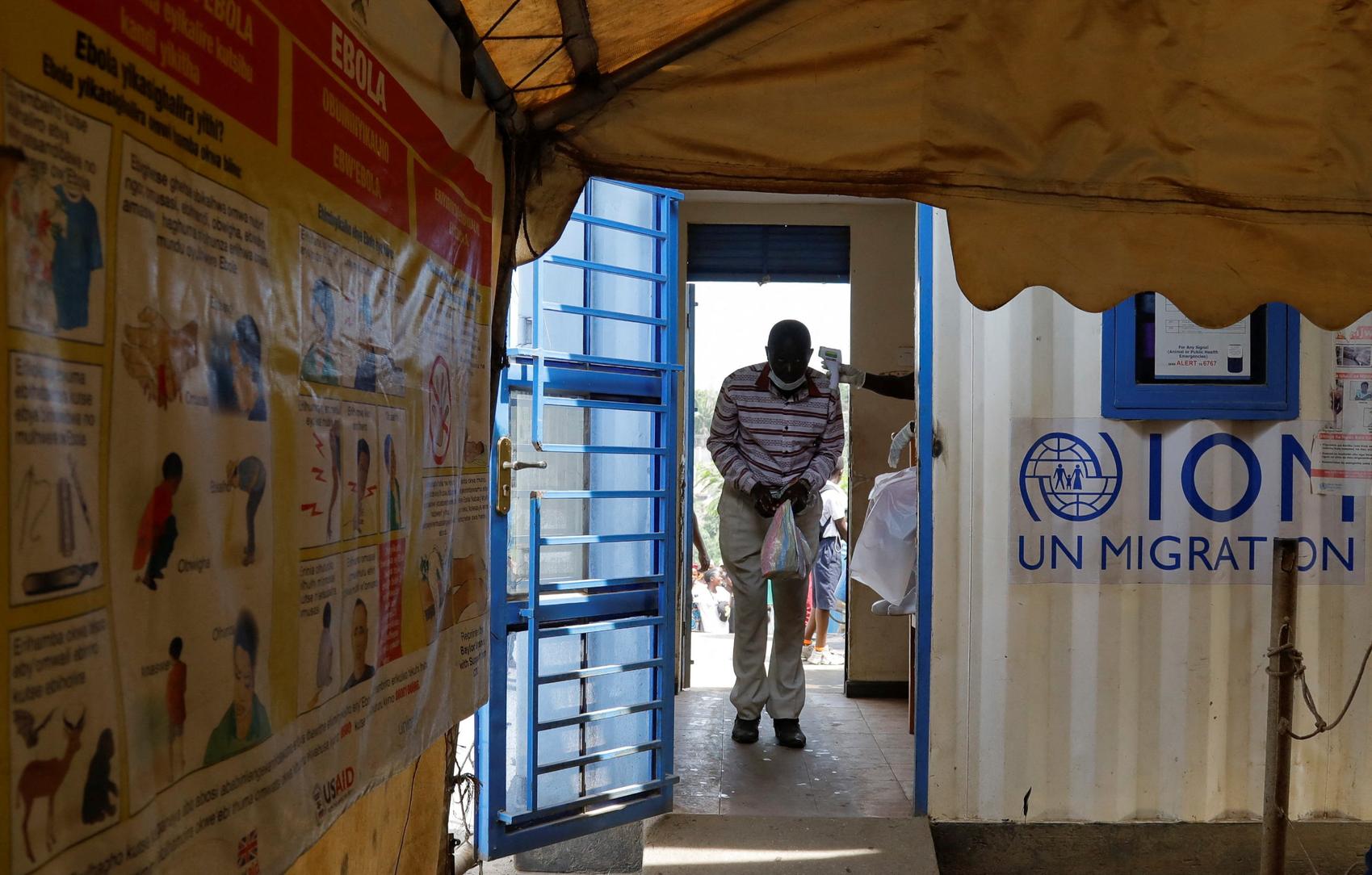
The World Health Organization recommended prioritizing three experimental treatments for the Bundibugyo strain of Ebola, including Mapp Biopharmaceutical’s MBP134, Regeneron’s maftivimab and Gilead Sciences’ antiviral remdesivir.
The WHO said on Thursday the drugs and other candidate vaccines should be evaluated in clinical trials to generate data on their use. The agency and outside experts have been working to identify several candidates.
The move comes as an outbreak continues in the Democratic Republic of the Congo, with cases also reported in Uganda.
There are currently no approved vaccines or therapies specifically for the Bundibugyo virus disease, the WHO said.
Supply of maftivimab is already on the ground in the DRC, should the WHO wish to utilize it for immediate treatment or as an additional component of study, Regeneron said in a statement.
For prevention, Gilead’s experimental oral antiviral obeldesivir was highlighted as a priority for post-exposure use in contacts of confirmed cases, although its effectiveness will depend on robust contact tracing.
Among vaccines, a single-dose candidate known as rVSV Bundibugyo, being developed by the International AIDS Vaccine Initiative, was seen as the most promising.
However, it is unlikely to be ready for trials for another seven to nine months, the agency said.
Another candidate, ChAdOx1 Bundibugyo, developed by Oxford University and the Serum Institute of India, could be available for testing within two to three months, though additional animal data are still needed.
The WHO also reviewed the potential use of Merck’s Ervebo, the only licensed Ebola vaccine, but said it should not be deployed outside research settings as evidence of protection against Bundibugyo virus remains limited and inconclusive.
The WHO advisors also recommended evaluating combination therapy using a monoclonal antibody together with remdesivir.
The agency said it is working with authorities in Congo and Uganda, along with partners including Africa CDC, to design and implement clinical trials under strict ethical standards.
© Thomson Reuters 2026.

