


The full-fledged participation of Japanese forces has given this year’s large-scale military exercise between the Philippines and the United States a new dimension and is helping create stronger regional security amid common threats, according to military officials and analysts.
In recent years, the Japanese Self-Defense Forces have either observed the annual Balikatan exercise, which is co-hosted by the Philippines and the United States, or taken part in one of its drills designed for humanitarian assistance and disaster response.
“It’s important that we train with them (Japan Self-Defense Forces) in terms of military tactics and strategies because we are looking at addressing threats in the region not as individual countries, but as a collective group,” Gen. Romeo Brawner Jr., Armed Forces of the Philippines chief, told reporters after the exercise on May 8.
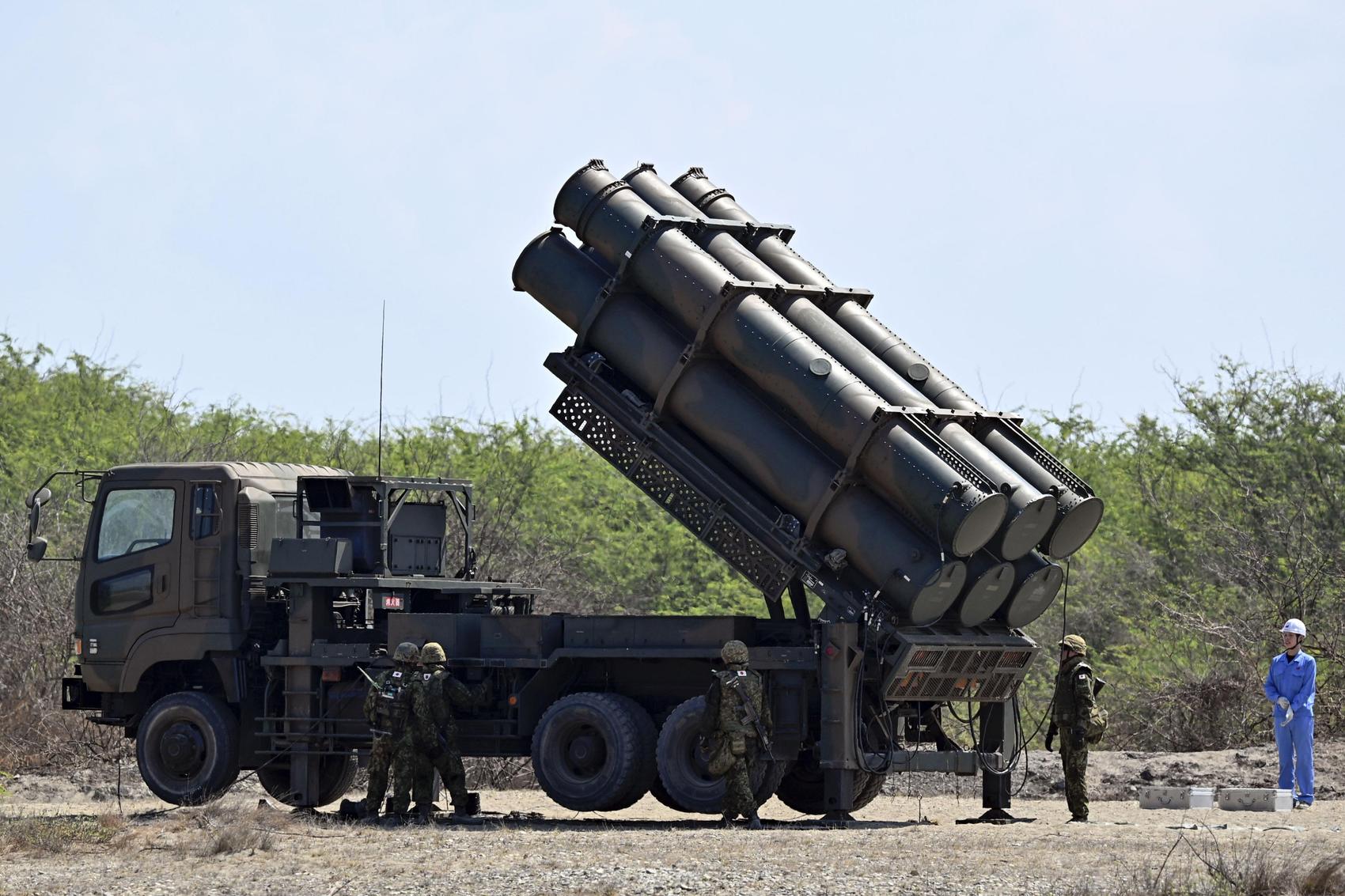
In the most recent Balikatan exercise, which lasted 19 days, Japan sent 1,400 personnel, three ships, and two aircraft, as well as its Type-88 guided missile system. The Japanese contingent was among the approximately 17,000 participants from seven countries.
The move came after the Philippines’ Reciprocal Access Agreement with Japan, which enables faster troop deployment and facilitates joint drills, took effect last year.
During the closing ceremony, Adm. Samuel Paparo Jr., chief of the U.S. Indo-Pacific Command, described this year’s exercise as “a strategic evolution from a bilateral exercise to a full-scale multinational mission rehearsal for the defense” of the Philippines, and one that “reflects the dangerous security environment we live in.”
For such exercises, the Japanese forces’ participation “should generate the deterrent effect needed to counter China’s regional ambition, if well nurtured,” Philippine Navy ex-vice commander Rommel Ong said.
He also asserted that the SDF’s full participation is key to forming an alternative regional security framework that does not solely rely on the United States but includes “middle powers” such as the Philippines and Japan.
Middle powers are regarded as countries that can exert influence in global affairs.
From April 24 to 28, the Japanese Maritime Self-Defense Force ships Shimokita, Ikazuchi and Ise participated in the Balikatan maritime drill inside the Philippines’ exclusive economic zone in the South China Sea, practicing maneuvers and formations at sea with the Philippine, U.S., Canadian, and Australian navies and coast guards.
The Japanese contingent also took part in anti-submarine warfare, gunnery and deck landing drills. Chinese ships and air assets were monitored from a distance although they did not interfere.
“After World War II, Japan has been our partner. Japan is showing how committed it is to regional peace and security,” said Capt. Paul Michael Hechanova, commander of the participating Philippine Navy frigate Miguel Malvar that hosted journalists from Kyodo News and local media during the maritime exercise.
On May 4, during a live fire exercise at a counter-landing along the coast of Ilocos Norte in the northwestern Philippines, some 40 Japanese Ground Self-Defense Force personnel from the 2nd Amphibious Rapid Deployment Regiment, based in Nagasaki Prefecture, demonstrated their combat skills alongside their Filipino and American counterparts.
“This was extremely meaningful as it covers training subjects that are difficult to complete domestically,” the regiment’s commander, Col. Sho Tomino, told reporters afterwards. “We want to continue utilizing opportunities like this to strengthen multilateral joint deterrence.”
Admitting there were language barriers and cultural differences, Tomino said, “We need to consider how much adjustment is necessary for understanding.”
Two days later, Japan tested its Type-88 missile system from an adjacent town as part of a maritime strike drill. The missile hit a decommissioned Philippine Navy ship from a range of 75 kilometers offshore.
Philippine Defense Secretary Gilberto Teodoro and his Japanese counterpart, Shinjiro Koizumi, observed the activity onsite. Meanwhile, President Ferdinand Marcos Jr. watched via live video feed at the Philippine military headquarters in Manila.
Ong, a professor of Praxis with the Ateneo School of Government and a non-resident fellow at the Stratbase Institute think tank in the Philippines, regards the anti-ship missile demonstration as “most noteworthy” among the SDF capabilities, as the Philippines is also developing this “critical capability.”
Recognizing the capabilities of the SDF, Paparo said that U.S., Australian, Japanese, and Filipino troops are exercising together more and more and “building our forces’ interoperability” to strengthen deterrence in the Indo-Pacific.
The various drills, along with Japan’s full participation, did not sit well with China.
Beijing has criticized the overseas deployment of SDF personnel and the firing of missiles. Its Foreign Ministry said that some of Japan’s “policies and moves have gone far beyond the scope of self-defense” and that Tokyo should “reflect deeply on its history of militarist aggression.”
The Philippines’ defense chief, Teodoro, brushed off the remarks, citing China’s aggressive actions in the South China Sea and its “improper references to history.”
“China’s attempt to evoke memories of World War II is an obvious attempt to sow division and create resistance against an emerging regional security arrangement and prevent Japan’s active participation in such undertaking,” said Ong.
Maj. Gen. Toshikatsu Musha, commander of the GSDF’s Amphibious Rapid Deployment Brigade, witnessed the May 4 counter-landing live fire exercise and recognized the broader implications of Japan’s participation in the Balikatan exercise.
“We will send (a) bigger” contingent for the Balikatan gradually from next year, he added.
Maricar Cinco and Taisuke Kikuchi contributed to this report.
© KYODO

