


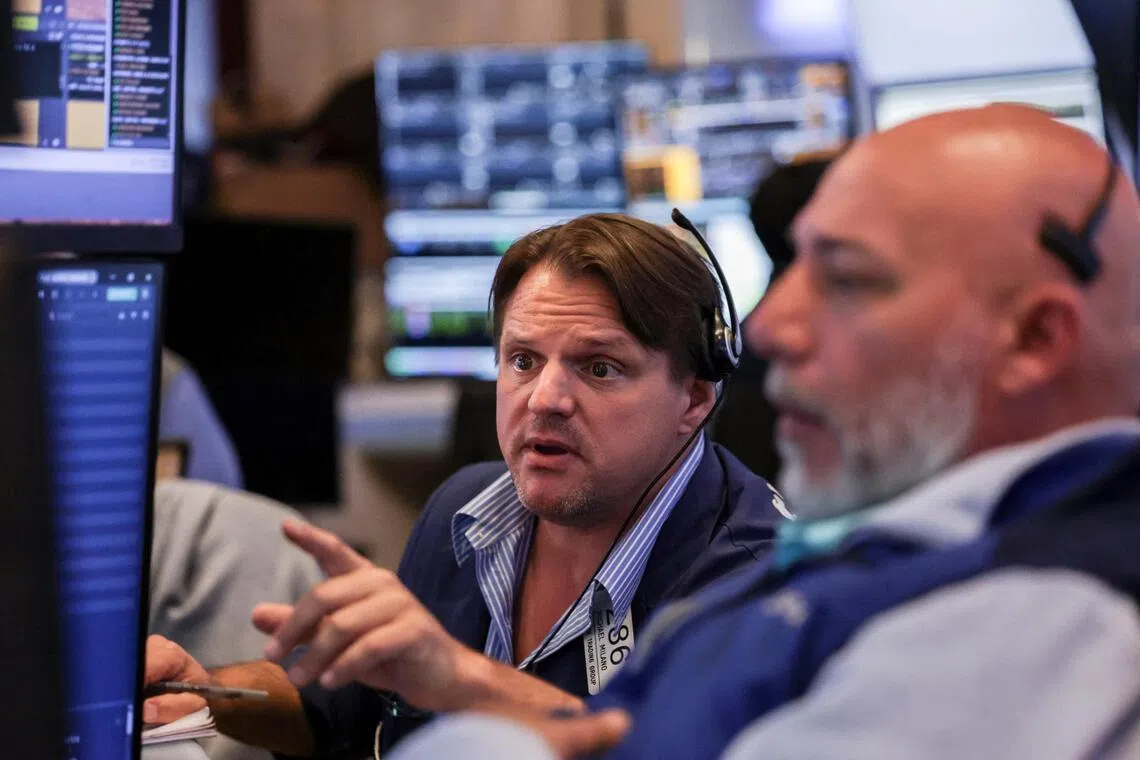
NEW YORK – Wall Street’s three main indexes closed slightly higher after May 21’s choppy session as oil prices lost ground, with some officials citing progress in US-Iran peace talks even as both sides took opposing stances over Tehran’s uranium stockpile and control of the Strait of Hormuz.
After spending the morning in the red, stocks clawed their way back to gains in afternoon trading while oil prices shifted from a rally to a decline.
While US Secretary of State Marco Rubio told reporters there had been “some good signs” in talks with Iran, he also said a diplomatic deal between the US and Iran would be unfeasible if Tehran implemented a tolling system in the Strait of Hormuz, which is a key conduit for oil transportation.
A senior Iranian source told Reuters that no deal has been reached with the US, but that gaps have been narrowed while Iran’s uranium enrichment and Tehran’s control over the strait remained among the sticking points.
Mr Jason Pride, chief of investment strategy and research at Glenmede, attributed volatility during May 21’s session to investor reactions to speculation about geopolitics.
“We’re sitting at high levels of valuation partly driven by earnings,” he said.
“That overshadowed the concerns around Iran but now earnings season is largely over. We’re not going to suddenly get any more good surprises out of earnings, which means that market attention is now back to Iran. The market, on a near-term basis, is going to be finding its way based on rumors or actual announced deals regarding Iran.”
The Dow Jones Industrial Average rose 276.31 points, or 0.55 per cent, to 50,285.66, marking a record closing high.
The S&P 500 gained 12.75 points, or 0.17 per cent, to 7,445.72 and the Nasdaq Composite gained 22.74 points, or 0.09 per cent to 26,293.10.
“The silver lining is that from a market perspective, the fragile ceasefire is still holding. It’s positive there’s still, according to news reports, the possibility of an off-ramp. Oil and market sentiment is very sensitive to every headline,” said Mr Marc Dizard, chief investment officer at Huntington Wealth Management.
He added, however: “Nobody knows, except the inner circle in Iran and in the US, how much progress is truly being made.”
Investors also reacted to the latest batch of earnings from big US companies. Walmart shares tumbled 7.3 per cent after the largest global retailer forecast second-quarter profit below estimates and maintained its annual targets.
Chief financial officer John David Rainey said consumers were feeling pressure from high fuel prices and that if the “elevated cost environment persists, we’d expect somewhat higher retail price inflation in Q2 and the second half of the year.”
Among the S&P 500‘s 11 major industry sectors, consumer staples led losses with a 1.6 per cent decline as it was weighed down by Walmart along with declines in some other retailers that fell in sympathy, including Casey’s General Stores, down 3.3 per cent, and Costco Wholesale, which finished down 2.2 per cent.
Shares of Nvidia, the world’s most valuable company, fell 1.8 per cent as some investors took profits after the AI heavyweight’s upbeat second-quarter revenue forecast and US$80 billion share-repurchase programme.
Its stock has gained sharply so far this year but the pace of growth has slowed as investors believe Nvidia will face tougher competition from chip rivals including Intel and Advanced Micro Devices going forward.
However, the Philadelphia Semiconductor Index finished up 1.3 per cent as investors viewed Nvidia’s results as a positive sign for the group.
In economic data, jobless claims fell last week, pointing to continued labour market resilience, giving the US Federal Reserve room to keep its focus on inflation risks.
US manufacturing activity rose to a four-year high in May as businesses built inventories to guard against potential shortages and rising prices tied to the Iran war.
Among other movers, IBM rose 12.4 per cent on news that the Trump administration will fund a handful of quantum computing companies, including a new IBM venture, in exchange for stakes in some of the firms.
GlobalFoundries also climbed 14.9 per cent while D-Wave Quantum added 33.4 per cent, Rigetti Computing jumped 30.6 per cent and Infleqtion gained 31.5 per cent.
Intuit’s shares plunged 20 per cent after the software maker lowered the annual revenue forecast for its tax-filing software, TurboTax, and said it would cut 17% of its full-time workforce. Shares of tax preparer H&R Block ended down 4.8%.
Advancing issues outnumbered decliners by a 1.51-to-1 ratio on the NYSE, where there were 234 new highs and 106 new lows.
On the Nasdaq, 2,985 stocks rose and 1,798 fell as advancing issues outnumbered decliners by a 1.66-to-1 ratio.
The S&P 500 posted 11 new 52-week highs and four new lows while the Nasdaq Composite recorded 96 new highs and 108 new lows.
On US exchanges, 17.67 billion shares changed hands compared with the 18.57 billion moving average for the last 20 sessions. REUTERS

