


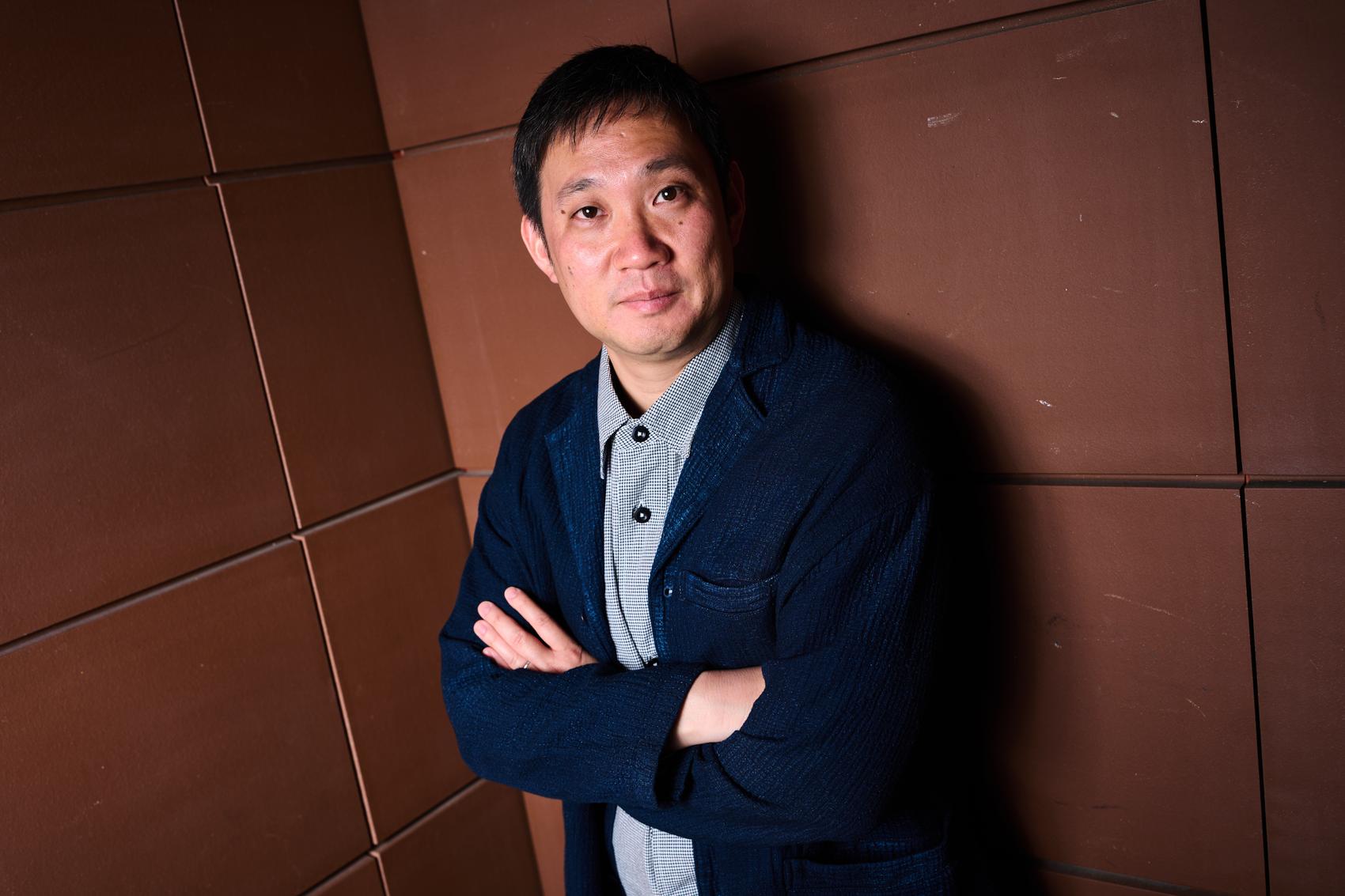
The Cannes Film Festival is not a place that’s conducive to taking your time. Festivalgoers rush frantically between screenings. The protocol department enforces precisely timed red carpet premieres. Standing ovations are clocked.
But one of the most lauded films of this year’s Cannes is a patiently plotted, sensitively told three-hour drama about giving people the time they deserve.
Ryusuke Hamaguchi’s “All of a Sudden” has been one of the most widely acknowledged knockouts of the festival — in part because of how much it cultivates and nurtures its own gentle rhythm. For anyone who feels life may be moving too fast, the ironically titled “All of a Sudden” may be welcome recalibration.
“I face the same issues,” Hamaguchi, the Japanese filmmaker, said in an interview. “Just living and working in a society like the one we live in today, we all feel this. It’s about not having the time and the availability to give our interest to others. To find that time, we have to be conscious about it.”
Hamaguchi spoke over coffee on a quiet morning in Cannes. His manner is humble and reflective, but he also has a steely determination. You would have to make such sprawling humane movies that defy convention. His three-hour 2021 opus, “Drive My Car,” tenderly accrued such power that it became an international sensation, landing four Oscar nominations and becoming the first Japanese film ever nominated for best picture.
In “All of a Sudden,” which Neon will release in the U.S. later this year, Hamaguchi’s story could be a metaphor for his own quietly radical cinema.
Virginie Efira plays Marie-Lou Fontaine, who leads a Paris elderly care facility that’s trying to instruct its workers in Humanitude, a program emphasizing personal, compassionate care for residents. It prioritizes things like looking residents in the eye and, yes, spending more time with them.
But not everyone is on board. There are realities to deal with for the hard-working staff that can make the Humanitude methods more idealistic than practical. Through a random encounter, Marie-Lou meets a theater director, Marie Morisaki (Tao Okamoto) whose moving play includes a role for a young man with a developmental disability (Kodai Kurosaki).
When Marie-Lou and Marie meet, their connection is immediately deep and their conversation continues not just into the night but into the following day. Their evolving relationship and the changing atmosphere of the facility gracefully move “All of a Sudden” toward something hopeful and profound about the possibility of real connection.
“My own values and thoughts around filmmaking come into the film,” grants Hamaguchi. “I first learned about Humanitude in a different context and I decided to work within the field of caregiving. But when I started to research about it, I realized there were so many shared issues in common with the film industry.”
While Hamaguchi is a well-traveled movie watcher — in conversation, he praised John Cassavetes and the Nicholas Ray Western “Johnny Guitar” — he’s resistant to some of the plot mechanics that tend to reflexively dictate many mainstream movies.
“I rely very much on my discomfort,” explains Hamaguchi. “Storytelling as an action, you’re sort of forcing certain things to happen to make an interesting film. Oftentimes, when I watch other films, they say this is how it is and continue to push the plot forward. I find that to be uncomfortable.”
Just as abuse might occur at an elderly care facility, Hamaguchi notes young film crew members might be treated harshly. He strives for an approach to moviemaking closer to the Humanitude ethos.
“There are so many parts of the film industry where the system is built in a way that doesn’t treat actors as people,” he says. “They’re seen as people who prepare their emotions and then bring that emotion to the set. What I want to record is not the prepared emotions but the emotions that arise out of reacting with each other. For that to happen, it’s important to have time.”
Hamaguchi spent five months shooting “All of a Sudden” in an elderly care facility in Paris. Many of the residents appear as extras in the movie. Asked if this proximity to the residents reframed anything for Hamaguchi, he pauses to consider.
“The residents have a quiet acceptance of what is to come,” Hamaguchi says. “It’s hard to say whether this experience changed my thoughts around death and illness. Yet I do have this belief that despite what’s to come, no matter how definitive, we can always find other ways to live or find happiness.”
© Copyright 2026 The Associated Press. All rights reserved. This material may not be published, broadcast, rewritten or redistributed without permission.

