


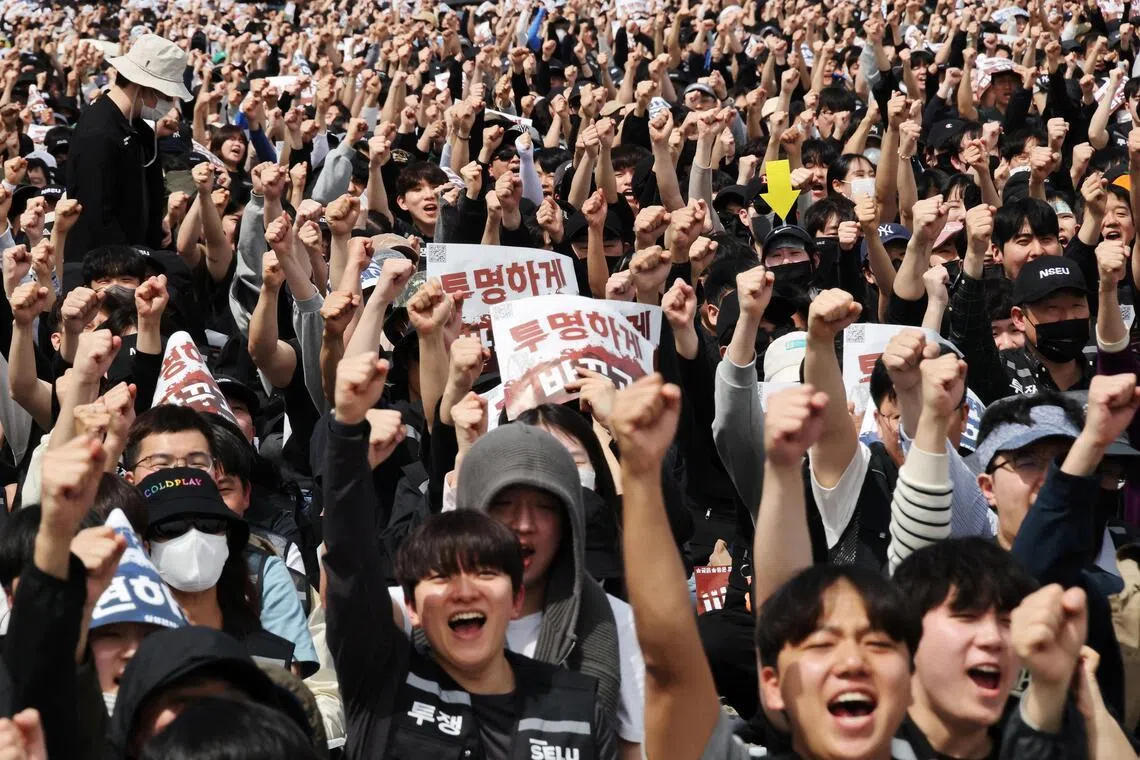
SEOUL – Samsung Electronics and its South Korean labor union failed to reach a pay deal on May 13, its union leader said, expecting over 50,000 workers would go ahead with a full strike that threatens to disrupt production of AI and other chips.
The impasse followed hours of marathon talks over two days as pressure from the public and the government mounted on Samsung workers to compromise on the pay deal and avert a strike.
“I would like to express some regret that none of the agenda items requested by the union have been addressed,” union representative Choi Seung-ho told reporters at about 3am local time on May 13.
The union has said that should its demands not be met, workers will strike for 18 days from May 21. That could delay shipments to customers, push up chip prices further and benefit rivals.
Its representative said he currently has no plans to resume talks with management before the strike date, but would be willing to consider “a proper proposal” if the company presents one.
Investors are closely watching the development because any disruptions at the world’s largest memory-chip maker could ripple through the global semiconductor supply chain.
“There are mounting concerns that any significant production disruptions or operational uncertainty at Samsung Electronics could place additional strain on the global memory semiconductor market, potentially worsening supply bottlenecks, price volatility, procurement uncertainty and broader supply chain instability,” the American Chamber of Commerce in Korea said in a statement this week.
The dispute comes as South Korea grapples with broader questions over how the gains from the AI boom should be distributed.
Samsung and its union are sharply divided over performance bonuses tied to booming AI-related earnings. The union demanded that Samsung scrap the existing bonus cap, allocate 15 per cent of its operating profits to worker bonuses and formalise those terms in employment contracts.
Samsung has proposed providing 10 per cent of operating profit to bonuses, along with a one-time special compensation package that exceeds industry standards, according to Yonhap. Company executives argued that the union’s demands would be difficult to sustain over the long term, it said.
The failed talks underscore rising tensions across the country’s technology sector as workers push for a greater share of profits generated by the AI infrastructure boom. Union leaders have pointed to rival SK Hynix, which in 2025 agreed to allocate 10 per cent of annual operating profit to a performance bonus pool.
A strike would threaten disruptions to Samsung’s semiconductor operations at a time when it competes fiercely with SK Hynix and Micron Technology in the memory market. A prolonged labour dispute could complicate Samsung’s efforts to accelerate development of next-generation AI chips.
On May 13, the Suwon District Court is scheduled to hold a second hearing on Samsung’s request for an injunction to restrict the union’s planned strike. The court is expected to decide by May 20 whether to grant the injunction, which seeks to ban occupation of key facilities and mandate that safety-critical staff remain on-site to prevent equipment damage, potentially altering the scope of the walkout set for May 21. BLOOMBERG, REUTERS

