


SINGAPORE – Trust Bank’s strategic partnership with FairPrice Group gave it a strong edge in Singapore’s crowded digital banking space, helping it turn profitable for the first time in March, analysts said.
It also benefited from the backing of a large, incumbent lender, Standard Chartered Bank, which provided operational expertise and helped the digital bank overcome initial scepticism around digital banks, analysts told The Straits Times.
Trust Bank posted its first net profit in March 2026 since its September 2022 launch, making it one of the fastest digital banks to reach the milestone.
The digital bank said its risk-adjusted revenue for March rose 67 per cent year on year, while costs fell 9 per cent, although it declined to disclose the base figures.
But Trust Bank still reported a net loss for the first quarter ended March 31.
In 2025, it posted a $54 million net loss, narrowing from $93 million a year earlier.
Rivals GXS Bank and MariBank also posted net losses for the year, though GXS Bank’s net loss narrowed to $132.1 million from $145.4 million in the year-ago period, on higher income and lower costs.
Fitch Ratings director Tamma Febrian said FairPrice Group, a familiar household name in Singapore, gave Trust Bank an early advantage in attracting customers and generating stronger fee income through its credit and debit card tie-ups.
By embedding itself in customers’ daily financial lives early, through the FairPrice ecosystem, it created a level of engagement frequency that is hard to replicate, noted Mr Amit Chopra, head of Asia-Pacific banking and payments at FIS.
GL Insight director Zennon Kapron said that Trust Bank’s advantage was acquiring customers through an existing loyalty base – which is far cheaper than buying them through digital marketing.
Trust Bank also started out with a few key products before expanding its suite of services, added Mr Kapron.
“Trust didn’t try to be everything at launch. A simple product set, savings and a credit card, both tied to spending (that) customers were already doing at FairPrice,” he said.
Trust Bank then built out its product suite methodically, Mr Chopra said, from savings to lending, insurance and investing, giving customers more reasons to deepen their relationship with the bank.
Mr Febrian further noted that StanChart’s backing helped mitigate the “trust” issue associated with new digital banks when they first entered the market, allowing Trust Bank to rapidly build deposits.
Trust Bank acquired more than one million users by early 2025, making it the fourth-largest retail bank in Singapore by customer numbers.
Around one-third of total deposit balances come from customers who credit their salary to Trust Bank, with more than 170,000 customers using it as one of their primary banking accounts.
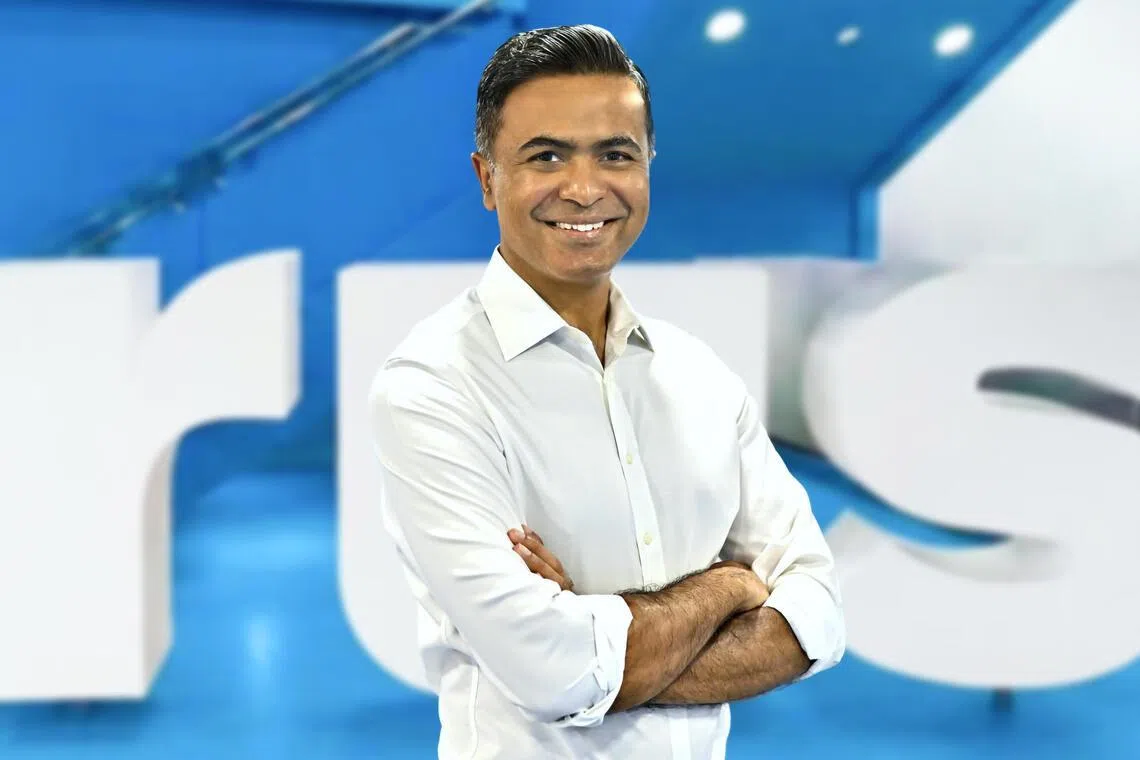
Trust Bank chief executive Dwaipayan Sadhu said the profitability was driven by an expanding product suite and deep customer engagement as well as efficiency gains from automation and AI adoption.
“Profitability is driven by very sustainable growth in our revenue, very sustainable performance in our costs as well as credit performance. So we believe this positions us very well for a long-term sustainable financial path,” he told ST.
Mr Sadhu said the bank’s 2026 focus is to build products and services which customers truly need by responding to their feedback and addressing pain points.
Digital banks in Singapore emerged from a push by the Monetary Authority of Singapore to diversify the financial sector, strengthen resilience and foster innovation.
Unlike traditional banks, digital banks primarily operate through online platforms or mobile apps rather than extensive physical branch networks. They also often target underserved segments like small businesses or younger, tech-savvy consumers.
GXS group chief executive Lai Pei-Si said that the bank targets to reach profitability by 2027. “We aim to grow our revenue two times or more and keep expenses flat.”
For 2025, GXS Bank’s total income grew to about $44 million, from about $30 million in 2024, while operating expenses narrowed to $134.5 million, from $152.4 million in 2024.
In 2026, the bank plans to continue scaling its core retail and business banking lending portfolios, said Ms Lai.
“Moving forward, we expect to accelerate this momentum by diversifying our wealth offerings with four new funds in our invest suite and launching our GXS credit card in the second half of the year,” she said.
On the other hand, MariBank’s losses widened to $55.6 million in 2025, from $51.3 million in 2024, mainly due to higher allowances for credit and other losses.
The bank’s loans and advances to customers surged to $222.4 million in 2025, from $103.7 million in 2024. Allowances for credit and other losses jumped to $20.5 million, from $4.4 million in 2024.
A MariBank spokesperson said the losses reflect investments to build a scalable bank and are “in line with our expectations”.
The spokesperson added that the bank’s provisions rose in line with the growth of its loan portfolio, which it described as healthy. Safeguards are also in place to promote responsible borrowing among customers.
MariBank is expanding its products and features in investment, lending and business banking in 2026, the spokesperson added.
Mr Febrian from Fitch said it is typical for digital banks in the region, including those in Singapore, to incur losses during their first five years of operations due to sustained investment.
But Singapore’s digital banks have made progress towards profitability over the past two years as they ramp up their revenue engines and build their loan books, he said, adding that the momentum is likely to continue over the next one or two years.
Trust Bank will probably pull further ahead, partly because profitability buys reinvestment capacity, said Mr Kapron from GL Insight.
But digital banks still face stiff competition from much larger traditional lenders, analysts said.
Mr Febrian said retail banking is highly competitive in Singapore, given that the three local banks – DBS Bank, OCBC Bank and UOB – have dominant franchises and are continuously improving their digital offerings, allowing them to maintain their market shares.
Mr Chopra from FIS said he expects sharper strategic focus, with each bank doubling down on where it has the clearest advantage.
“The broader shift to watch is how quickly agentic artificial intelligence moves from experimentation to deployment. The institutions that deliver on that credibly, whether digital or traditional, will have a meaningful edge for the rest of this decade.”

