


Vietnamese food is a vegetable-based diet, and Vietnam actually has one of the lowest obesity rates in the world, with the saying, “I don’t think I ate it without vegetables.” That’s why many places around the world experience Vietnamese food a lot. Among Vietnamese foods, noodles are classified by the type of noodles. The names ‘fur’ and ‘bun’ refer to the type of noodles. In Korean noodle dishes, even the same ingredients and soup are classified into noodles, udon, and ramen according to the type of noodles. These noodles are dipped in the broth of Vietnamese pho, and they are made under the influence of poto, a type of beef stew that French immigrants used to eat in their hometown during the colonial period. Originally, Vietnamese pho is usually mixed with seafood or vegetable soup, or fried like pad thai. Pur, eaten in Korea, tastes quite refined, and the full-fledged Vietnamese style has a strong smell of meat and herbs fighting against each other. Not all restaurants do, and some offer lime and herbs separately, so you can add as much as you want. Other herbs can vary slightly from store to store, but lime is always served at any store. Lime is also common in local rice noodle restaurants in Vietnam, just as Korean restaurants serve kimchi. It’s unfamiliar to those who have only eaten rice noodles in Korea, but local rice noodles in Vietnam are usually more oily than rice noodles sold in Korea, so they’re refreshing to eat with lime. At first, you might think it’s like throwing away the savory taste of the soup, but once you get used to it, you can find lime in Korean rice noodle restaurants.
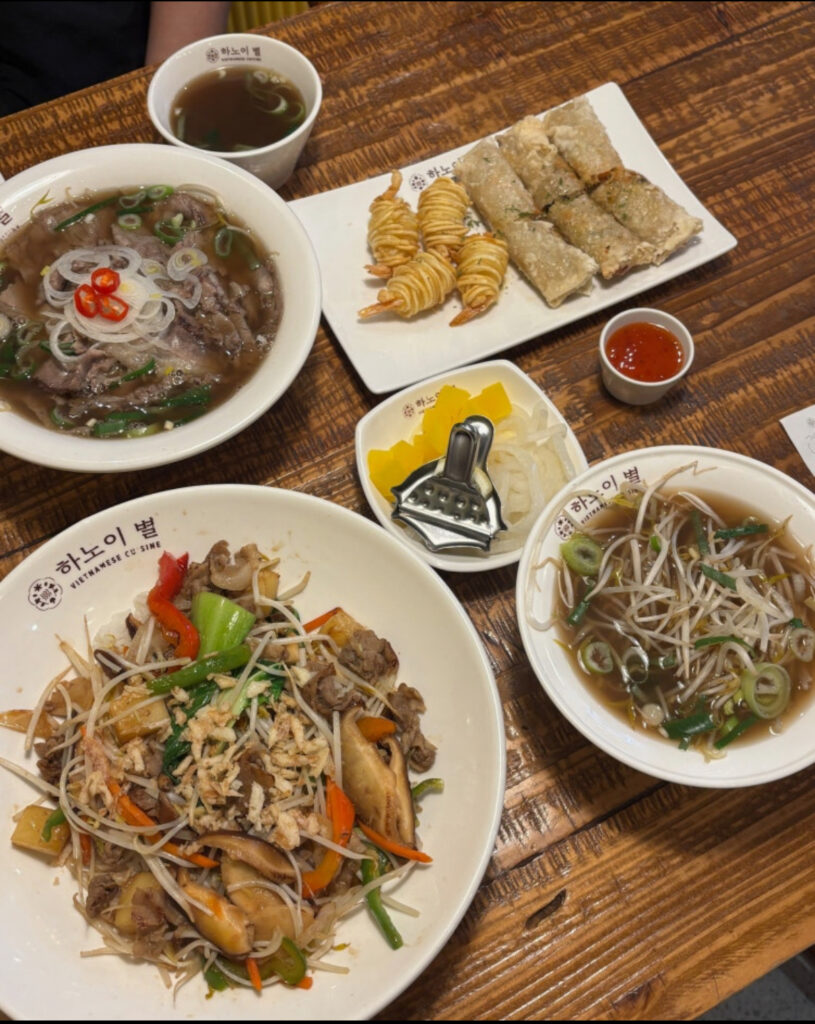
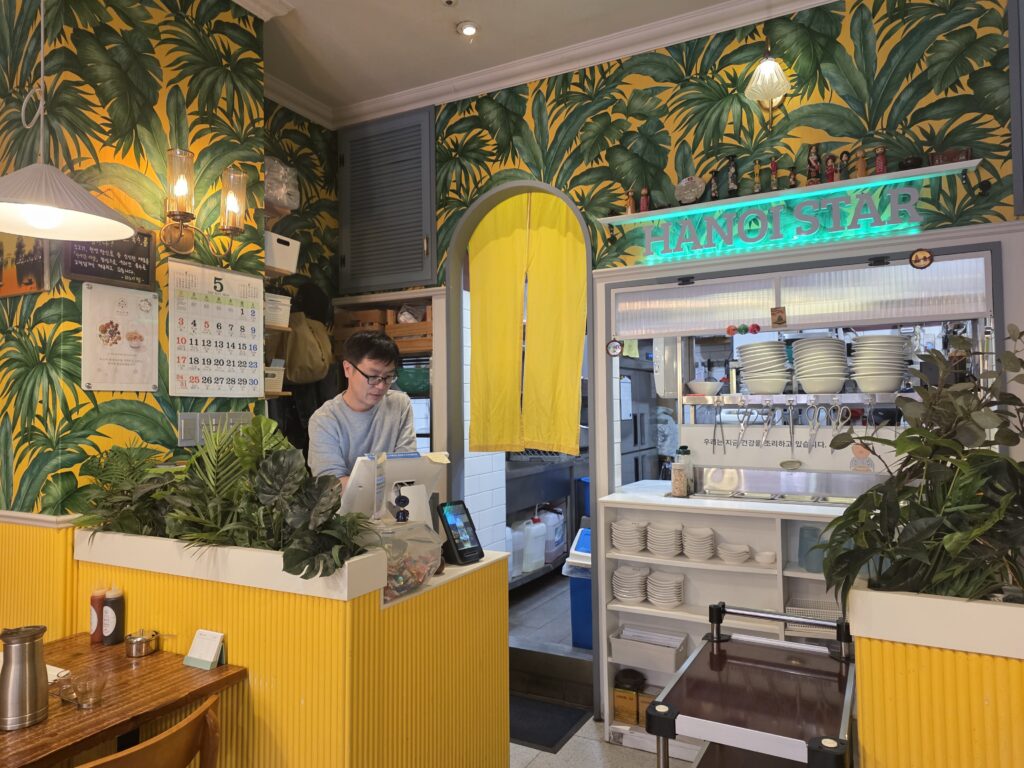
Without lime or herbs, it tastes like savory rice noodles, which are commonly thought of. Usually known worldwide, this method is prepared by the pear people themselves and is the South Vietnamese (Saigon) method, which has a strong liver and scent. The Hanoi method excels at the plain taste, as if you are mixing noodles with beef bone broth. After visiting Korea, you can experience and enjoy the taste at Songdo ‘Hanoi Star’, which is about 30 minutes away from Incheon International Airport. In particular, it is close to Songdo’s flagship attraction, Central Park Lake Park.
You can enjoy the local taste of Vietnam, but above all, the hygiene of ingredients and dishes is very important. The reputation of K-food is already well known. The basic hygiene of fresh ingredients and dishes is also light and good for your health due to the taste of Korean-style K-food. I highly recommend it as a family restaurant.
▲Hanoi Star
▲Owner Daesik Park
▲#112, 251, Incheon tower-daero, Yeonsu-gu, Incheon, Republic of Korea
SAM KIM
US ASIA JOURNAL

