


SINGAPORE – Singapore’s diabetes epidemic is not going away any time soon, and the wide pool of patients in a country with high-quality medical care and research makes it an ideal platform to pilot new forms of diabetes treatment.
New drugs and delivery forms can then be expanded to other countries in the Asia-Pacific region, Novo Nordisk’s senior vice-president for Asia-Pacific Jay Thyagarajan said in an interview with The Straits Times.
This will be increasingly important as digital health becomes more widespread, and the company looks to ramp up its delivery of diabetes and obesity treatment via platforms such as telemedicine.
Singapore has grown in strategic importance for the Danish pharmaceutical giant, best known for manufacturing the injectable drug Ozempic, which regulates blood sugar levels in people with Type 2 diabetes, as well as the weight-loss drug Wegovy.
In 2025, the company moved its regional headquarters from Dubai to Singapore, citing the Republic’s geographical location, stable political system and digitally savvy economy as important to its business strategy in the Asia-Pacific.
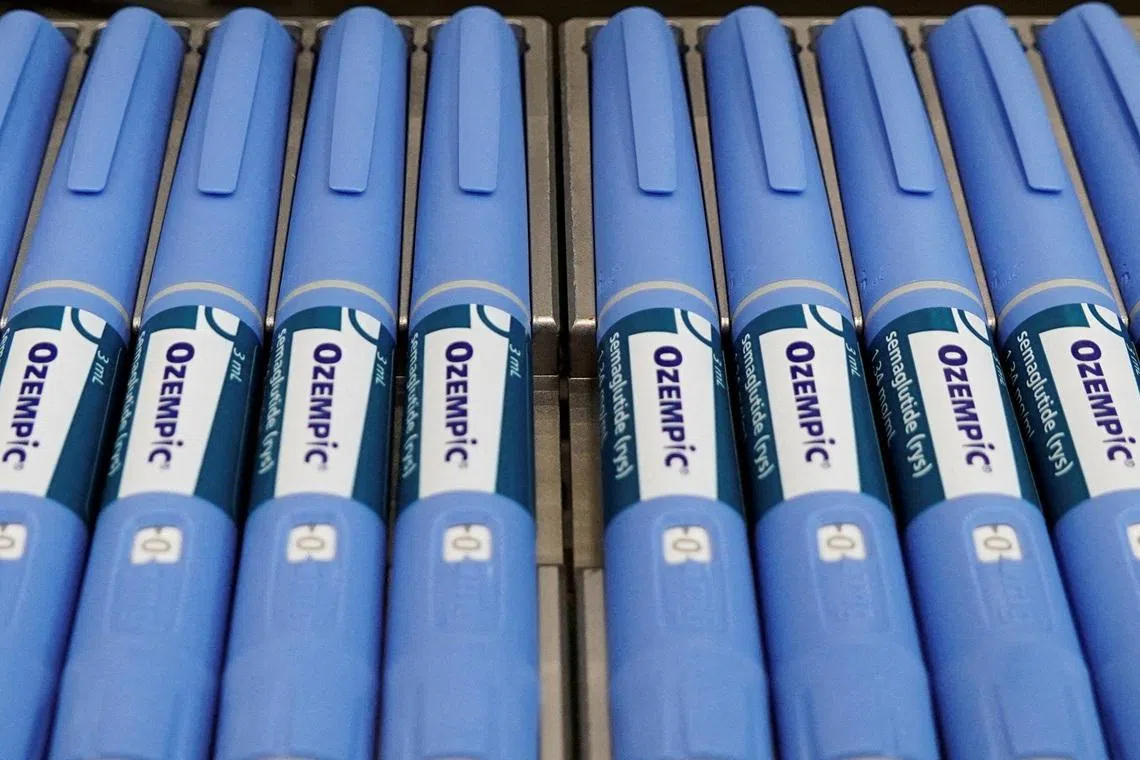
Danish pharmaceutical giant Novo Nordisk is best known for manufacturing the injectable drug Ozempic.
REUTERS
The regional headquarters in Singapore now serves as the “nerve centre” for spearheading its business operations and supply chains, as well as piloting policy engagement through public-private partnerships to improve the prevention and early detection of diabetes and obesity.
The company, which first set up an office in Singapore in 1997, has already run several campaigns in conjunction with the Ministry of Health to drive awareness and prevention of the diseases, as well as create early detection programmes and improve the training of general practitioners in early diagnosis.
Mr Thyagarajan said it is currently working with over 200 GPs and around 30 to 50 health and telehealth companies.
Looking ahead, it plans to set up a centre of excellence in Singapore that would provide multidisciplinary care, with patients being seen by a team of doctors, dietitians, nutritionists and behavioural therapists.
In a 2023 survey by consulting firm Bain and Company, 43 per cent of Singapore respondents said they had used telemedicine, which was more than double the 16 per cent figure in 2019 and higher than the 32 per cent recorded in 2021.
A 2019 report by the Economic Development Board showed that Singapore’s digital health ecosystem was ranked the third-largest in Asia-Pacific.
It is poised for further growth over the medium term, driven by national strategies to adopt artificial intelligence and digitalise healthcare.
The region’s digital health market was valued at around US$80 billion (S$102.5 billion) in 2025, and is forecast to have a compound annual growth rate of more than 20 per cent over the next five years.
Mr Thyagarajan said Singapore’s strengths in its digital strategies allow the company to build on its capabilities to utilise digital integration, data analytics and artificial intelligence in delivering personalised care for patients.
The regional head, who has led the Asia-Pacific office for more than 1½ years, added that the region still has a significant unmet need in the effective treatment of diabetes and obesity, the latter of which is a common cause of Type 2 diabetes.
According to Novo Nordisk, over 90 per cent of the 600 million diabetes and obesity patients in the Asia-Pacific require treatment. That figure is around 34 per cent of the total number of patients globally.
In Singapore, around one in 11 adults is affected by diabetes. This prevalence has barely subsided since the Government launched its war on diabetes a decade ago, and it also remains higher than in many other Asian countries.
The company hopes to replicate engagement programmes in Singapore in other countries in the near future.
Over the next five years, in addition to investing further in partnerships with academia and healthcare institutions, Novo Nordisk will expand its commercial activities such as research and development of new drugs and treatments, healthcare infrastructure, capability building and talent development.
Its bigger goal is to create a system that could raise the quality of healthcare for Singaporeans.
“We want to establish an integrated ecosystem where we bring in partners from various sectors such as healthcare, banking, finance, as well as the Economic Development Board and others, to see if we can bring about changes in urban living.
“This could mean changes to the food we eat, our calorie intake, so that even with or without Novo Nordisk here, we leave behind an ecosystem that is sustainable and provides for its citizens at large.”
Novo Nordisk recorded a slowdown in growth in 2025, with revenue increasing by just 6 per cent to 309.1 billion Danish kroner (S$69.1 billion), while net profit grew 1 per cent to 102.4 billion kroner.
This came after a surge between 2022 and 2024 when the company posted an average of 25 per cent year-on-year growth, buoyed by its Wegovy drug, which transformed the company from a diabetes-focused one into the world’s leading obesity treatment provider.
The Asia-Pacific saw the highest growth in its international operations in 2025 at 25 per cent, with sales of its glucagon-like peptide-1 (GLP-1) receptor agonist drugs up by 10 per cent, while obesity care sales grew by 122 per cent.
Drugs like Ozempic mimic the GLP-1 hormone by binding to a cell receptor and triggering its effects, thereby stimulating the pancreas to create more insulin in Type 2 diabetes patients.
Novo Nordisk attributed its slower financial growth to increased competition in the weight-loss pharmaceutical space, in particular from US firm Eli Lilly, whose drug Zepbound was competitively priced and thus able to capture more of the US market.
Its business was also badly hit by copycat drugs that took advantage of the GLP-1 shortage and loopholes in the US Food and Drug Administration laws.
This led to a plunge in the Denmark-listed company’s share price by over 50 per cent, from its heyday of 1,000 kroner in June 2024 to around 400 kroner April 2025, prompting a change in chief executive in May 2025. In September 2025, it announced that it would cut 9,000 jobs.
Its stock price has continued to fall, and as at April 29 it stood at 255.55 kroner.
One silver lining is that the company was largely shielded from the impact of tariffs imposed by US President Donald Trump in 2025, as a large portion of its manufacturing footprint is already in the United States.
Novo Nordisk does not have any manufacturing facilities in Singapore.
But Mr Thyagarajan noted that Mr Trump’s “most favoured nation” drug policy, which aims to lower US prescription drug costs by pegging them to the lowest prices in other developed nations, could still lead to pricing pressures in the near term.
“We have to be proactive in how we price future innovations in these different markets because there is a risk that the products may become unaffordable by placing them at different price points.”
He added that the company has traditionally priced its drugs according to the socio-economic levels of the various markets. But it could now employ both price differentiation and brand diversification to offer an expanded product pipeline at many different price points in order to overcome the potential challenges posed by the Trump administration.

An artist’s impression of Novo Nordisk’s new US production facilities in Clayton, North Carolina, which will be completed between 2027 and 2029.
PHOTO: NOVO NORDISK
Responding to ST’s questions on how its financial performance could affect its strategy in Singapore and the Asia-Pacific, Novo Nordisk replied that the short-term headwinds of significant pricing pressures and increased competition, as well as near-term global volatility, do not change its long-term confidence in its science and mission, or its commitment to patients at large.
“Increasing access to innovation and driving health at scale remain growth drivers for the APAC region,” said a spokesperson.
While the company did not disclose how much it would spend on its investments in Singapore and the wider Asia-Pacific region, it said it had typically re-invested between 14 per cent and 16 per cent of its revenue into research and development worldwide.
In 2025, this figure was more than 82 billion kroner.
It said the company is “focused on sustainable, long-term value creation by expanding our reach and advancing our pipeline”.

