


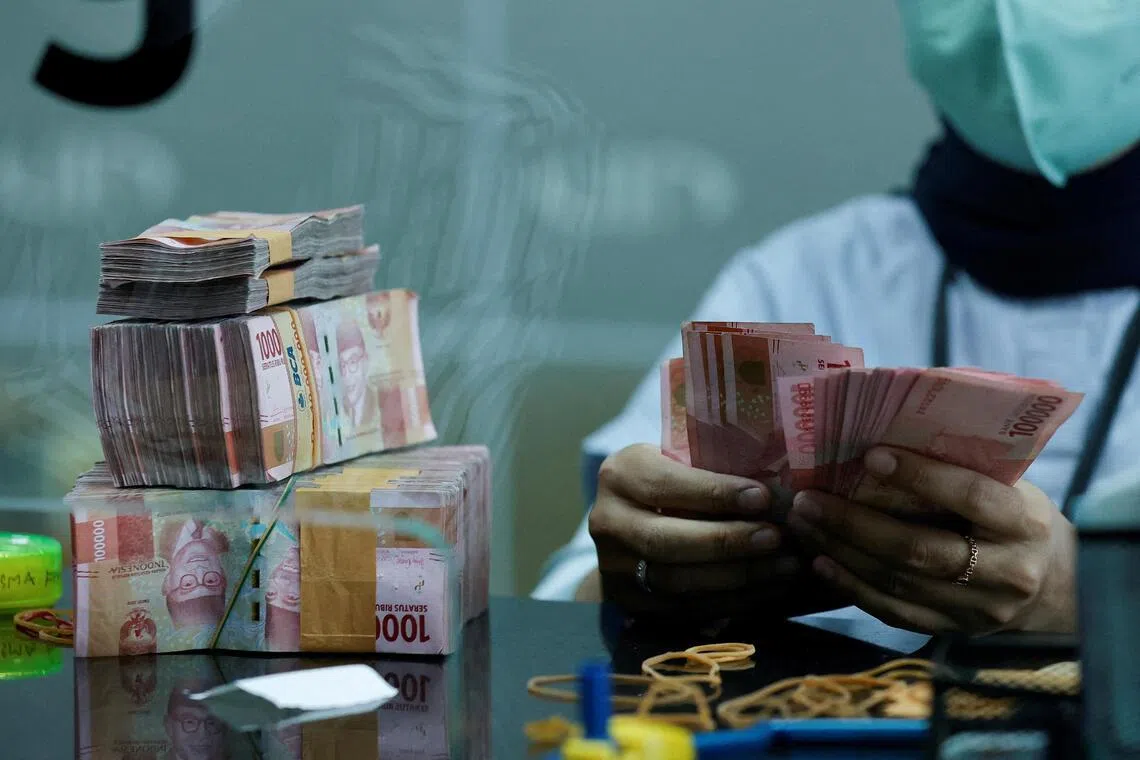
SINGAPORE – Indonesia’s rupiah hit a fresh low against the Singapore dollar on April 15, weighed down by rising oil prices linked to the Iran war and capital outflows from the country’s bond and equity markets.
The currency weakness has raised concerns about a potential pullback in Indonesian demand for Singapore services, particularly healthcare, as well as softer export flows to Indonesia.
The Indonesian currency was trading at around IDR 13,500 per Singapore dollar on April 16. It fell 9.3 per cent against the Singapore dollar in 2025, and has weakened by another 4 per cent in 2026, according to Bloomberg data.
S&P Global Ratings said on April 15 that Indonesia’s sovereign credit profile is among the most exposed to a prolonged conflict in the Middle East.
Indonesia produces oil but remains a net importer, so higher energy prices amid the fallout from the Iran war have raised import and subsidy costs, weakening the archipelago nation’s external trade balance and fiscal position.
Global risk aversion has also triggered capital outflows from Indonesia’s bond and equity markets, as investors move funds into safer assets, adding to pressure on the rupiah.
Official data showed that foreign investors sold a net US$202 million (S$256.64 milion) of Indonesian government bonds in January. The outflows also coincided with a local stock market rout that erased about US$80 billion in market value after index provider MSCI flagged concerns over ownership and trading transparency.
Saxo sales trader Mr Sean Teo said the rupiah has been on a prolonged downtrend, with tensions in the Middle East adding to the pressure.
He noted that disruptions to oil flows through the Strait of Hormuz have raised energy prices, prompting capital to flow into the US dollar and away from riskier currencies such as the rupiah.
“Rating agency Moody’s has revised Indonesia’s outlook to ‘negative’, citing political uncertainty and weakening governance, while MSCI halted any positive adjustments to Indonesian securities, which led to the US$80 billion sell-off from the Indonesian markets in January,” said Mr Teo.
“So capital may instead flow to other markets in the region, such as Singapore, Hong Kong and Malaysia,” he added.
Pressure on medical tourism, exports
Analysts expect some recovery in the rupiah if tensions in the Iran war ease, but noted that a weaker rupiah and strong Singapore dollar, if prolonged, could weigh on Singapore’s medical tourism sector, and trade with Indonesia.
Singapore’s currency is expected to appreciate after its central bank on April 14 tightened its monetary policy stance to curb inflation, allowing for a stronger Singdollar to dampen import costs.
OCBC foreign exchange strategist Christopher Wong said that the impact of a weaker rupiah on Singapore’s economy is likely to be “uneven”.
“In healthcare, demand for specialist and higher-acuity treatment should remain relatively resilient, as such services tend to be less price-sensitive,” he said.
“By contrast, elective procedures and related discretionary spending may be more vulnerable, as a softer rupiah makes treatment and travel to Singapore more expensive for Indonesian patients.”
Rupiah recovery expected
For now, analysts are still expecting the rupiah to gradually recover.
DBS Group Research foreign exchange and credit strategist Chang Wei Liang said the bank is expecting a recovery “with the rupiah now looking undervalued, and with Indonesia also embarking on market reforms to soothe investor concerns,” he said.
UOB senior foreign exchange strategist Peter Chia added that the Bank Indonesia is expected to maintain its currency stabilisation measures, which should help to prevent further downside in the rupiah.
Indonesia’s central bank has been intervening in the foreign exchange market to support the rupiah, by drawing on the country’s foreign reserves, which fell US$3.7 billion to US$148.2 billion in March. It has also tightened monetary policy to manage volatility.
“Assuming the Iran conflict continues to de‑escalate, an improving global risk environment, combined with a substantially weaker rupiah, could present attractive entry points for foreign bond investors,” said Mr Chia.
He added that the rupiah’s performance will depend largely on whether investors keep putting money into Indonesian bonds.

