


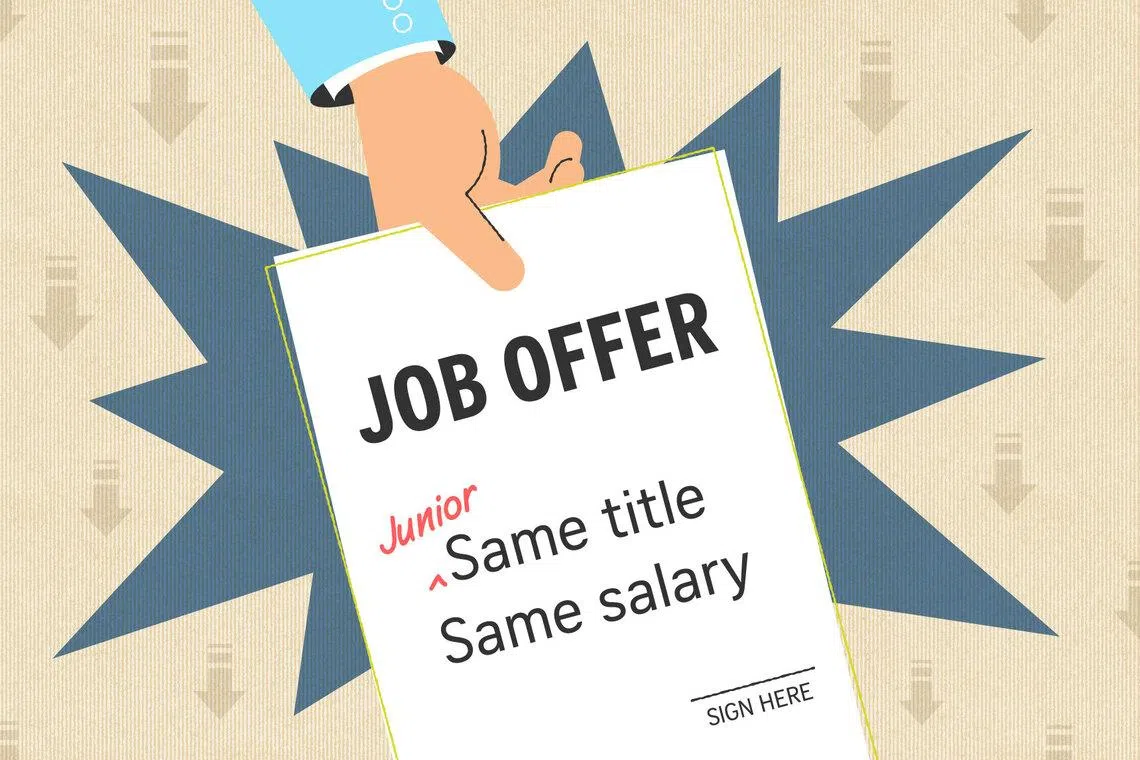
In this series, business journalist Timothy Goh offers practical answers to candid questions on navigating workplace challenges and getting ahead in your career. Get more tips by signing up to The Straits Times’ Headstart newsletter.
Titles are often less meaningful than people think they are – a “director” in one company can be very different from a “director” in another.
In hiring, experienced managers tend to look past titles and focus on scope, including the decisions you make and the outcomes you drive, said Mr Kevin Chan, chief executive of HR technology company Epitome Global.
There are several common reasons companies adjust titles. Sometimes it is structural – when organisations restructure, flatten layers or align roles across teams.
“In such cases, titles are recalibrated to fit a more consistent framework, even if the work itself has not changed,” said Mr Chan.
Companies may also be correcting earlier title inflation.
“During hiring booms, senior titles are often used to attract candidates. Over time, this creates misalignment internally, and companies reset titles to restore consistency,” said Mr Chan.
“The more important question is whether your scope has changed. If your responsibilities, autonomy and influence remain the same or have grown, this is likely a title correction, rather than a real step back.
“But if the change comes with a smaller remit, reduced visibility, or fewer opportunities to lead, then it may signal a genuine shift in how the company sees your role,” he added.
Ms Tong Liu, a certified senior professional at the Institute for Human Resource Professionals, said that titles and salaries are often managed independently, with the latter being tied to a job grade or compensation band.
“Title changes may arise from job architecture redesigns, levelling recalibrations or restructuring, and are sometimes a labelling adjustment rather than a demotion,” she added.
Still, titles can carry weight as they signal career level and can affect visibility, promotion eligibility and external perception.
“Before accepting such a change, employees should clarify whether their job grade has changed, whether their responsibilities and decision-making authority remain the same, and whether their progression pathway is affected,” said Ms Liu.
Mr Chan noted that long-term progression, ultimately, is driven less by titles and more by demonstrable capability.
“Professionals who continue to build real skills and take on meaningful scope tend to recover quickly from title changes,” he said.
“A title reflects your company’s internal structure. Your capability determines your market value.”

