Six of the world’s most advanced manufacturing sites are in Singapore – the highest concentration of such facilities in South-east Asia.
Spanning sectors from life sciences instruments and consumer goods to semiconductors, these facilities are key manufacturing nodes for leading companies Agilent, Coca-Cola, HP, Infineon, Micron and – the latest addition in September 2025 – GlobalFoundries.
They are part of the World Economic Forum’s (WEF) Global Lighthouse Network (GLN), a group of sites independently assessed and recognised for scaling Fourth Industrial Revolution (4IR) technologies – from artificial intelligence to advanced robotics – in ways that deliver proven results across productivity, sustainability and workforce development.
Since the network was launched in 2018, the number of WEF Lighthouses – as they are commonly described – has grown from 16 to 201 sites across 30 countries and 35 subsectors.
Manufacturers in the GLN network typically achieve return on investment (ROI) of two to three times within three years, and four to five times within five years. More recent cohorts are transforming even faster, reporting ROI within 10 to 20 months – around 25 to 50 per cent quicker than earlier pioneers.
Additionally, the latest WEF Lighthouses achieved, on average, a 40 per cent increase in labour productivity and nearly halved lead times, with successful use cases replicated across global networks far faster than before.
These facilities have moved beyond pilot projects to enterprise-wide implementation of advanced technologies, typically achieving significant improvements in metrics such as cost reduction, quality enhancement and environmental impact.
Their presence in Singapore shows how manufacturers can get support to adopt, apply and scale successful 4IR – or Industry 4.0 – technologies to drive efficiency and sustainability.
Learn more about the six WEF Lighthouses in Singapore.
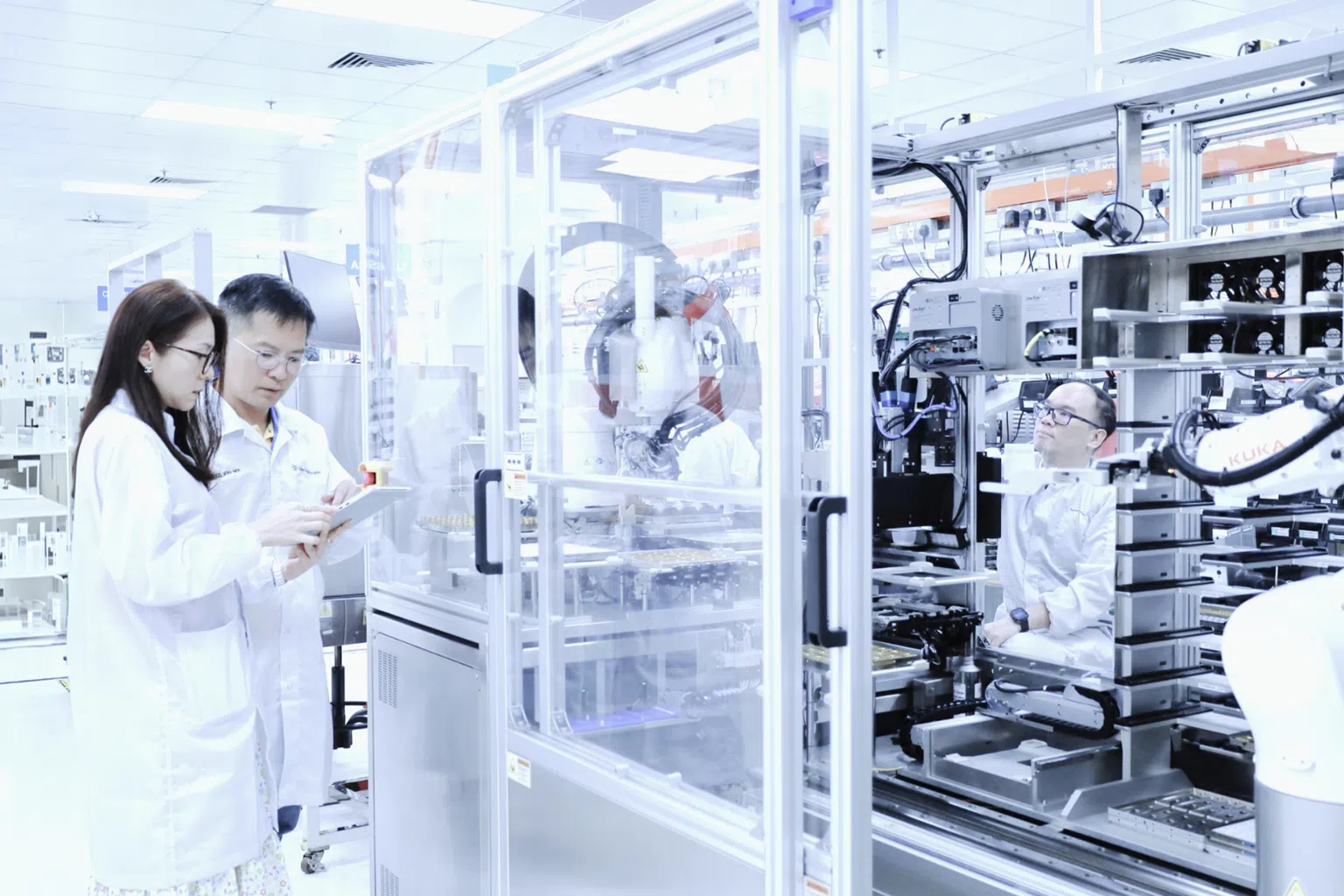
Employees at Agilent’s Singapore facility applying digital twin and AI solutions to advance precision manufacturing.
PHOTO: AGILENT TECHNOLOGIES
In 2022, Agilent Technologies was the first analytical and clinical laboratory technology company in the world to receive WEF Lighthouse designation with its Singapore facility.
The facility simplifies high-mix, high-precision instrument manufacturing by deploying digital twins, machine learning and AI to meet rising customer demand.
Over 150 IIoT (Industrial Internet of Things) stations with Agilent-designed AI algorithms were implemented for predictive testing. These systems learn from previous test results, identify patterns and facilitate automated testing.
Robotics perform highly complex tasks, cutting cycle time by 30 per cent, while AI-driven visual inspections optimise quality control.
By embracing 4IR technologies, the site has increased productivity by 60 per cent and output by 80 per cent, while advancing sustainability through renewable energy and upskilling its workforce into future-ready AI talent.
Read about how Agilent’s partnership with Singapore contract manufacturer ETLA has reduced manufacturing lead times.
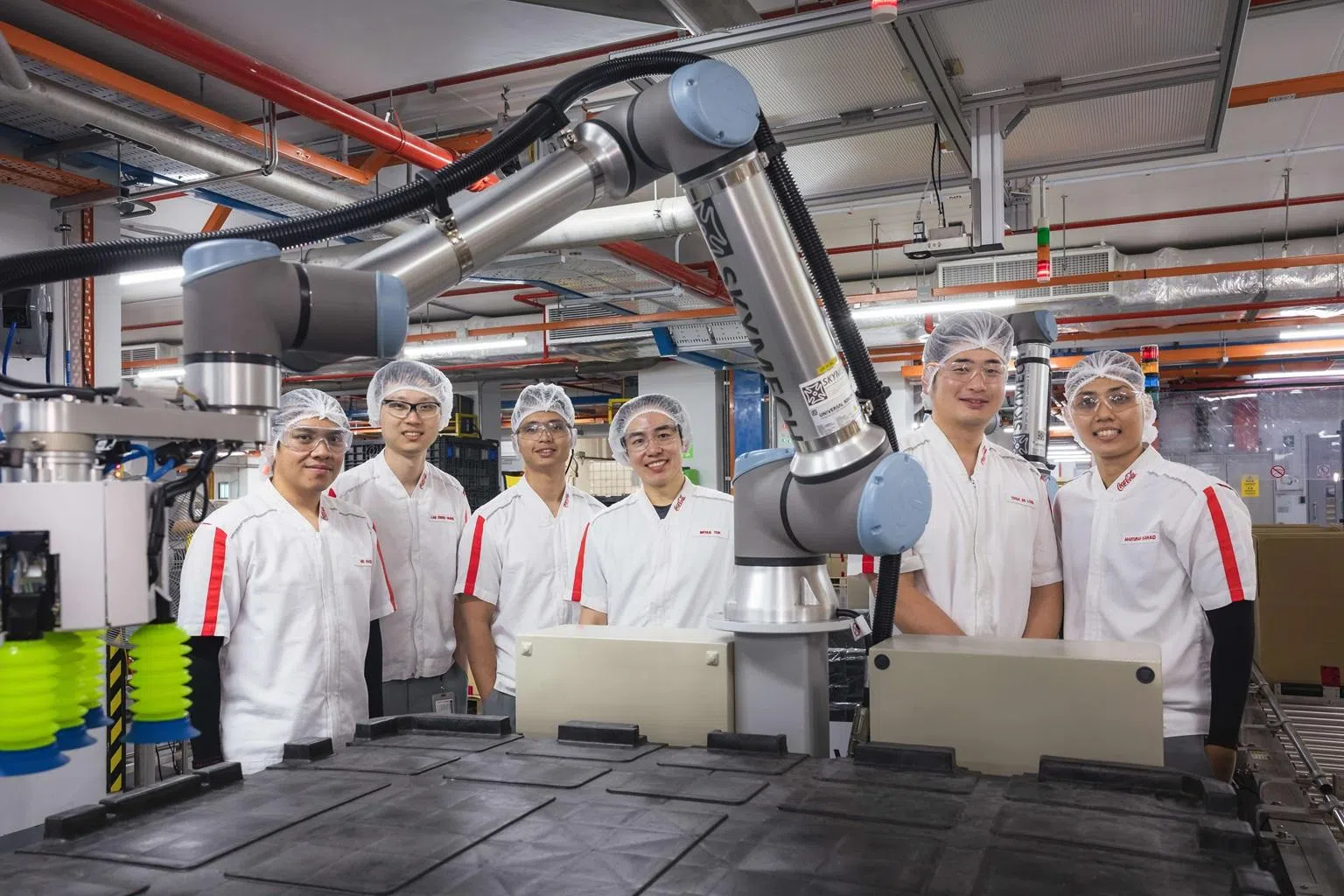
The core team at Coca-Cola’s Tuas plant driving digital innovation and sustainable manufacturing practices.
PHOTO: COCA-COLA
Coca-Cola’s concentrate manufacturing plant in Tuas was added to WEF’s GLN in 2024.
Facing rising demand and product variety, the site implemented AI-powered demand forecasting and production scheduling, alongside robotics in packaging and digital tools for complex runs.
The site also logged over 5,000 hours of training through Coca-Cola’s global digital academy and ran cross-site exchange programmes, enabling employees at every level to share and adopt best practices to sustain the new systems.
The efforts saw throughput increase by 28 per cent and labour productivity by 70 per cent. Inventory shortages fell by 80 per cent, with on-time deliveries improving by 31 per cent.
At the same time, indirect greenhouse gas emissions were reduced by 34 per cent.
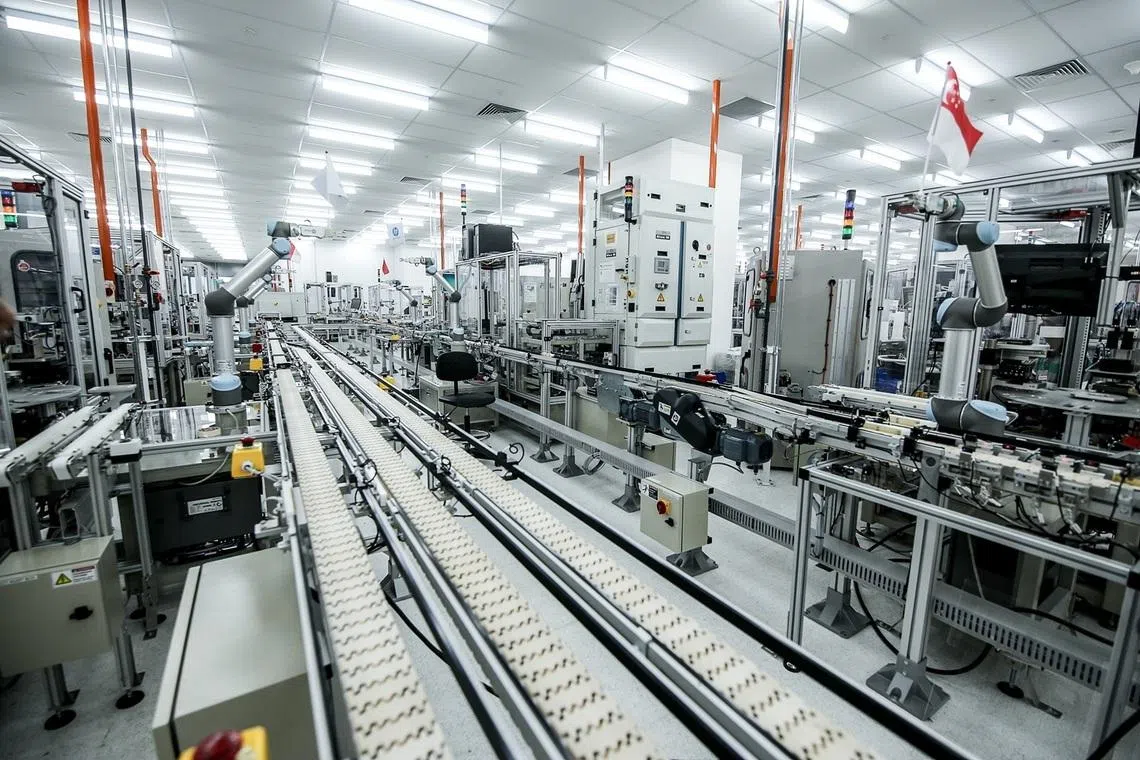
Falcon Line is HP Singapore’s most advanced manufacturing line.
PHOTO: HP INC
HP Inc’s Singapore facility earned the WEF Lighthouse recognition in 2021 for transforming a traditionally labour-intensive operation into a fully digitised, automated and data-driven production environment.
The company’s approach centred on four pillars: advance automation, digitalisation (VR/AR and IIoT), additive manufacturing and data analytics (machine learning and AI).
The WEF Lighthouse recognition is the culmination of innovations developed at the company’s Smart Manufacturing Application and Research Centre, set-up in 2017 to develop and implement new technologies into its manufacturing process.
HP Singapore’s manufacturing line, which produces printheads and cartridges for industrial, commercial and 3D printers, deploys robots and autonomous vehicles to relieve operators of repetitive and heavy tasks, while AI-enabled inspection systems detect print defects at a pixel level.
Predictive analytics and machine learning models are also optimising quality checks and line set-ups, lowering waste and improving precision. A plant-wide IIoT network now connects machines and sensors for real-time visibility, 24/7 monitoring and management of the line.
The line can also produce its own replacement parts using additive manufacturing, reducing waiting times for new parts from days to hours.
As a result, HP Singapore’s Falcon line recorded a 20 per cent reduction in manufacturing costs, and a 70 per cent improvement in both productivity and quality.
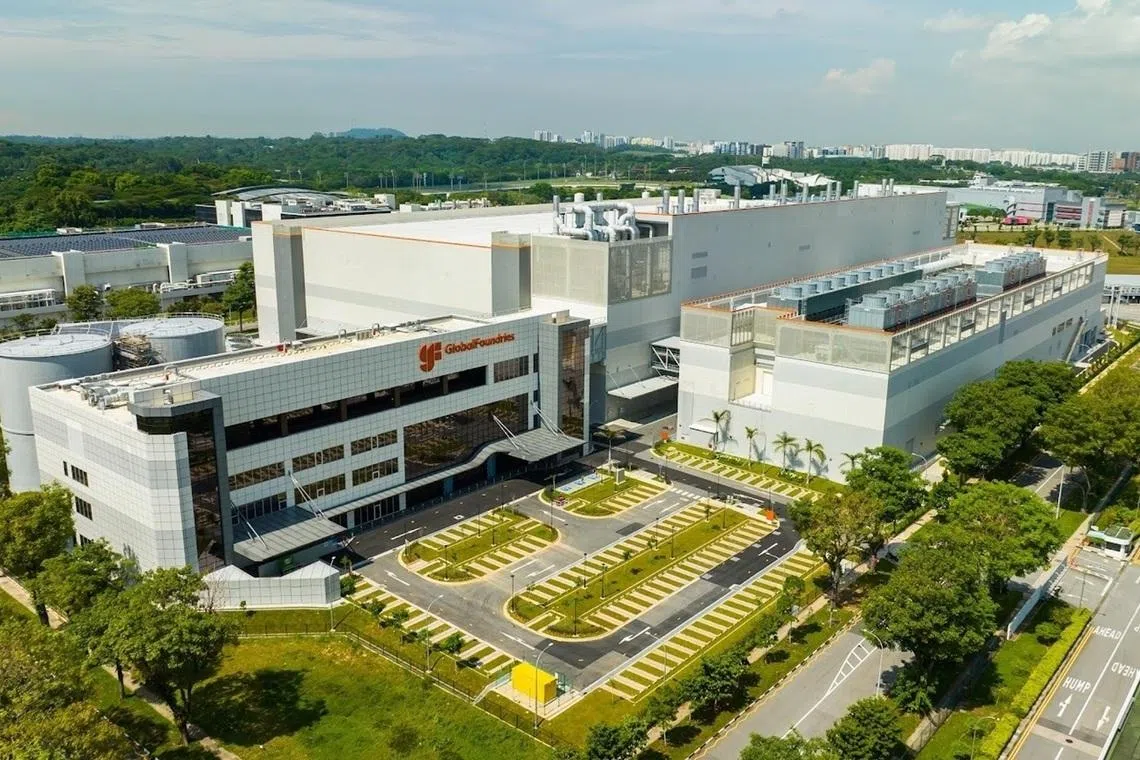
GlobalFoundries’ 300mm semiconductor fabrication plant in Singapore where over 60 AI- and data-driven solutions are transforming semiconductor production.
PHOTO: GLOBALFOUNDRIES
The 300mm semiconductor fabrication plant in Singapore operated by US manufacturer GlobalFoundries was recognised as a WEF Lighthouse in 2025 for its enterprise-wide adoption of digital and AI-enabled solutions.
The site deployed machine learning for predictive maintenance, quality control and workflow optimisation, while remote support tools reduced downtime and improved efficiency.
This accelerated GlobalFoundries’ ability to deliver differentiated, essential semiconductor chips that power AI growth and adoption while meeting the demands of fast-evolving markets such as mobile, automotive and IoT.
The digital transformation has also led to the creation of new roles, with employees advancing their capabilities in data-driven environments and stepping into leadership roles in smart manufacturing.
Since 2020, more than 60 transformation use cases have been scaled across the facility, supported by partnerships with universities and solution providers to co-develop smart manufacturing solutions and grow Singapore’s pool of digital talent.
These have resulted in an increase in labour productivity by 40 per cent and cut new product prototyping time by 30 per cent, reinforcing GlobalFoundries Singapore’s role as a key node in the company’s global semiconductor footprint.
Learn about GlobalFoundries fab expansion in Singapore.
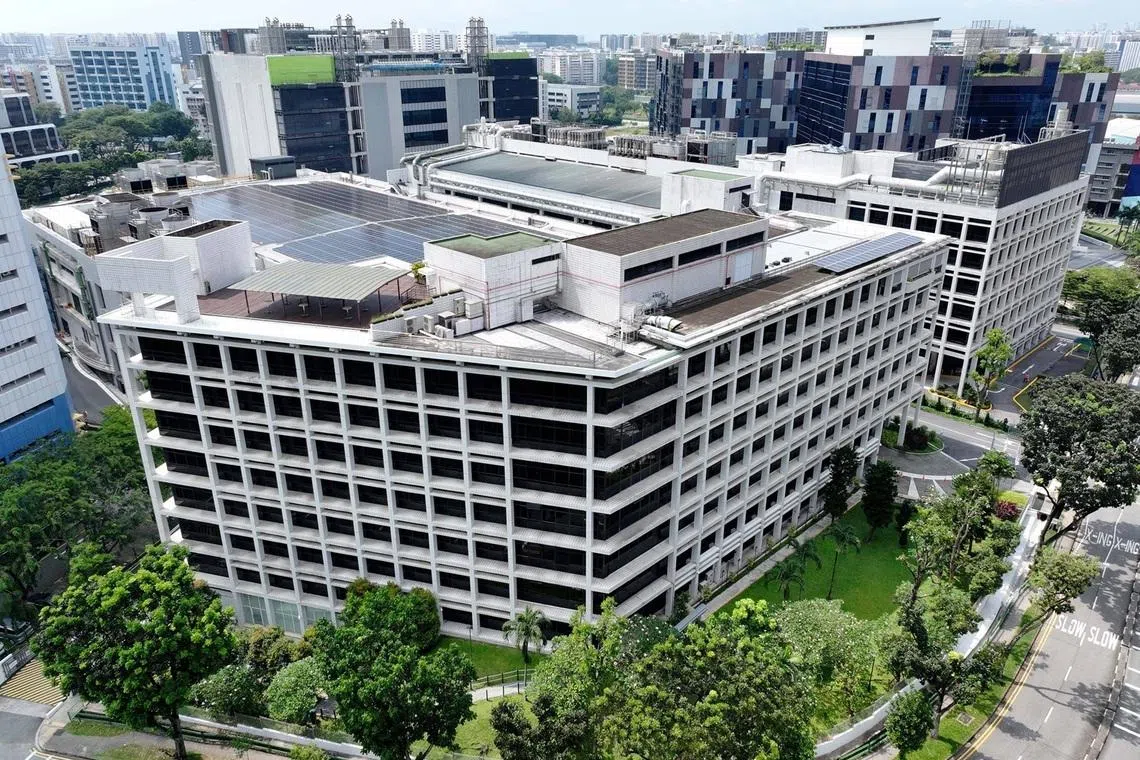
Infineon’s back-end manufacturing plant in Singapore where AI, robotics and advanced analytics are driving greater efficiency and agility in semiconductor production.
PHOTO: INFINEON
The back-end manufacturing plant of Infineon Singapore – the Asia-Pacific headquarters of the German semiconductor manufacturing and design company – achieved WEF Lighthouse certification in 2020 for its focus on advanced manufacturing within the semiconductor value chain.
The facility is a WEF Lighthouse for the successful transformation of high-volume, high-mix manufacturing through the use of Industry 4.0 tools.
The site has integrated AI, robotics and advanced analytics to deliver significant improvements in productivity and quality, increasing Infineon’s agility in responding to dynamic market demands. All production processes in the factory – from production order scheduling to material transfer – are now fully automated.
Today, the plant is being further developed towards autonomous manufacturing.
Read more about how Infineon is furthering co-innovation in Singapore.
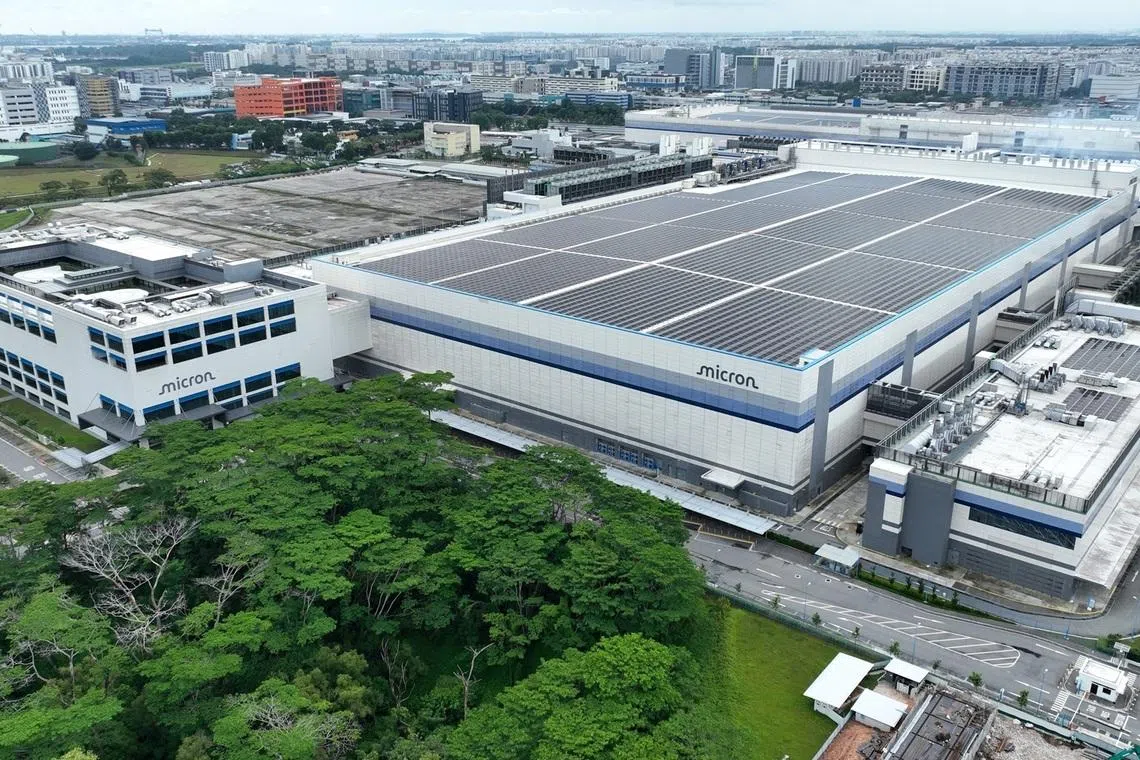
Micron’s Singapore facility, designated a WEF Lighthouse and Sustainability Lighthouse, is central to the company’s global NAND flash memory operations and green manufacturing efforts.
PHOTO: MICRON TECHNOLOGY
Micron’s Singapore facility was among the first in the country to receive WEF Lighthouse recognition in 2020. It subsequently earned additional recognition as a Sustainability Lighthouse – a designation for factories that lead in sustainable manufacturing – the first front-end semiconductor fab globally to obtain two designations.
The Singapore site’s fabs and assembly and test operations form Micron’s NAND Center of Excellence, supporting the US-based company’s global production of NAND flash memory – a type of storage technology used in every application from smartphones to data centres.
The semiconductor fabrication facility implemented a comprehensive suite of advanced technologies, integrating big data infrastructure with IIoT systems to enable AI and data science solutions across its operations.
Advanced analytics to optimise processes with original equipment manufacturers reduced the time needed to ramp up new products by 50 per cent, while deep-learning optical-defect detection systems created a 2 per cent yield improvement.
Between 2018 and 2021, output increased by 270 per cent while resources consumed per gigabyte produced fell by 45 per cent.
These results were enabled by a robust big-data infrastructure, AI-powered yield improvement, and smart water and energy systems.
Read about Micron’s new advanced packaging facility in Singapore.
-
About 35 per cent of tertiary graduates each year come from Stem (science, technology, engineering and mathematics) disciplines.
-
Employees can upskill through schemes such as SkillsFuture and Career Conversion Programmes, while students gain industry exposure through Work-Study pathways and the ITE Technician Support Scheme.
-
JTC Corporation – Singapore’s lead government agency for developing industrial infrastructure – manages around 86 per cent of Singapore’s industrial land, with estates and business parks strategically located near key transport hubs.
-
Specialised parks such as Wafer Fab Park and Tuas Biomedical Park offer built-in utilities for semiconductor and life sciences firms.
-
The Jurong Innovation District enables companies to co-locate research and development (R&D), training and production in one hub.
-
Companies can also collaborate with research institutes such as the Agency for Science, Technology and Research (A*STAR) to test new technologies and co-develop solutions with researchers, accelerating industrial deployment.
-
Singapore’s advanced manufacturing ecosystem makes it easier for companies to set up, operate and innovate.
-
Strong intellectual property protection gives firms the confidence to base high-value R&D here.
-
Efficient regulations and well-connected supply chains support smooth operations and access to global markets.
-
A strong base of global engineering, procurement and construction firms and technology providers ensures access to the latest design and automation expertise.
-
Public-private platforms such as the National Additive Manufacturing Innovation Cluster and the National Robotics Programme allow firms to pilot and scale Industry 4.0 solutions in real-world conditions.
-
National initiatives such as the Singapore Green Plan 2030 and the $10 billion Future Energy Fund support the country’s net-zero ambitions by 2050.
-
Manufacturers based in Singapore can tap into a diverse ecosystem of more than 140 carbon services and trading firms, offering expertise in everything from carbon accounting to advisory and verification – supporting their move towards cost-effective sustainable operations.
Download the Manufacturing the Future from Singapore guide to learn how Singapore supports global manufacturers seeking growth and impact.