


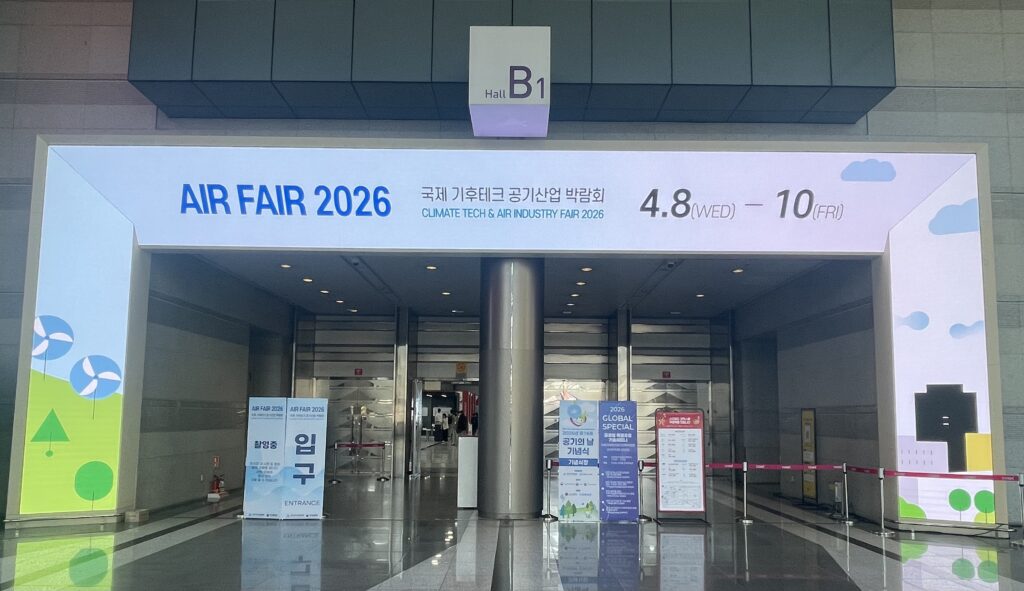
Held from April 8 to 10, 2026, at COEX in Seoul, AIR FAIR 2026 – International Climate Tech & Air Industry Expo demonstrated that air is no longer just part of the natural environment—it has become a full-fledged industry and an emerging investment opportunity. The exhibition featured a wide range of innovations, including air purifiers, ventilation systems, industrial dust collection equipment, indoor air quality monitoring devices, eco-friendly fuels, carbon reduction technologies, and AI-based air management solutions.
In the past, the “air industry” might have been associated with just a few types of air purifiers. Today, however, it has expanded into a vast ecosystem that connects climate tech, energy, construction, healthcare, semiconductors, and mobility industries.
At its core, the air industry refers to technologies and businesses dedicated to making air cleaner, safer, and more efficiently managed. This includes sensors and monitoring systems that measure indoor and outdoor air quality, filtration and dust collection technologies that remove fine particles and harmful gases, heating, ventilation, and air conditioning (HVAC) systems, air sterilization and disinfection technologies, carbon capture and eco-friendly fuels, and AI-powered air quality management platforms.
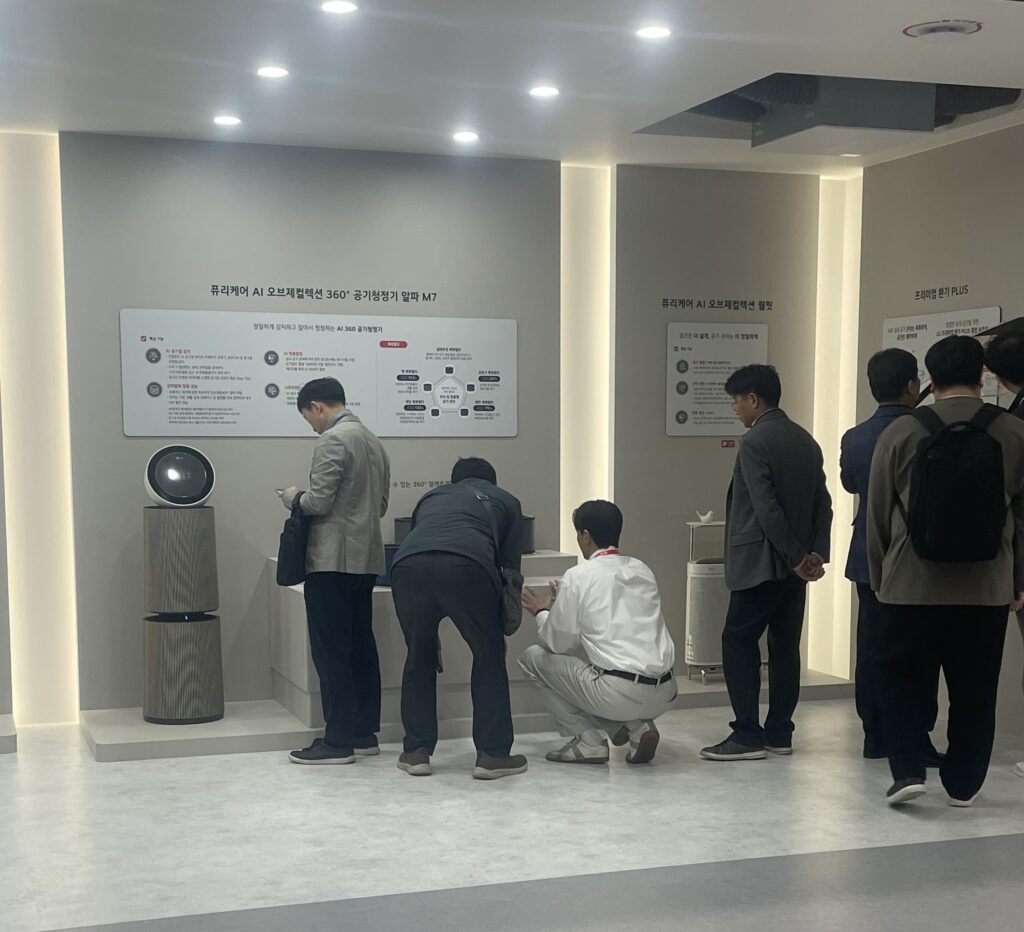
In particular, the COVID-19 pandemic fundamentally changed how people perceive air. Viruses, ultrafine dust, yellow dust, radon, volatile organic compounds (VOCs), and carbon emissions have all highlighted that air quality is directly linked to health, productivity, and even corporate competitiveness. From schools and hospitals to offices, subways, data centers, and semiconductor fabs, creating “clean air” has become essential across all environments.
Today, the air industry can largely be divided into three main sectors.
The first is the consumer-oriented indoor air market. This includes air purifiers, dehumidifiers, humidifiers, ventilation systems, and clothing care appliances used in homes and offices. Recently, these products have evolved beyond simple dust removal to systems that analyze carbon dioxide levels, humidity, fine dust, bacteria, and odors in real time and automatically adjust indoor environments.
The second is the industrial air environment sector. Advanced manufacturing facilities such as semiconductor, battery, and biotech plants require extremely clean air—even a tiny particle can reduce production yield. As a result, demand is rapidly growing for cleanrooms, high-performance filters, industrial dust collectors, hazardous gas removal systems, and air quality monitoring solutions. AI- and sensor-integrated air management systems are becoming critical infrastructure in smart factories.
The third sector is the climate tech-driven atmospheric environment industry. This includes technologies aimed at reducing pollutants and carbon emissions from cities, industrial complexes, and transportation systems. Key examples include carbon capture, utilization, and storage (CCUS), eco-friendly fuels, air purification systems for electric and hydrogen vehicles, and urban fine dust reduction facilities. More recently, Direct Air Capture (DAC) technologies—which extract carbon dioxide directly from the air for reuse—have emerged, positioning the air industry as a central player in addressing the climate crisis.
These trends were clearly visible at AIR FAIR 2026. The exhibition brought together not only traditional air purifier manufacturers but also AI startups, sensor companies, green building firms, carbon reduction technology providers, and industrial ventilation and filtration companies. This convergence signals that air management is no longer confined to a single sector—it is becoming a foundational technology across future industries.
Looking ahead, the future of the air industry can be summarized by three key themes.
First is AI. Future air management systems are likely to shift from manual control to fully automated environments optimized by AI. These systems will analyze air quality data in real time and create optimal conditions. For instance, offices could automatically adjust ventilation and climate control based on occupancy levels, outdoor pollution, and indoor carbon dioxide concentrations. Hospitals could use AI to manage airflow in high-risk zones, while factories could instantly activate systems when abnormal air conditions are detected.
Second is the expansion into a data-driven industry. Air will no longer simply be something to purify—it will become a valuable source of data. Smart cities around the world are already deploying air quality sensors to collect data on fine dust, temperature, humidity, and harmful gases. This data can be applied to building operations, transportation policies, healthcare, insurance, and even real estate valuation. Ultimately, companies that control air data platforms are likely to lead future markets.
Third is climate change and carbon neutrality. As governments strengthen carbon emission regulations, the air industry is becoming essential for compliance. In the future, buildings and factories may not even be allowed to operate unless they meet certain air quality and carbon reduction standards. Consequently, demand for high-efficiency ventilation systems, carbon capture technologies, eco-friendly HVAC systems, and energy-efficient filtration solutions is expected to grow significantly.
Experts predict that the air industry will increasingly converge with the energy, healthcare, and construction sectors to create entirely new markets. For example, future residential developments may offer “clean air as a service” alongside housing. Similarly, vehicles may evolve beyond transportation into mobile spaces that actively manage and optimize indoor air quality.
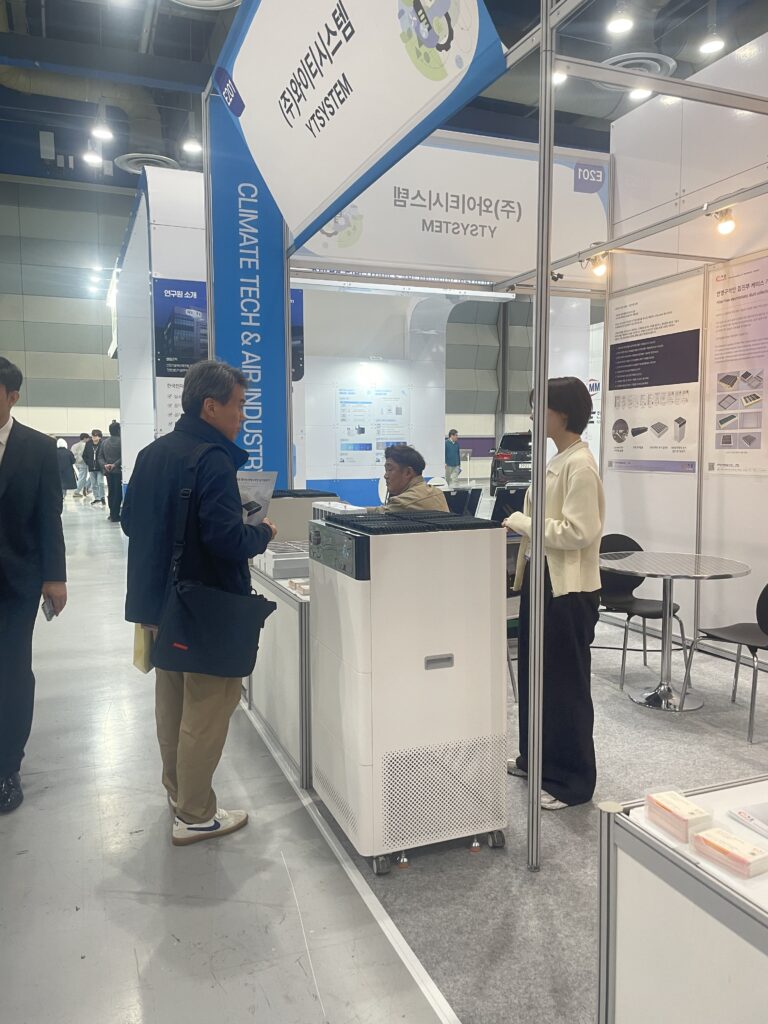
The importance of the air industry extends beyond environmental protection—it represents one of the fastest-growing future industries.
First, air-related challenges are not going away. Fine dust, climate change, urbanization, and industrialization will persist, and as populations concentrate in cities and large-scale data centers and factories expand, the demand for clean air will only increase. This makes the air industry a structurally growing market rather than a passing trend.
Second, the industry is closely tied to government policy. Countries are strengthening regulations on carbon neutrality, indoor air quality standards, green building certifications, and environmental controls in industrial settings. As regulations tighten, demand for related technologies and products will inevitably rise. Just as solar energy and electric vehicles grew through policy support, the air industry is poised to follow a similar path.
Third, the investment landscape is highly diverse. The air industry is not limited to air purifier manufacturers—it spans filter material companies, sensor and semiconductor firms, HVAC providers, smart building companies, AI platforms, carbon capture technology developers, and clean energy businesses. Investing in the air industry, therefore, is effectively investing in the future of manufacturing, climate tech, smart cities, and healthcare.
Above all, the air industry is fundamentally about human life and health. Clean air is no longer a luxury—it is becoming essential infrastructure. Just as electricity and the internet have become indispensable to modern society, companies that can deliver clean air technologies and services are likely to become the key players of the future.
AIR FAIR 2026 showcased this transformation. Air—once invisible and taken for granted—is now technology, industry, and investment. In the years ahead, nations and companies that manage air effectively will gain a significant competitive edge. And now is the moment to pay attention to this emerging shift.”
SALLY LEE
US ASIA JOURNAL

