


Follow our live coverage here.
LONDON – Shipowners are placing “huge volume requests” for insurance cover as they look to transit the Strait of Hormuz following the US-Iran ceasefire deal, according to broker McGill and Partners.
With the increased demand from the market also comes “a pronounced rate correction”, said Mr David Smith, head of marine at the London-based firm.
He added that despite the ceasefire agreement, “heightened war conditions still remain and the Strait of Hormuz is still classified as a very-high-risk area”.
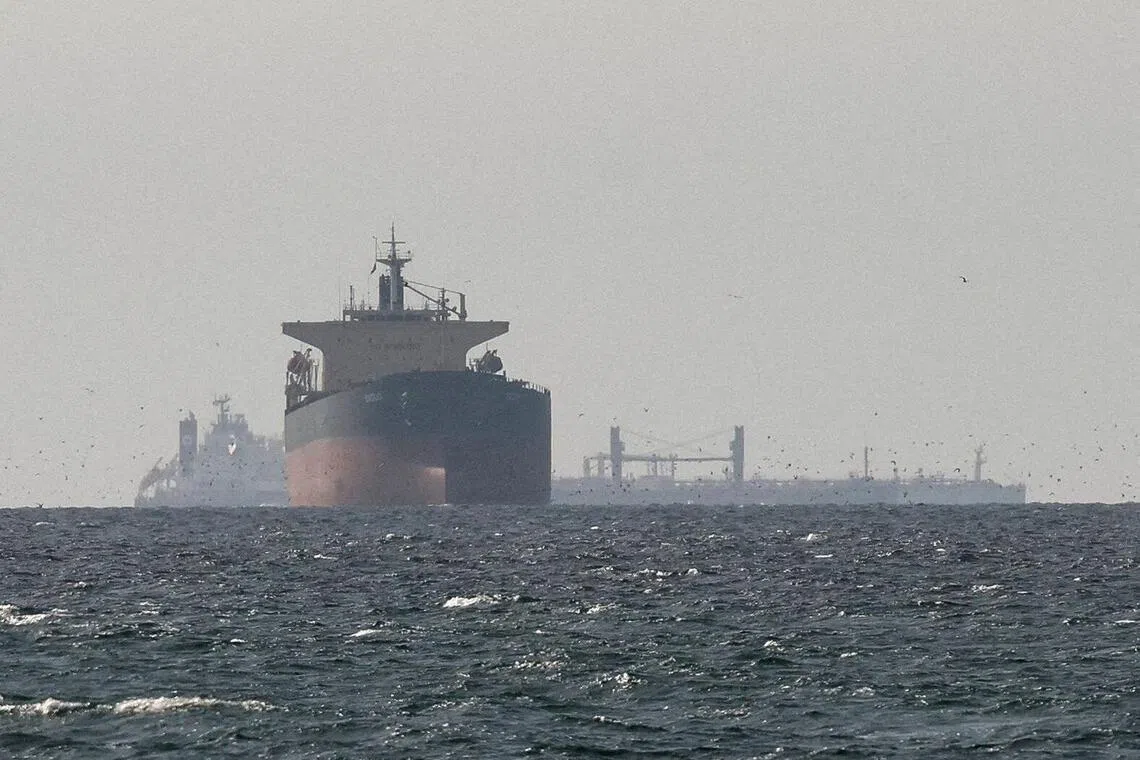
The Strait of Hormuz remains largely blocked as shipowners try to understand if they can safely transit the vital waterway following a fragile ceasefire between the US and Iran.
This is as continued fighting in the Middle East, punctuated by Israeli strikes in Lebanon, threatened to derail the US-Iran detente even as the two sides signalled that they could soon hold talks to end the six-week conflict.
“The latest news on the ceasefire is positive news and will, hopefully, ease the passage through the Strait of Hormuz and for ships more generally in the region,” said Mr Andrew James, managing director of marine at broker Arthur J. Gallagher & Company.
“Of course, it is very early days,” Mr James said, but “underwriters are already recognising the ceasefire and reducing rates for some risks”.
He added that insurers “will continue to be understandably cautious as they watch how this plays out”.
Meanwhile, Japan’s Mitsui OSK Lines (MOL), one of the world’s largest shipping companies, said it will need to scrutinise details of the ceasefire agreement and its implementation before allowing its vessels to test the Strait of Hormuz.
“How it is implemented in the water – that is something we really need to understand,” MOL president Jotaro Tamura said in an interview on Bloomberg Television.
MOL’s priority is the safety of each vessel, he said, adding the company is working with the Japanese government.
MOL operates a fleet of more than 900 vessels, with several ships stranded in the Persian Gulf since the US and Israel began strikes on Iran over a month ago.
Japanese Prime Minister Sanae Takaichi on April 7 reiterated a request to secure the safe passage of Japanese vessels through Hormuz.
A ship partly owned by MOL, carrying liquefied natural gas, passed through the Strait of Hormuz last week, the first time a vessel with Japanese ties successfully made it through the waterway.
While some vessels were able to pass through, that is based on the ship’s “individual situation”, Mr Tamura said.
The company needs to see “sustainable stability” to continue sending vessels, he added. BLOOMBERG

