


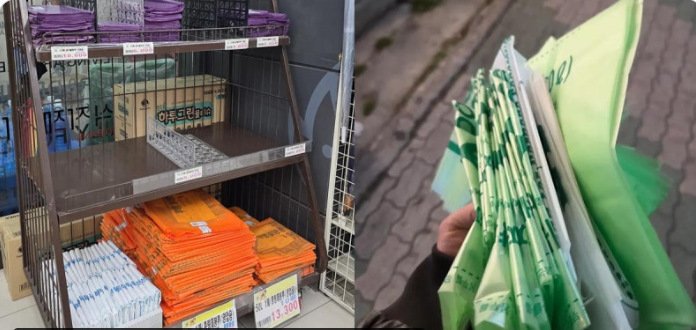
In Korea, there are a series of cases of volume-based bags being sold out, and in Japan, the phenomenon of hoarding toilet paper is being reproduced.
According to the Japanese Economic Daily, the Nikkei POS data analysis showed that toilet paper sales in Japan increased 38% year-on-year for the week of March 16-22. The previous week, March 9-15, the growth rate reached 59%, the highest weekly level in the last two years.
Some consumers who recalled the ‘oil crisis’ in the 1970s appear to be buying toilet paper amid the risks in the Middle East, the Japanese Economic Daily said.
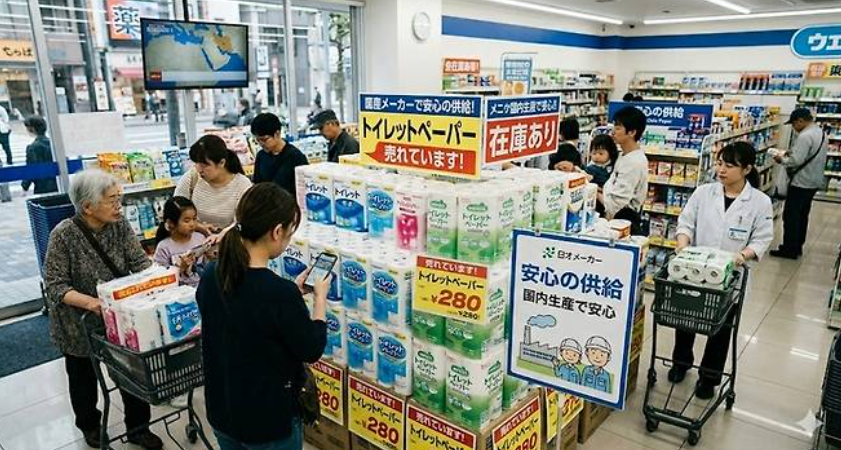
In Japan, toilet paper was sold out nationwide when the news of a surge in crude oil prices during the first oil crisis in 1973. Similar hoarding was also repeated in the early stages of the Great East Japan Earthquake in 2011 and the spread of COVID-19 in 2020.
In response, Fortune, a U.S. business magazine, said, “The hoarding is very similar to the bank run, making it difficult to know the exact starting point,” adding, “If someone posts on social networking services (SNS) that ‘the stock of toilet paper will run out due to the war with Iran,’ people will start purchasing all at once.”
This trend is not limited to Japan, but is also appearing in Korea. As concerns over supply and demand of naphtha, a vinyl raw material, are raised, the demand for vinyl products such as volume-based bags is rapidly increasing.
According to E-Mart, sales of pay-as-you-go bags increased 258.2% over the past 10 days from March 22 to 31 compared to the same day of the previous year. Convenience store CU also reported that sales of pay-as-you-go bags increased 252.4% year-on-year from March 23 to 31.
The government and the retail industry are currently in a position that there is enough stock, but some convenience stores and large discount stores have sold out of volume-based bags.
“As a result of carefully checking local governments and production plants across the country, more than half of local governments have already secured more than six months’ worth of supplies,” Kim Sung-hwan, Minister of Climate, Energy and Environment, said on Facebook on the 30th of last month. “There is no problem in supplying raw materials for more than a year because they also have enough capacity to use renewable raw materials.”
JULIE KIM
US ASIA JOURNAL

