


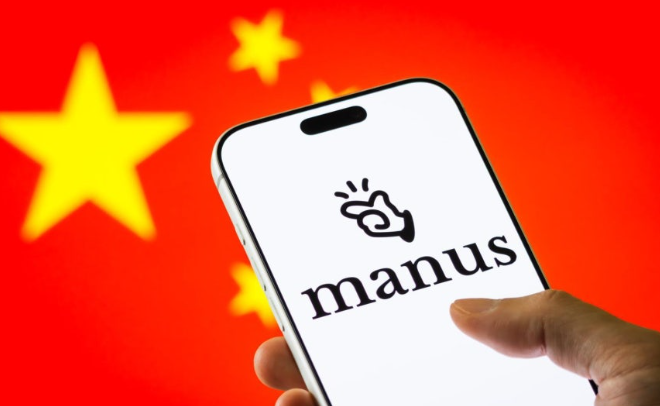
According to the Wall Street Journal and the Financial Times, the Chinese authorities summoned Ma’nus co-founder Xiaohong and Chief Scientist Zi Yatao to Beijing early this month to investigate the case. They are said to be restricted from leaving the country. No official investigation or specific charges have been disclosed. Both of them are co-founders and are in charge of key decision-making at the company.
Authorities are reportedly looking into Meta’s $2 billion acquisition of Manus for violating foreign investment reporting regulations.
In December last year, Meta conducted a deal to acquire Manus based on its Singaporean subsidiary. It is a large investment to secure Meta’s AI competitiveness. However, some observers say that the survey could affect the terms of the transaction or future operations.
Manus is a startup that has developed AI agent technology that performs tasks without human intervention and provides functions such as file creation, application construction, and data analysis. Founded in China, Manus moved its headquarters to Singapore last year.
This issue reflects China’s technology control stance.
China has been tightening regulations that restrict the overseas transfer of core technologies. When discussing the sale of TikTok, he included recommendation algorithms in the export control list and said that it would be difficult to transfer technologies without government approval.
Manus also seems to have been subject to the authorities’ review in that the technology developed in China is transferred through overseas subsidiaries.
The Manus case is also interpreted as an example that reveals the limitations of the recently spread so-called “Singapore Washing” strategy.
The term began to be used to refer to the flow of Chinese companies moving their headquarters to Singapore to avoid US sanctions around 2025. In fact, some companies have been promoting investment attraction and global business expansion at the same time through their Singaporean subsidiaries.
Manus has been considered a prime example of this strategy. However, this incident has highlighted the difficulty of avoiding regulations as long as the technology’s development base is in China, even if the corporation is moved overseas.
The United States is also strengthening control over China-related AI technologies and capital flows.
The U.S. Treasury Department introduced a “regulation on investment in China” in 2024, restricting domestic capital from investing in high-tech fields such as AI. In a related development, it was reported that the U.S. government made inquiries to Benchmark, an investment firm of Manus, to confirm whether the regulations were applied or not.
Politicians are also concerned that the influx of Chinese-based technology into U.S. platforms could lead to security risks.
Eventually, AI companies are in a situation where they have to consider both China’s technology export regulations and the US’s investment and security regulations at the same time.
This issue shows that the competitive structure of the AI industry is shifting from technology-oriented to country-oriented.
Companies’ investments, acquisitions, and business expansion are directly affected by where the technology was developed and what regulations it was subject to. The Manus case demonstrates how these changes actually affect business transactions.
JENNIFER KIM
US ASIA JOURNAL

