


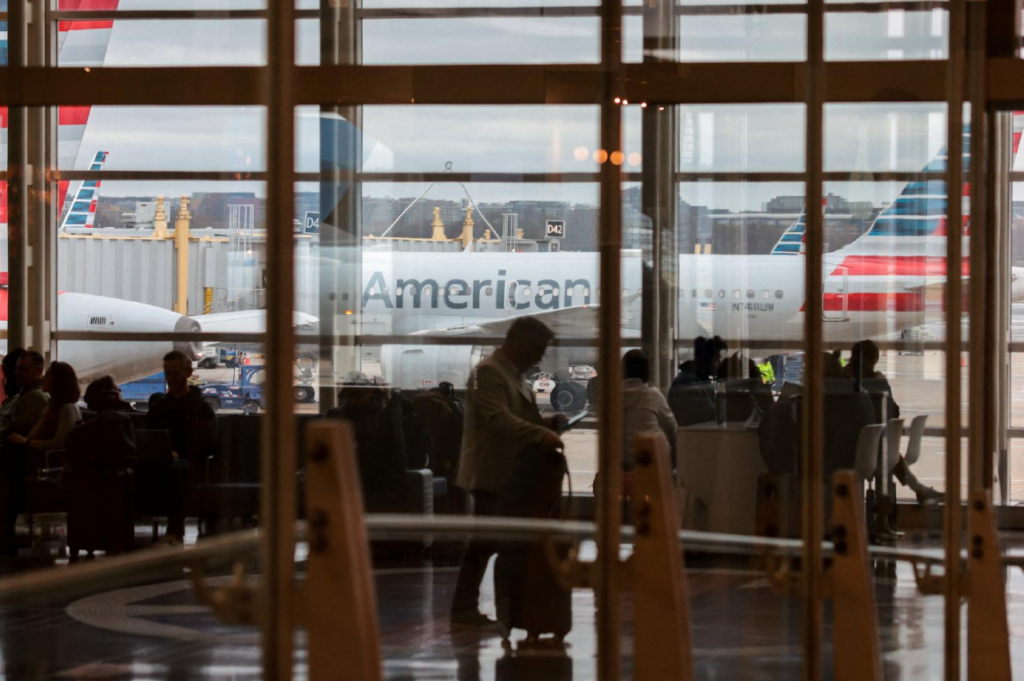
Passengers who delayed their trips after U.S. President Donald Trump’s tariff policy last year are traveling again this year. The performance of major U.S. airlines has risen significantly in recent years despite the recent war in Iran and the impact of the U.S. winter storm.
According to the British Financial Times (FT), the top executives of Delta Air Lines, United Airlines and American Airlines said at the JPMorgan Industrial Conference held on the same day that passenger demand for tickets has soared recently. Airlines predicted that the price of jet fuel will almost double due to the blockade of the Strait of Hormuz, which will reduce profits by $400 million each in the first quarter, but expect the impact of the surge in demand for tickets to be greater.
Scott Kirby, CEO of United Airlines, said that all 10 weeks of reservation performance this year have been in the top 10 in its history. Delta Air Lines also recorded five of its biggest sales in 10 days since the U.S. and Israel’s attacks on Iran began, and last week’s sales rose 25% year-on-year.
Analysts say that travel demand, which has slowed down due to tariffs and immigration policies since President Trump took office last year, has exploded this year.
Joe Esposito, Delta Air Lines’ chief executive officer, said, “Due to President Trump’s influence, everything, including spring break and transatlantic travel reservations, has stalled this time last year. Passengers who were reluctant to fly last year seem to be trying to make up for lost time.”
American Airlines CEO Robert Isom said he raised his forecast for sales growth to more than 10% in the first quarter, explaining, “This is the largest year-on-year record in the company’s history.” He also explained, “8 of the top 10 days of sales reservation in the company’s history and 8 of the top 10 weeks of sales were concentrated in the quarter.”
It is analyzed that demand for tickets has surged mainly among the wealthy, who are less sensitive to price fluctuations. According to Delta Air Lines, premium passengers, who account for about 90 percent of sales, were not significantly affected by the increase in ticket prices due to the Iranian crisis. In fact, it was analyzed that U.S. airlines also actively attracted high-income customers through customer loyalty programs and credit card alliances had a positive impact. However, low-cost carriers (LCCs), which do not have large margins and are mostly price-sensitive customers, are expected to be directly hit by the war in Iran.
Experts analyzed that the effect of customers’ advancement of reservations also affected the recent surge in demand. They expect airlines to raise ticket prices more rapidly in the future due to the increase in jet fuel, so they hurry to purchase them.
However, some experts have also diagnosed that they underestimate the impact of the energy crisis caused by the war in Iran on the aviation industry. Some say that the partial shutdown of the U.S. federal government (temporary suspension of work), such as the suspension of payment of airport workers from last week, could cause an increase in airport waiting times or security vulnerabilities, putting a heavy burden on the demand for tickets.
SAM KIM
US ASIA JOURNAL

