


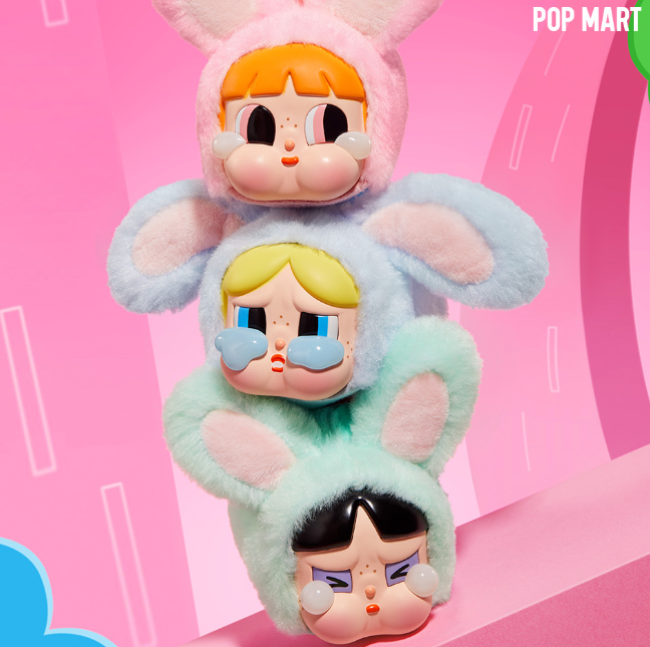
Pop Mart, a Chinese toy company that has created a craze for collecting toys with “La Bubu” dolls, is aiming for the next success with a new character. While the popularity of La Couples, which once heated up to the resell market, has subsided somewhat, La Couples’ “brother” characters such as “Twinkle Twinkle,” “Sculpanda,” and “Crybaby” are quickly gaining a fan base, becoming a new growth engine.
According to Bloomberg, Twinkle Twinkle, released by PopMart in the second half of 2024, has emerged as one of the fastest-growing characters in the company, with sales of 390 million yuan worldwide in the first half of 2025. Morgan Stanley estimated that the character’s sales could reach half the level of Lavoiselle’s sales in China by 2026. PopMart’s sales structure is also changing. According to Huatai Securities, the proportion of Crybaby and Twinkle Twinkle among PopMart’s sales has increased since the fourth quarter of last year. Twinkle Twinkle and Crybaby are also popular in the Southeast Asian market, accounting for 28% and 51% of the top-selling products of Thai and Indonesian pop mart TikTok shops from December 11 to 28 last year, respectively.
These characters are also gaining a premium in the resell market. On China’s resell platform Chendao, Twinkle Twinkle products are often traded at higher prices than the official price, while Crybaby’s “Vocation Mode On” series stuffed dolls are sold at 72 percent higher prices than the official price. In the U.S., Skullpanda is ranked second in the IP of Pop Mart, and its recent collaboration with Hasbro’s “My Little Pony” received hundreds of thousands of “likes” on social networking services (SNS), Bloomberg reported.
PopMart’s strategy is to continue the collective toy craze through these characters. Over the past year, PopMart accelerated the launch of new products centered on new characters and also launched a crossover series that combines multiple IPs. It also strengthened marketing such as pop-up events and collaboration campaigns.
Wang Ning, founder and CEO of Pop Mart, has emphasized that the company is not just a single character success story. “Our goal is to build a global platform for designer Toy IP,” he said in an interview with China Central Television (CCTV) last year. “As Pop Mart is trying to grow into a global IP powerhouse, it will continue to diversify across its IP and licensing businesses,” said Jeff Zhang, an analyst at an investment research firm. “We will continue to release new IPs to reduce dependence on LaBubu.”
However, La Boo is still at the heart of Pop Mart’s business. Pop Mart sold more than 400 million toys in 2025, about a quarter of which were from the Monsters series featuring La Bubu.
Sammy Shih, a consumer analyst at Deutsche Bank, said La Bubu is still a “core sales strategy” of Pop Mart, accounting for more than half of its overseas sales and more than 70 percent of its sales in some Western markets. “If it weren’t for the popularity of La Bubu, brand awareness and sales of other IPs overseas would not have reached the current level,” he said. Some analysts say that such a highly dependent structure on certain characters such as La Bubu could be a risk factor. La couple gained huge popularity in 2025 and led the overseas expansion of Pop Mart from the U.S. to Australia, but as supply increased and fake dolls spread, the resell premium decreased and the craze somewhat faded.
According to Bloomberg’s Second Mezzer data, the sales growth rate of Pop Mart in the U.S. was 40% year-on-year in February, a significant slowdown from the previous month (130%). Pop Mart shares listed on the Hong Kong stock market fell about 40% from their peak in August last year.
SALLY LEE
US ASIA JOURNAL

