


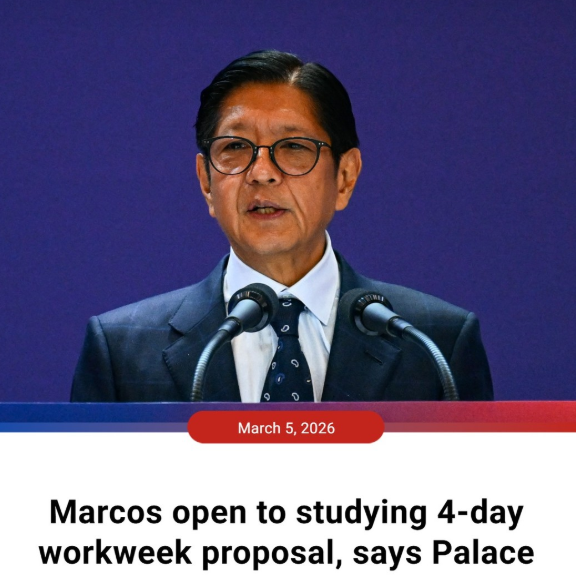
According to AFP, Philippine Inquirer, President Ferdinand Marcos Jr. announced that a four-day work week would be implemented by government agencies as a temporary measure to mitigate the economic impact of armed conflict between Iran, Israel and the United States.
Accordingly, the Philippine government will implement a four-day work week from the 9th, excluding ministries that provide emergency services or essential services such as police and firefighters, and institutions that provide front-line public services.
President Marcos then instructed all government agencies to reduce fuel and electricity consumption by 10-20%. In addition to training and teamwork activities for official purposes, “office meetings that can be conducted online” were also prohibited.
The Philippines imports most of its crude oil from the Middle East and relies on fossil fuels, including oil, for the majority of its electricity production.
“We are victims of a war that we have not chosen,” Marcos said in a statement. “We can decide for ourselves how to protect the people of the Philippines.”
In Philippine politics, there are voices that private companies should also join efforts to mitigate the impact of rising oil prices.
“Predicting possible situations and taking early action will strengthen the resilience of the country if the situation worsens,” Senator Francis Escudero said in a statement, urging private companies to also implement a four-day work week, or flexible work week.
On the other hand, Ferdinand Ferrer, president of the Philippine Chamber of Commerce, said, “The manufacturing industry has been operating with limited resources, and further reducing the number of working days could disrupt compliance with the delivery schedule.”
SAM KIM
US ASIA JOURNAL

