


With Iran’s Islamic Revolutionary Guard Corps (IRGC) moving to block the Strait of Hormuz, Asian economies that rely heavily on Middle Eastern crude oil—including China, Japan, India, and countries across Southeast Asia—are bracing for severe disruptions to energy supplies and logistics.
The Strait of Hormuz is one of the world’s most critical energy chokepoints, accounting for roughly 20% of global seaborne oil shipments. According to Japan’s Yomiuri Shimbun, about 80% of the crude oil passing through the strait is bound for Asia, including China and Japan.
If the blockade drags on, the entire region could face serious energy security challenges.
China and Japan are closely monitoring developments in the Middle East while scrambling to formulate countermeasures.
India, which recently slashed imports of Russian crude and significantly increased its dependence on Middle Eastern oil, is reportedly considering resuming purchases from Russia as the situation grows increasingly urgent.
As the world’s largest crude oil importer, China is carefully assessing the potential economic fallout. China, along with Russia, has maintained close ties with Iran. In 2016, following President Xi Jinping’s visit to Tehran, Beijing and Tehran established a comprehensive strategic partnership and have since expanded cooperation in diplomacy and trade.
In energy terms, China is widely regarded as the largest buyer of Iranian crude. According to energy analytics firm Kpler, China purchased more than 80% of Iran’s oil exports last year. It imported an average of 1.38 million barrels per day of Iranian crude—about 13.4% of its total seaborne crude imports of 10.27 million barrels per day.
If geopolitical tensions spread across the broader Middle East, the implications could be far more severe. Chinese customs data show that in 2024, about 75% of the oil consumed in China was imported, with roughly 44% coming from the Middle East. Bloomberg reported that about one-third of China’s crude oil imports pass through the Strait of Hormuz.
China has taken some precautionary steps, including expanding its strategic petroleum reserves in 2025 and increasing crude imports by 4.9%. However, a prolonged blockade could still trigger supply instability and sharp price increases.
Beyond oil, China also imports significant volumes of chemical feedstocks from Iran. According to Chinese business outlet Sina Finance, 45% of China’s methanol imports and 10% of its polyethylene (PE) imports come from Iran. These materials are essential for products such as fertilizers, plastics, synthetic fibers, and coatings.
Sina Finance warned that a closure of the Strait of Hormuz would deliver a “triple shock”: soaring oil prices, raw material shortages, and logistical paralysis. Basic petrochemicals and refining sectors would be hit first, followed by downstream specialty chemicals and finished goods.
China International Capital Corporation (CICC) also projected that fluctuations in fuel costs and freight rates would affect air cargo and maritime shipping. If the crisis persists, changes in global demand could ripple across China’s export markets.
Japan once imported large volumes of oil from Iran but has gradually reduced that share. Nevertheless, in 2024, 95.9% of Japan’s crude oil imports came from the Middle East. The breakdown was: United Arab Emirates (43.6%), Saudi Arabia (40.1%), Kuwait (6.4%), and Qatar (4.1%).
Japan’s three major shipping companies—Nippon Yusen (NYK Line), Mitsui O.S.K. Lines, and Kawasaki Kisen Kaisha—have already suspended voyages through the Strait of Hormuz. Vessels currently in the Persian Gulf have been instructed to move to safer waters.
As of December last year, Japan’s combined government and private-sector oil reserves were equivalent to 254 days of consumption. Liquefied natural gas (LNG) reserves reportedly cover about three weeks of demand.
The Mainichi Shimbun commented that alternative routes, including overland options, are limited, making serious supply disruptions and price spikes difficult to avoid.
According to NHK, Yuki Togano, a researcher at the Japan Research Institute (JRI), warned that if the Strait of Hormuz is blocked, crude prices could surge from around $67 per barrel to $120. In a worst-case scenario, Japan’s GDP could shrink by about 3%.
Takahide Kiuchi of the Nomura Research Institute estimated that if oil prices climb to $140 per barrel, Japan’s GDP would decline by 0.65% while consumer prices would rise by 1.14%.
The blockade could also disrupt broader trade. Japanese shipping firms use the strait to transport not only oil but also LNG and automobiles.
Prime Minister Sanae Takaichi told the lower house budget committee that the government would “ensure stable supplies and take necessary measures to minimize the impact on people’s lives and economic activity.”
NHK also noted that, amid ongoing yen weakness, a sharp rise in global oil prices could push up gasoline and other prices and potentially unsettle financial markets.
India faces significant disruption after sharply reducing Russian crude imports following a provisional trade agreement with the United States and increasing purchases from the Middle East.
Reuters reported that more than 40% of India’s oil imports could face transportation disruptions due to the Strait of Hormuz blockade. Kpler estimates that nearly two-thirds of India’s LNG imports and about 95% of its liquefied petroleum gas (LPG) imports come from the Middle East—most transiting the strait.
After Russia’s 2022 invasion of Ukraine, India became the largest importer of Russian crude. But earlier this month, New Delhi agreed to a provisional trade framework with Washington and subsequently cut Russian purchases to minimal levels, filling the gap primarily with Middle Eastern supplies.
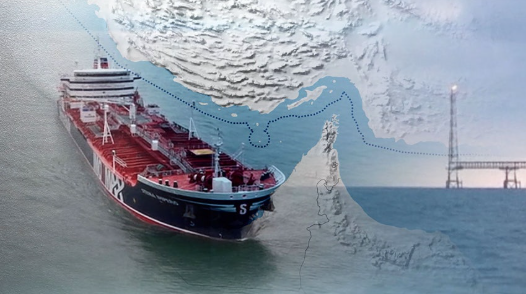
Now, oil trades are being disrupted and cargo shipments to and from the Middle East have been suspended, according to a senior Indian government official cited by Bloomberg.
Gaurav Kapur, an economist at IndusInd Bank, said that if oil prices remain above $80 per barrel, India’s current account deficit could widen by about $10 billion, putting downward pressure on the rupee and fueling domestic inflation.
Bloomberg also reported that Indian government officials and executives from state-run refiners met over the weekend to discuss emergency measures, including potentially resuming Russian oil imports.
Officials from India’s Ministry of Petroleum and Natural Gas reportedly said combined government and private strategic reserves amount to only about two weeks of supply. Refiners are considering tapping roughly six days’ worth of strategic reserves, accelerating imports of Venezuelan crude, and asking Saudi Aramco to reroute shipments to the Red Sea port of Yanbu to avoid the Strait of Hormuz.
In Southeast Asia, countries such as Thailand and the Philippines—which depend heavily on imported energy—are also expected to suffer economic strain, with their currencies already showing signs of weakness.
Meanwhile, airspace closures by Iran and neighboring countries have effectively shut much of the Middle Eastern corridor, disrupting flights between Europe and Southeast Asia. This poses a major threat to tourism, a key industry across the region.
India’s largest airline, IndiGo, has suspended all flights passing through the Middle East. Air India, Malaysia Airlines, and Singapore Airlines have also halted services to destinations including the United Arab Emirates and Saudi Arabia, according to Reuters.
As a result, travel agencies in Vietnam and other Southeast Asian countries are reporting cancellations of tour packages connecting Europe and Southeast Asia via the Middle East.
EJ SONG
US ASIA JOURNAL

