


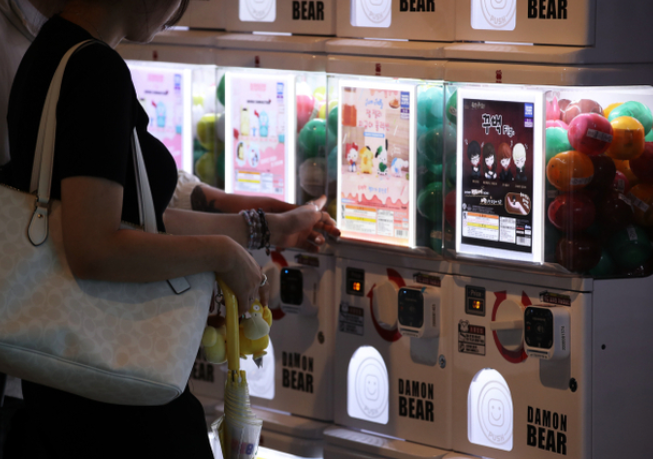
According to the Nihon Keizai Shimbun, Family Mart will focus on animation and game-related businesses as new growth areas and install crane game consoles and gacha machines in 5,000 stores, three times the current level.
The company also plans to commercialize an online lottery service in February that allows users to receive prizes for animated characters or idols. It is a conversion of the existing offline lottery service to online. It is available at the Family Mart’s exclusive payment “Farmy Pay.” The company is also considering a high-priced lottery system that allows users to receive large figures of popular characters at around 5,000 yen per session.
Family Mart is also operating a service that prints popular idols or animation bromides using multifunctional machines installed in stores nationwide. Since January, it has also allowed the sale of illustrated works drawn by individual creators. Through these new businesses, the company aims to increase its business sales to 100 billion yen in 2029, which is 2.5 times the current level.
This is an effort to expand the number of convenience store users concentrated in their 30s and 50s to younger people. Lawson is also focusing on the entertainment sector, installing crane game consoles in about 1,300 stores and having subsidiaries that operate movie theaters and ticket services.
Character products are more profitable than food or daily necessities. According to the Yano Economic Research Institute, crane games have a gross profit margin of about 30 percent. Last year, the character business market in Japan is estimated to have grown by 3% year-on-year to 2.8492 trillion yen.
Seven-Eleven Japan, Family Mart and Lawson posted higher sales last year thanks to higher prices. However, as customers close their wallets due to prolonged high prices, dark cloud casts over the outlook for their performance. “There is a growing perception that convenience stores are more expensive than supermarkets,” Nikkei said. “Lower-priced stores such as Don Quixote are on the rise.”
SALLY LEE
US ASIA JOURNAL

