


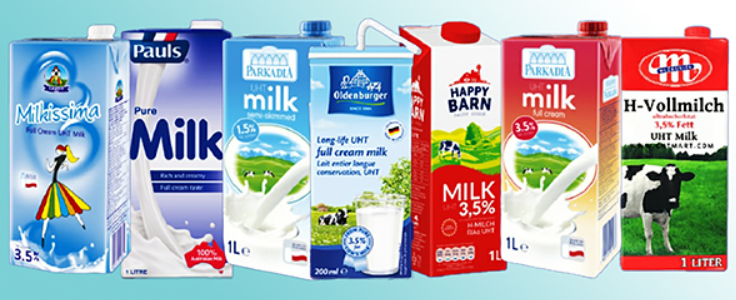
Imported sterilized milk is rapidly eroding the domestic market as tariffs on U.S. and European milk have virtually disappeared. There are concerns that the competition could be further disadvantageous if the exchange rate conditions improve due to the already significantly lower price than domestic refrigerated milk and the convenience of storage. According to the Korea Customs Service on the 21st, tariffs on U.S. milk have been reduced from 2.4% to 0% from this year. European milk tariffs have also been lowered from 4.8 to 2.5% to 2.0%, and will be completely eliminated from July. The barriers to tariffs on dairy products, which once averaged 36%, virtually disappears.
In terms of price, imported sterilized milk already has the upper hand. Polish sterilized milk “Mlecovita 3.5 percent (1L)” is sold at 1,900 won (1,900 U.S. dollars) at online shopping malls. It is 35 percent cheaper than Korean refrigerated milk with the same volume costing around 3,000 won. Industry sources say that if tariffs are completely eliminated, the price of European milk could fall by an additional 40 won per liter.
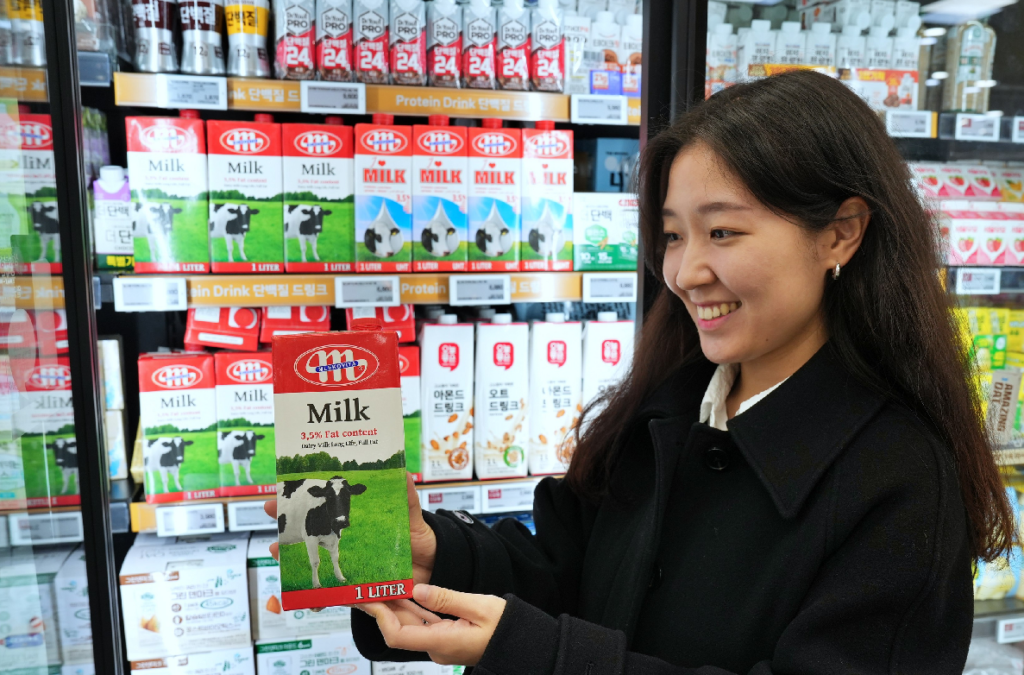
Sterile milk can be stored at room temperature and has a long consumption period, which reduces the burden of distribution and inventory management. Nutritional ingredients are also assessed to be the same as refrigerated milk. Although both refrigerated white milk and sterilized milk go through ultra-high temperature sterilization (UHT) processes and some vitamins may be reduced during the manufacturing process, the basic nutritional structure is similar, according to the industry.
There are different opinions on the difference in taste, but many say that it is difficult to feel it when used as a raw material for coffee or baking. For this reason, the use of imported sterilized milk is rapidly increasing, especially in private cafes and bakeries, where the cost burden is high.
The import volume is also on a steep rise. According to the Korea Customs Service, the import volume of sterilized milk increased 40 times in eight years from 1,214 tons in 2016 to 48,671 tons in 2024. Imports in the third quarter of last year also hit a quarterly record of 17,424 tons. However, for now, the high exchange rate is slowing down the price decline. As the won-dollar exchange rate and logistics cost burden partially offset the effect of tariff reduction, some analysts say that price fluctuations are not significant in the retail sector. However, if the exchange rate stabilizes, the price competitiveness of imported sterilized milk will increase further.
The domestic milk industry is under double pressure from structural cost burden and reduced consumption. Last year, the price of crude oil in Korea was 1,246 won per liter, which is twice that of the United States. While milk consumption is decreasing due to the low birth rate and aging population, alternative products such as soy milk and vegetable drinks are also increasing. The industry is responding with premium and functional products, but there is also a high possibility that consumers will move to low-priced products.
SAM KIM
US ASIA JOURNAL

