


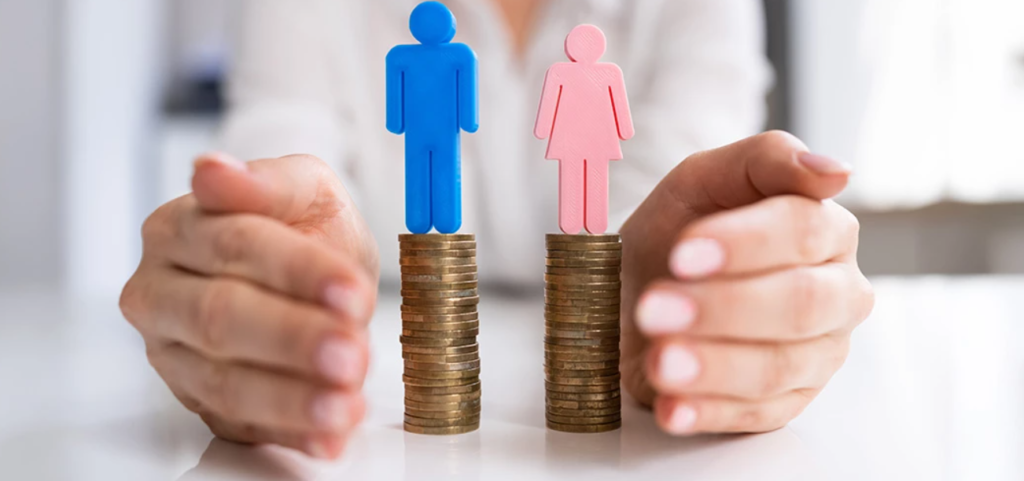
As most countries disclose gaps, not amounts, discussions on institutionalization in Korea are likely to flow to “disclosure of gaps” in the future. According to the Ministry of Gender Equality and Family, the European Union (EU), Canada, and Sweden disclose the current status of gender employment and wage gaps of companies over a certain size. However, the key is to focus on gaps such as ratios and gender equality indices, not amounts such as average wages.
In April 2021, the EU enacted a law requiring companies employing 250 or more employees to report gender wage information to the authorities every year. Wage information includes the gender wage gap between male and female workers and the ratio of male and female workers by wage quintile. If a worker wants to know the current status of the gender wage gap, he can ask the employer and the employer must answer.
EU laws are guidelines, and implementation is carried out by each country’s legislation. The deadline for implementation is June this year. Belgium became the first country to enact domestic laws in accordance with EU recommendations, followed by the Czech Republic and Poland last year.
Canada requires businesses with more than 100 employees to disclose the level of employment, promotion, and dismissal by gender and employment type and wage gap. However, it is evaluated to be closer to the reporting system than the ‘disclosure’ system. This is because it focuses on efforts and plans to improve the gap rather than a detailed report on the current status of the gap. In addition, companies with 100 or more employees should establish and operate an equity wage committee to review whether there is a violation of the same wage for equal value labor. The committee must include a worker representative. In Sweden, employers who employ 10 or more workers must organize their wages and report audit results. However, the report is not open to the public, and individual workers have no authority to see it. Instead, if a grievance related to equal wages is filed through a labor union, the necessary information can be obtained.
In the UK, information on the gender wage gap is required to be disclosed on the corporate website for projects with more than 250 employees. The disclosure items consist of six items, including the difference in the average or median hourly wage between men and women, and the difference in bonuses.
Regarding such overseas cases, the “Study on the Introduction of the Corporate Gender Equality Disclosure System” published by the Korea Women’s Policy Institute said, “The EU and others have composed legal provisions as a mechanism to analyze and correct problems in companies rather than a punishment-oriented approach to gender wage inequality,” adding, “Korea’s gender equality disclosure system needs to be designed and implemented in a way that companies are aware of problems and correct wage practices.”
SAM KIM
US ASIA JOURNAL

