


They usually minimize consumption with convenience store lunch boxes, low-cost coffee, and meal kits, but they open their wallets without hesitation in restaurants, pop-up stores, concerts, limited-edition items, and travel where they decide to use them once. It is a pattern of saving in daily life and flex in experience. It is often described as polarization of consumption or extreme consumption. However, I think it is appropriate to call it separation of consumption patterns according to purpose, so-called split consumption. This is because it is a consumption pattern that reflects a clear goal of “this experience.”
A special wine pairing consisting of meals at restaurants by famous chefs and recommendations by sommeliers, whose reservations are easy to make. Especially, the act of eating and drinking, which is equivalent to food, clothing, and shelter, is the stage where the value judgment is most frequently revealed. In the modern society where it is natural to post daily life on social networking sites, deciding what to eat and drink is also linked to the moment when it proves who I am.
Numerous low-cost coffee shops in front of subway stations, convenience stores with one-plus-one promotions, stores that disappear inventory, cafeteria at lunch, and office workers who share with colleagues to meet the minimum delivery order price. What should be noted here is that this saving is not a “deficiency” but a “strategy.” The reason I save now is that the narrative of investing for the future is hidden. It is not that I drink cheap drinks because I don’t have money, but that it is a strategy to save now to make a big budget for later use. For them, the criteria for flex are not price, but content and narrative. Whether it is worth posting on Instagram or whether it is worth posting your own story on a short-form video to achieve high views are the criteria for generations to open their wallets these days.
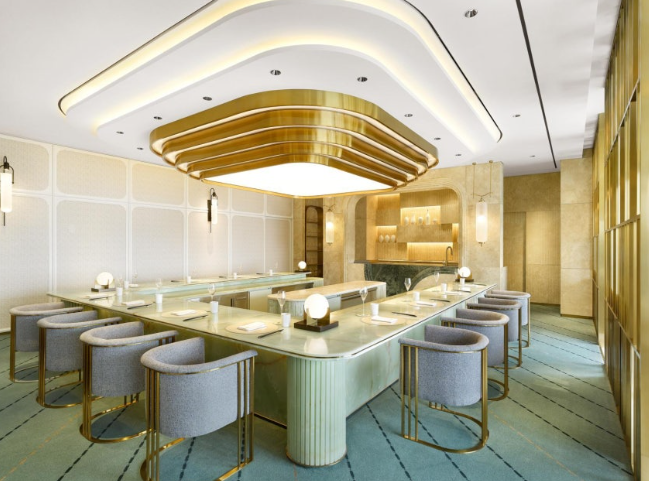
Seoul’s fine dining restaurants, luxury hotel lobby lounges, limited-season menus at restaurants, and brand pop-up lounges are representative flex stages. Restaurants and bars that are difficult to make reservations, have a story, and can ask where others are, pay hundreds of thousands of won per person, but say, “It’s worth visiting at least once.” Overseas, travel routes that adjust travel schedules to make reservations at Michelin-starred restaurants or visit specific cafes or bars as if they were pilgrimages are now natural. What is important here is that this experience is reproduced as “content” rather than a single shot. The second issue is taste and price. The focus is on “how dramatic the reservation process was,” “the space was good enough to be printed on social media,” and “how the interaction with the chef or bartender was.” In other words, it is a structure in which consumers can rewind the story and the story into content, not the food, when they open their wallets.
After all, the key question is, “Why do they boldly open their wallets at certain moments?” There are two aspects of this. One is identity and the other is relationship. First of all, in terms of identity, the food and beverage experience becomes a language to describe yourself. The stories of “I’m this drinker” and “I like this taste of dessert” are fully conveyed through SNS contents. Nara is a line of narrative that can explain what a person is like. In terms of relationships, “the experience of eating together” is the key. As the number of single-person households increases and non-face-to-face communication becomes commonplace, the rare value of the experience of sharing the same time and table increases. The restaurants and bars selected at this time are not just restaurants, but also stages that will prove a turning point in the relationship.
Split consumption poses a challenge to businesses as well. Instead of thinking that you have one wallet, you should assume that you have at least two. A wallet for daily life and a wallet for experience. When aiming for a wallet for daily life, it is important that the brand be a “part of the routine.” Reasonable price, quick and easy access, easy cooking, consumption, membership, subscription, and point accumulation are the key functions.
The strategy, on the other hand, is completely different when targeting an experience wallet. Here, the priority is not the price, but the narrative, space, and direction. Limited time, limited quantity, space production, artwork, playlists from stores, and employee service temperatures are all combined to create a single experience package. Even within a bank account with the same salary, the wallet is opened and closed with a completely different logic.
Split consumption by choosing clear criteria rather than whims. As soon as we understand that standard, the spending on tables and cups in 2026 will begin to be much more readable.
JULIE KIM
US ASIA JOURNAL

