


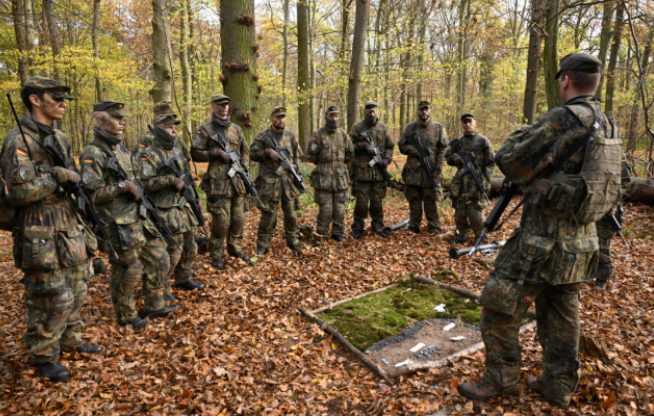
Although Germany is strengthening its military power against the threat of Russia, foreign media reported that it is difficult to achieve its recruitment goal due to Generation Z’s reluctance to serve in the military.
The Wall Street Journal (WSJ) reported that Germany abolished the conscription system in 2011, but it is planning to revive the conscription system as it pushes for rearmament in preparation for Russia’s invasion after the outbreak of the war in Ukraine, and the government introduced a new military service system on January 1 this year with the revival of the conscription system in mind.
As a result, the government started sending out questionnaires to 700,000 men and women born in 2008 asking their physical conditions and intentions to serve. The duty to respond is only for men, who must undergo a physical examination regardless of their intention to serve.
But since late last year, tens of thousands of German teenage students have poured into the streets to protest against the new military service system.
A 16-year-old student who participated in the protest last month said, “I would rather live under Russian occupation than die on the battlefield,” while another teenage student also strongly protested, saying, “If there is a war, I will leave Germany and go to my foreign grandparents’ house.”
Faced with uncertain job prospects and high living costs, young people are angry that military service is demanding sacrifices for older generations. “Why should we sacrifice for a country that pours a quarter of the federal budget into pension payments for the elderly?” students are raising their voices at the protest.
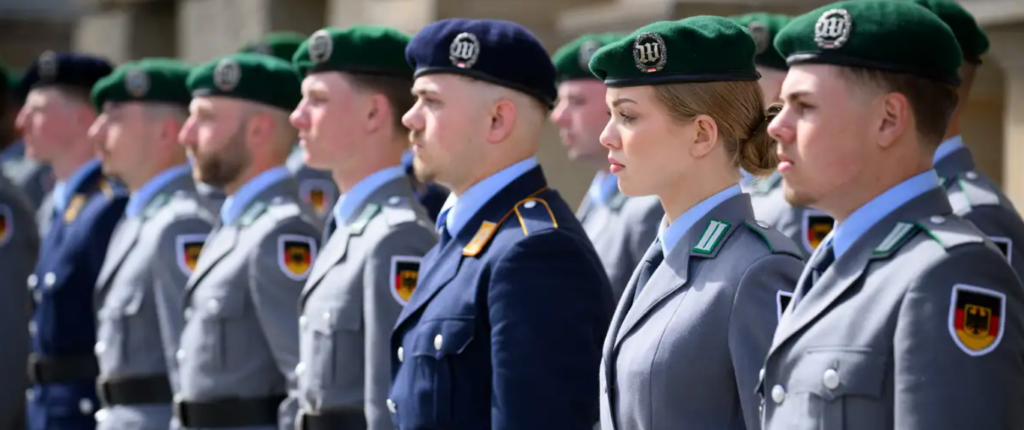
WSJ explained, “The conflict between generations over the military is more of an economic problem than politics,” adding, “The younger generation is asking the question, ‘What do I gain from military service?'”
The German government is also aware of Generation Z’s dissatisfaction and is offering incentives to encourage them to join the army. Under the new military service system, volunteers receive up to $3144 per month, an increase of $932 from the previous one.
In the face of Generation Z, the number of new German military enlistments is barely supplemented by those who have been discharged and retired, and the ‘military aging’ is accelerating.
Against this backdrop, Germany has set a short-term target conservatively. In a letter to Parliament, Defense Minister Boris Pistorius said the goal is to register 20,000 recruits this year, and the Ministry of Defense hopes to recruit 13,500 more soldiers.
However, the German Ministry of Defense has set a goal of increasing the number of active-duty soldiers from 184,000 to 260,000 by 2035, which requires 60,000 to 70,000 recruits annually, the WSJ noted.
EJ SONG
US ASIA JOURNAL

