


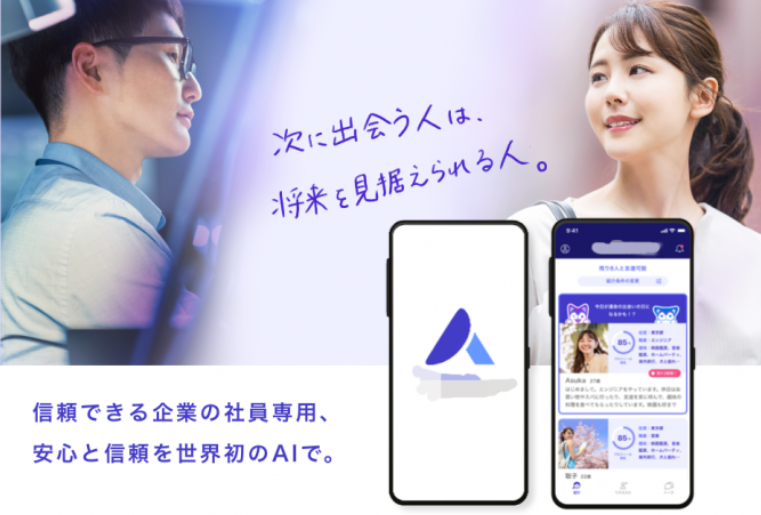
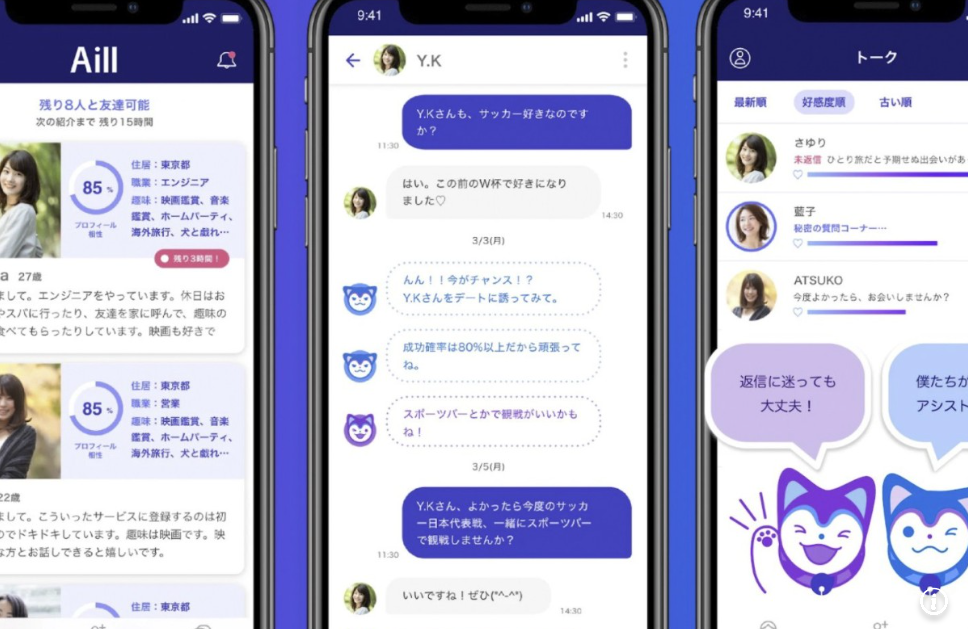
Major Japanese conglomerates have introduced a “business-only blind date app” for unmarried employees as a welfare system to solve the serious manpower shortage and low birth rate. This is interpreted as an unconventional strategy to increase the settlement rate of employees and prevent them from leaving their jobs by supporting romantic relationships.
According to Japan’s Asahi Shimbun, more than 1,500 major companies and institutions, including Toyota Motor Corp. and Mitsubishi UFJ Bank (MUFG), provide “Aill goen,” a matching service for unmarried employees, as an official welfare program.
The accumulated dissatisfaction of unmarried employees is behind the companies’ direct entry into blind dates. Until now, corporate welfare has been designed mainly for childcare or nursing leave.
Therefore, unmarried employees who have been in charge of night shifts to fill their work gaps have been relatively marginalized from welfare benefits.
In fact, credit card company Orient Corporation introduced the app in April last year for more than 40% of its total employees.
“Unmarried employees have been burdened with working overtime until 9 p.m. in place of their colleagues’ child-rearing gap,” said Yuichiro Kanano, manager of Oriko. “We judged that practical compensation was needed even for those who did not express complaints on the outside.”
After its introduction, 176 people used the app, and 17 people began dating. Daito Trust Construction is operating the system with a similar purpose. The company pays up to 30,000 yen in allowances to employees who bear the burden of work due to their colleagues’ leave, and also provides a blind date app voucher.
In particular, the fact that 60% of 3,000 unmarried employees are in their 20s and 30s who are not reluctant to meet through the app has accelerated the pace of introduction.
In Japanese society, dating apps have become a key channel of marriage. Within the past year, 30.4 percent of married couples formed relationships through matching apps. Companies are planning to strengthen blind date welfare, which supports work-life balance for employees and induces long-term service.
JULIE KIM
US ASIA JOURNAL

