



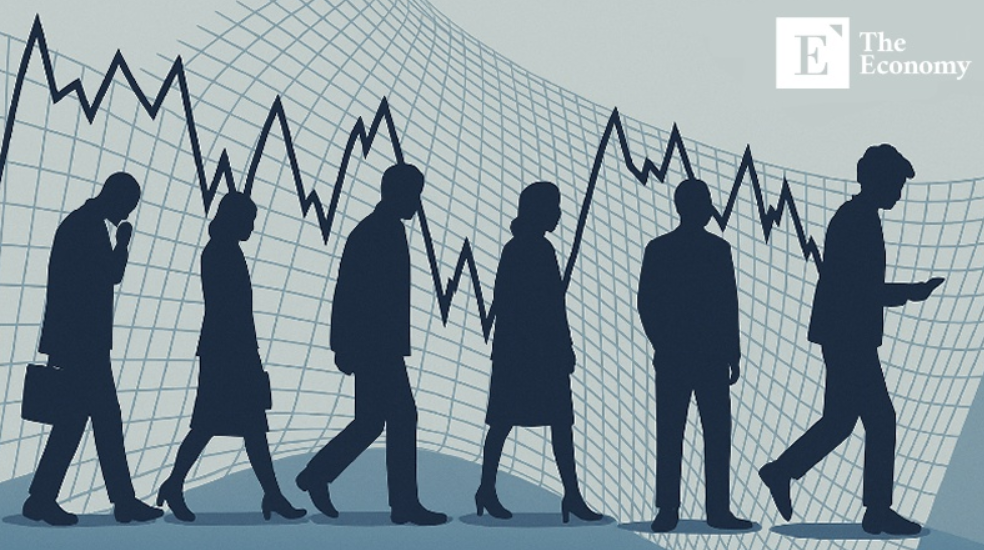
Although U.S. companies are embodying their 2026 management plans, most new hires are excluded from the strategy. With economic uncertainty and the spread of artificial intelligence (AI), large companies are weighing maintaining or reducing their current levels rather than increasing their workforce.
The Wall Street Journal (WSJ) said, “The management strategies of companies ahead of 2026 are summarized as ‘Don’t hire’.” Recruitment platform Indeed expected employment growth in the U.S. to be only very limited next year, while e-commerce platform Shopify and fintech company Chime Financial have already announced that they will hardly increase the number of employees.
Earlier this month, 66 percent of respondents said they planned to lay off their employees or maintain their current workforce in 2026, according to a survey conducted by Yale’s business school at a CEO’s meeting in Manhattan, New York. Only a third of CEOs said they were planning to hire new ones.
Chris Layden, CEO of Kelly Services, a human resources dispatcher, told WSJ, “In the future, there will be more wait and see companies,” adding, “As uncertainty grows, investment in capital, especially technology, is more likely than people.”
There are already clear signs of cooling in the job market. The U.S. unemployment rate in November was 4.6%, the highest level in four years. Job openings in healthcare and education increased throughout 2025, but analysts say the white-collar labor market is rapidly tight. Major companies, including Amazon, Verizon, Target, and UPS, have been reducing their white-collar workers in recent months, increasing employee anxiety.
The background of companies’ hesitancy to hire is the perception that AI can replace much of the work along with concerns about a slowdown in the economy. In addition, the process of adjusting the excessively increased workforce after the pandemic is not yet complete.
“The current employment growth rate is near zero. This is not a healthy labor market,” Federal Reserve Board member Christopher Waller said at a Yale event. “When I talk to CEOs across the country, they all say, ‘We’re delaying hiring to see what jobs AI will replace and what jobs will disappear,'” he said. Waller is a potential candidate for the next Fed chairman.
Waller also said, “Everyone is afraid of losing their jobs. I’m really serious.” The suspension of hiring may be temporary if companies decide they need more manpower to meet their growth goals, but the current atmosphere is closer to “no additional manpower.”
Amid this environment, workers’ turnover has also decreased significantly. IBM CEO Arvind Krishna said the employee turnover rate is the lowest in 30 years. IBM’s voluntary resignation rate in the U.S. is now less than 2 percent, down from the normal 7 percent level. Krishna said, “People are reluctant to change jobs, and as a result, hiring will decrease.”
Shopify CFO Jeff Hoffmeister also said at a recent conference, “I don’t think there will be a need to increase our workforce next year,” adding, “We have maintained our current workforce for more than two years, and we will be able to continue the same trend in 2026.”
Charlie Sharp, CEO of Wells Fargo, said there is a possibility that the number of employees will decrease further next year. Wells Fargo’s staffing has decreased from about 275,000 in 2019 to about 210,000 now. Sharp said the impact of AI on staffing size will be “extremely large,” but explained that it could be years before the effect is in full swing. “There are very few executives who want to say publicly that there will be fewer people in the future,” he added.
Laura Ulrich, head of economic research at Indeed, predicted that unemployment would remain around 4.6% in 2026 after analyzing the employment scenario over the next year. The explanation is that while hiring in high-wage white-collar jobs such as data analysis, software development, marketing and entertainment is particularly sluggish, job openings are relatively active in healthcare and construction.
Ulrich pointed out, however, that the current “low employment and low layoffs” environment is difficult to sustain for a long time. “With GDP growing, this structure cannot be maintained for a long time,” he said. “At some point, changes will inevitably appear in the job market.”
JENNIFER KIM
US ASIA JOURNAL

