


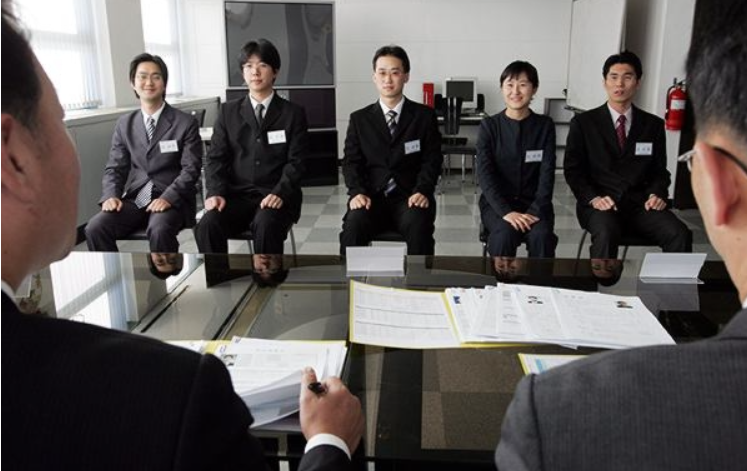
Changes are being detected in the recruitment market, with companies boldly eliminating document screening and evaluating all applicants as interviews as the number of self-introductions written and corrected with generative artificial intelligence (AI) increases in Japan.
According to the Asahi Shimbun, Japan’s Roto Pharmaceutical will abolish the self-introduction document screening from the recruitment of new employees in April 2027 and conduct interviews with all applicants. Under the system, which is named “entry meet recruitment,” applicants will reserve a desired interview time and conduct a 15-minute interview with a human resources manager. Interviews are in principle face-to-face and will be held in eight regions across the country, and the final successful candidates will be selected through several interviews and group walks.
Large companies and the financial sector are also joining the trend of change. Softbank, a Japanese telecom and IT company, abolished the submission of self-introduction letters from January this year, and introduced a method in which a person in charge of human resources makes the final decision after analyzing the self-introduction video with AI at the first stage. Yokohama Bank also removed self-introduction letters from new hires and required them to submit one-minute self-PR videos.
In fact, the use of AI has become common among Japanese job seekers. According to a survey conducted by a job information company My Navi, 67 percent of students said they had used AI for employment activities, and the main purpose of the study was to correct and write self-introduction letters. A university student said, “I received help from AI when writing the motivation for applying from a company that is not willing to join the company. There are many cases where the entire self-introduction letter is left to AI.”
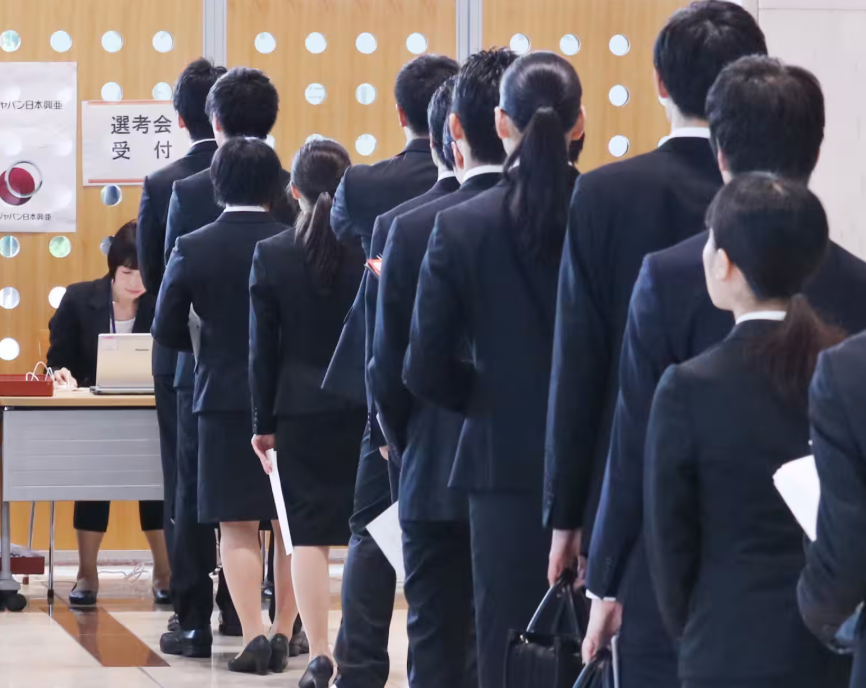
“The use of AI itself is not a problem,” Roto Pharmaceutical said. “The number of self-introduction letters with similar contents has increased, making it difficult to identify individuality,” he said. “We have come to value the process of direct conversation.” The company expects that strengthening face-to-face communication from the beginning of the recruitment will help applicants’ understanding of the company and reduce their early resignation.
For small and medium-sized enterprises, the abolition of document screening has led to rather positive effects. Nakanishi Manufacturing Co., a kitchen appliance manufacturer, has removed self-introduction letters and introduced a method of interviewing all applicants after aptitude tests since October last year, and as a result, the number of applicants has increased from about 200 to 350. The company said, “Recruitment costs have increased, but applicants will join the company with a full understanding of the company,” adding that it plans to expand the number of employees to 50 next year.
As AI has become a “standard tool” for job preparation, Japanese companies are no longer shifting their focus of hiring to directly check face-to-face communication, actual capabilities and personalities rather than written specifications. Analysts say that the abolition of document screening is likely to spread further among companies that have difficulty securing human resources.
SAM KIM
US ASIA JOURNAL

