


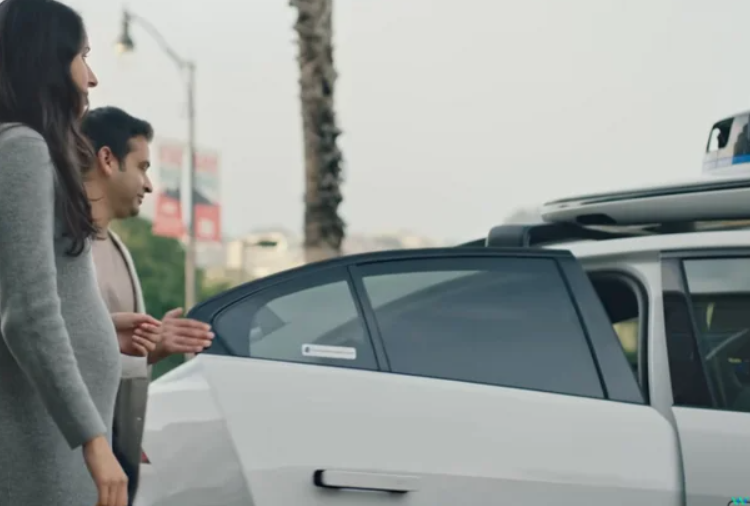
According to the Washington Post (WP) report, in an article titled “When Robotaxi stops, a secret human army comes to the rescue,” the demand for solving problems with Robotaxi is increasing.
The media reported Don Adkins’ case that he actually helped Google Waymo’s robotaxi that was stopped on a road in Los Angeles. Adkins was walking down the street of Sunset Street in Los Angeles one night when he heard a call for help from somewhere. According to the sound, Waymo’s Jaguar car, which is operated as an unmanned taxi, was repeatedly shouting “Please close the right back door” with its blinkers on. Adkins just ignored it and heard a car driving behind the car honking, and then went out to the road and closed the back door of the Waymo car.
The Washington Post said Adkins witnessed the Achilles’ heel of a Waymo Robotic Taxi, which carries thousands of passengers every week in Los Angeles and San Francisco, adding, “These cars can compete with taxi drivers on city roads without drivers, but they are isolated if humans do not close the back door when they finish driving.”
According to the Washington Post, Waymo will pay more than $20 through an app called Honk to close poorly-closed doors for a robotaxi in Los Angeles or to assist a robotaxi in trouble. Honk is a calling app similar to Uber in the car towing industry.
Washington Post interpreted such operations as “Waymo Robotaxi Shutdown and Towing” as an example of how automation progresses, new human jobs can be created to compensate for the shortcomings. On the other hand, such cost issues have become a challenge for companies operating the Robotaxi business.
Philip Koopman, an engineering professor at Carnegie Mellon University who has studied self-driving cars for nearly 30 years, said it is “expensive” to pay humans to shut down and retrieve broken vehicles, and that these costs must be minimized if the company wants to scale up and compete with Uber and Lyft.
JENNIFER KIM
US ASIA JOURNAL

