


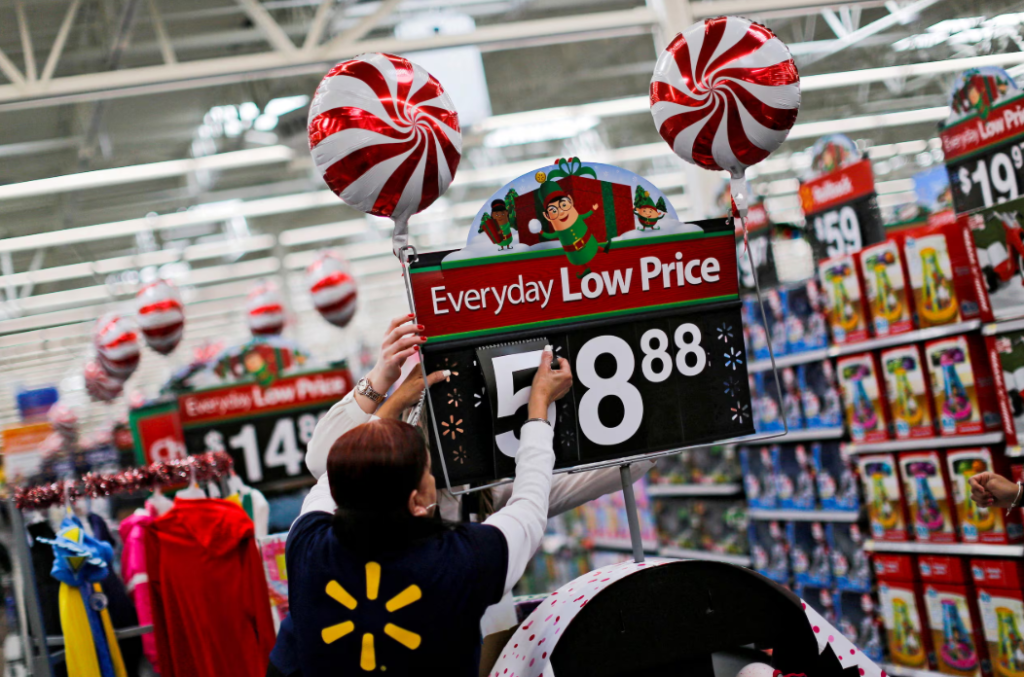
The Wall Street Journal (WSJ) reported on Sunday that rising inflation and fiscal pressure are changing the year-end spending behavior of U.S. households. It means that more consumers are buying used bags, toys and accessories for Christmas than usual.
The findings also support the change. In a survey of 8,200 U.S. consumers by the National Retail Federation (NRF), about half of the respondents said they are “likely to buy a used product at the end of this year.” In a survey of about 1,800 U.S. consumers by eBay, 82 percent of the respondents said they are “more willing to buy a used product than last year.”
Bernessa Roberts, who lives in Albany, New York, recently visited a used store and looked for Christmas gifts for her mother, and found a Coach brand bag for $125, but she plans to look around other used stores because of the price.
WSJ analyzed, “In the United States, there has long been a strong negative perception of the culture of giving used products as gifts,” adding, “There has been an atmosphere in which family members and acquaintances find it rude to receive used gifts, but recently, the trend of prioritizing practicality is becoming clear.”

Such changes in consumption patterns are also affecting the performance of used retailers. Major used goods vendors such as ThreadUp and Savers Value Village usually tend to slow down during the year-end gift season, but this year, they are enjoying Christmas specials.
Sales rose 10.5% in the three months from the end of July to the end of September, said Michael Mayer, chief financial officer of Savers Value Village. “The pace of increase in sales of gift products such as toys, games, books and electronics is above the average for all products.”
Changes in the political and trade environment are also affecting consumer sentiment. Analysts say that the increased inflationary pressure, mainly on imported products, is a burden on consumption at the end of the year as tariff hikes have strengthened since President Donald Trump returned to the White House.
Kathy Buske, who runs a store selling tableware and wine decanters in Troy, New York, said, “These days, there are a lot of customers who say that it is difficult to receive goods on time even if you order, and that it is difficult to buy them because the price is too high.”
Experts said, “As high prices are prolonged, resistance to used consumption is rapidly disappearing,” adding, “There is a possibility that used gifts will become a consumption culture beyond temporary phenomena in the United States.”
SAM KIM
US ASIA JOURNAL

