



According to the BBC, Lugano began its experiment in the “Bitcoin City” by distributing cryptocurrency payment terminals to stores and restaurants across the city.
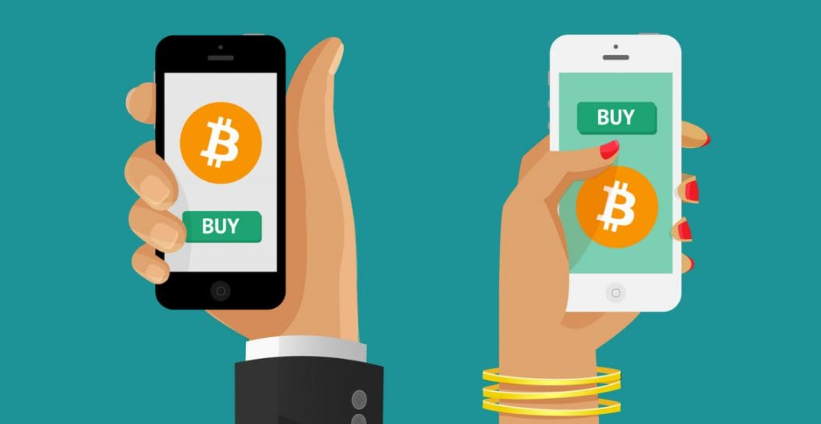
Media outlets said that from global franchises such as McDonald’s to local editing shops, there is a cryptocurrency payment machine that looks like a card terminal on the checkout counter. This is the equipment distributed free of charge to local retailers by the city. The payment method is simple. Users can make contactless payments with their smartphone Bitcoin wallet.
Currently, Bitcoin payments are available at about 350 stores and restaurants in Lugano. City Hall has also begun to receive administrative fees such as some fees and childcare fees in cryptocurrency. For example, kindergarten childcare fees can also be paid. Local users point to the advantage of being “free from brokerage fees.” The method of purchasing a prepaid gift certificate in Swiss francs, converting it to bitcoin, and charging it in a mobile phone wallet has also become common.
Cherubino Fry, the owner of “Vintage NASA,” one of the Lugano general stores, explained that the reason for receiving Bitcoin payments is “lower than credit card fees.” While cryptocurrency payment fees are usually less than 1%, debit and credit cards reach up to 1.7 to 3.4%. “So far, only some customers are using it intermittently,” he said, adding, “We look forward to growth in 5 to 10 years.”
Earlier, Lugano launched the “Plan B” project in 2022 in partnership with stablecoin issuer Tether. The goal is to become the “Bitcoin hub of Europe” by combining education and infrastructure. Mir Riponi, director of Plan B Hub, said, “As a result of the 11-day ‘only Bitcoin’ experiment, food and delivery were sufficiently possible.”
However, the limitations were also clear. Cryptocurrency payments were blocked for public transportation, fuel purchases, dental treatment, and electricity payments. Meanwhile, examples of places that tried Bitcoin projects similar to Lugano were also introduced. In 2021, El Salvador paid $30 worth of Bitcoin to those who downloaded the app to encourage the use of Bitcoin. However, few people actually used it. On the other hand, Ljubljana, the capital of Slovenia, was considered the “most cryptocurrency-friendly city in the world,” followed by Hong Kong and Zurich.
Reaction from within Lugano is also mixed. In August, a sculpture depicting “Satoshi Nakamoto,” known as the founder of Bitcoin, was damaged and dumped in a lake at a lake park. One resident was also skeptical of excessive public relations. “The image is largely linked to crime, dark web, and speculation,” he said. “Some people lost money due to a sharp drop in prices.”
Academia pointed out volatility and reputation risk as the biggest problems. “It is safe for merchants to exchange money into legal currency upon receipt,” said Sergio Rossi, a professor at Fribourg University. “Cryptocurrency used for illegal transactions can adversely affect the reputation of cities and financial institutions.”
The risk of custodial is also discussed. Swiss bank deposits are protected up to 100,000 Swiss francs, but cryptocurrency does not have the same protection. If the platform where the digital wallet is registered fails or goes bankrupt, all assets may disappear.
Lugano Mayor Michele Polletti refuted these concerns. “Just like Bitcoin, legal currency (cash) is used both for good and bad things. The reason why people receive non-bitcoin cash when selling drugs is because of higher anonymity,” he said. “110 new cryptocurrency-related companies have entered or moved to Lugano. Bitcoin is having a positive impact on the region.”
SAM KIM
US ASIA JOURNAL

