


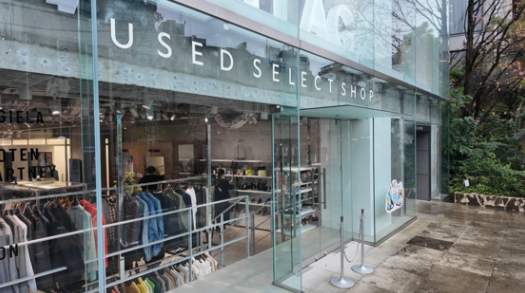
Many foreign tourists were carrying shopping bags wrapped in plastic on the streets in Harajuku, Tokyo, the center of Japanese fashion.
“I found a famous brand of pants worth about 400 euros at a vintage shop, and I bought a new one without wearing it for less than 100 euros,” said Portuguese Yannis, who met in front of a famous fashion vintage shop. “Japan’s used shops are so well-managed and diverse in color that they are incomparable to Portugal, so they are like heaven to me.”
Park Tae-min, an office worker from Korea, also said, “You can find old-fashioned products or rare products in used shops in Japan, and there are various varieties and well-managed products, so it’s fun to see them even if you don’t buy them.”
On the other hand, there were not many Japanese in second-hand stores that sell these high-end brands. “It seems that Japanese people don’t tend to buy these expensive brands,” said Wuozumi, whom I met at the store recently. “When I visit the store, more than half of them seem to be foreign tourists.”
Japan’s used luxury goods are attracting the attention of consumers around the world. According to the U.S. consulting firm Bain & Company, the global used luxury goods market has grown 2.4 times from 2017 to 48 billion euros in 2024. It is gaining popularity among consumers in that used goods, which are less fashionable and whose value does not change easily, can be bought cheaply if they are well managed or have little feeling of use. In this respect, Japan is the most satisfied place for second-hand luxury buyers, the Nihon Keizai Shimbun reported on the 13th.

According to Nikkei, Japan’s second-hand Rolex watches topped the German luxury watch resell site “Crono24,” where Rolex and other luxury watches are traded, with a buyer rating of 4.742 out of 5 from January to October this year.
In Japan, as used goods have been circulated for a long time, history management and authenticity are well-managed, and there are many things that are well-managed, so buyers have a sense of trust. Merukari and Japanese think tank Nisei Basic Research Institute estimated the value of used luxury goods in Japanese households at about 91 trillion yen.
Japanese companies are also actively promoting the so-called “used in Japan” as a catchphrase. Japanese online platforms are actively trying to pioneer overseas markets with used products from Japan. Merukari, a representative used trading platform, has greatly improved the app usage environment so that users can convert product descriptions into their native languages using artificial intelligence (AI). Based on this, it officially launched its services in Taiwan and Hong Kong from October. It also set a goal to enter 50 countries within the next three years.
JENNIFER KIM
US ASIA JOURNAL

