



The number of job openings in the U.S. increased to the highest level in five months in October. However, signs of a slowdown in the labor market are continuing as the number of new hires has decreased and layoffs have increased. According to the JOLTs report released by the U.S. Department of Labor on the 9th, the number of job openings stood at 7.658 million in September and 7.67 million in October.
The number of job openings in September exceeded the forecast (7.2 million) as well as August (7.227 million), and the figure in October also rose from the previous month to the highest level in five months. The announcement of the number of job openings was delayed due to the aftermath of the federal government shutdown, but the figures for September and October were released together on the same day.
By industry, the number of job openings in October increased significantly in healthcare (1.42 million cases), while professional and corporate services (1.388 million cases), trade, transportation, and utilities (1.363 million cases), and leisure and hospitality (1.159 million cases) also increased.
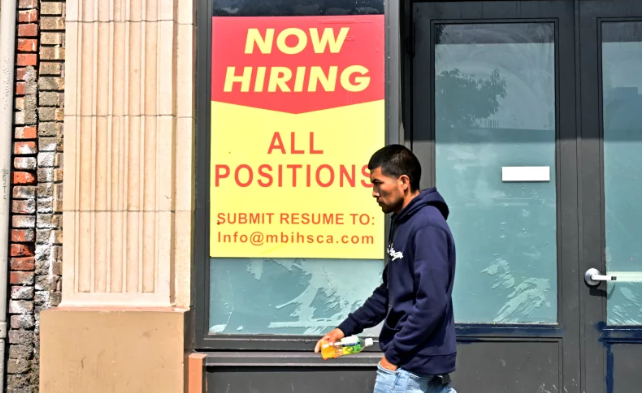
The number of job openings has increased, but layoffs have also increased.
The number of hires in October was 5,149,000 and the employment rate was 3.2%, lower than in September (5.367 million and 3.4 percent).
The number of retirements was 5.05 million and the retirement rate was 3.2%, slightly improving from the previous month (5.264 million and 3.3%). Of these, 2.941 million voluntary retirements (1.8%) were recorded, down from the previous month (3.128 million and 2.0%), the lowest since May 2020. On the other hand, the number of involuntary layoffs was 1,854,000 (1.2%) compared to the previous month (1.781,000 layoffs and 1.1% layoffs), the highest level since early 2023. The increase in layoffs was mainly seen in the accommodation and food service industries.
While fewer workers quit their jobs on their own, layoffs are increasing. This suggests that although the number of job openings itself has increased, companies are more cautious about new hiring in preparation for the impact of tariff policies, rising costs, and economic uncertainty, and workers also view the labor market situation more negatively.
“If you look at the October JOLTs report in detail, labor demand is relatively more sluggish than the figures revealed,” said Stuart Paul, an economist at Bloomberg Economics. “Overall, the number of job openings has increased, but layoffs have increased and voluntary retirements have decreased.” The U.S. Federal Reserve (Fed) will not view the labor market as a source of current inflationary pressure.
Although the labor market is not cooling down rapidly, the market is highly likely to cut interest rates the next day as signs of weakening are emerging. According to the Chicago Mercantile Exchange (CME) FedWatch, the Fed’s interest rate futures market reflects the 87.4 percent chance that the Fed will cut interest rates by 0.25 percentage points from the current 3.75 to 4.0 percent annually at the Federal Open Market Committee (FOMC) regular meeting on the 10th. The possibility of freezing is 12.6 percent.
“Overall, the labor market is not overheating or accelerating, but it is not falling apart,” said Steven Stanley, chief U.S. economist at Santander U.S. Capital Markets.
SAM KIM
US ASIA JOURNAL

