


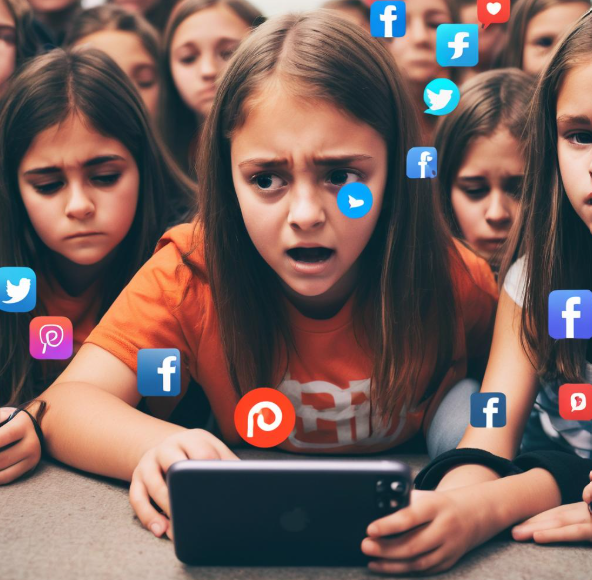
Ahead of Australia’s enforcement of the world’s first law banning the use of SNS under the age of 16, Meta has started blocking users’ accounts in that age group. Hundreds of thousands of teenagers will soon be forced to leave online.
According to AFP and other foreign media, Meta has imposed restrictions on Australian teenagers under the age of 16 on its social media platforms such as Instagram, Thread, and Facebook since the 27th of last month.
“When you turn 16, you will have access to (accounts) again,” a Meta spokesperson said. “If you return later, the existing content will be restored as it is.”
Australia will make it mandatory for major online platforms to block users under the age of 16 upon the enforcement of the law on December 10. Violation of the law will result in a fine of up to A$49.5 million (about 49.3 billion won).
Applications include X, Facebook, Instagram, TikTok, and Snapchat. Roblox, Pinterest, and WhatsApp are not included, but the target may be expanded in the future.
The number of teenagers affected by the measure is expected to reach hundreds of thousands. According to Meta, there are about 350,000 Instagram users aged 13 to 15.
Meta expressed its intention to comply with the law, but drew a line on who is responsible.
“When adolescents under the age of 16 download an app, they should be required to verify their age in the app store and get parental approval, so that adolescents do not have to check their age multiple times in multiple apps,” a Meta spokesperson said.
“Social media platforms will be able to use the previously verified age information to allow teenagers to have age-appropriate experiences,” he added.
YouTube protested that the new law allows teenagers under the age of 16 to access the platform without an account, which could make it more dangerous because safety filters are not applied.

In response, Australian Communications Minister Annika Wells strongly confronted.
He countered, “If YouTube says ‘its platform is not safe and there is inappropriate content for age-restricted users’, it is a problem that must be solved on its own.”
“Some teenagers killed themselves because they continued to expose content that lowered their self-esteem in a way that algorithms cling to certain content,” he said. “This law will not eliminate all harms on the Internet at once, but it will help children move toward better themselves.”
Some worry that bypass methods may spread among teenagers, such as uploading fake ID cards and manipulating images that make them look older with artificial intelligence (AI) after the law is enforced.
The local Internet safety watchdog said, “Platforms must devise means to prevent this from happening, but no solution can be 100% effective.”
SALLY LEE
US ASIA JOURNAL

