


Abercrombie & Fitch, once thought to have fallen out, is making a dramatic rebound with its strategy of reading the trend of consumption in the teens and 20s. In particular, it is analyzed that its affiliated brand “Holister” led the earnings growth by putting the Y2K sensibility at the forefront. Holister’s net sales in the third quarter of this year were $673.3 million, up 16% year-on-year, leading to the rebound of Abercrombie & Fitch. The company’s overall sales also reached a record high of $1.29 billion in the quarter. CEO Fran Horowitz said, “We continued to grow quarterly sales for the third consecutive year, achieving the largest quarterly performance ever. The strategy for the back-to-school season and autumn transition period fits exactly.” The key to growth is the Y2K lineup introduced by Holister. The brand introduced the concept of “2000s Vault,” which reproduces the emotions of the early 2000s, including store atmosphere, music, lighting, and product composition. It stimulated nostalgia by reviving the “school uniform items” of the teens and 20s at the time, including lace camisole, fleece shorts, baby idol top, and low-rise denim.
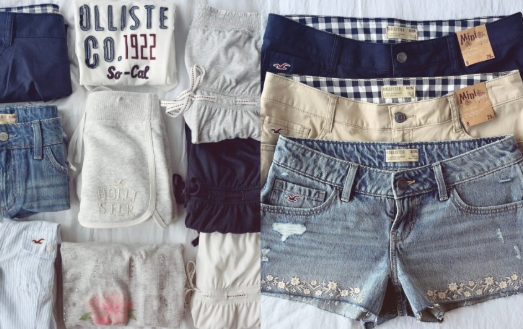
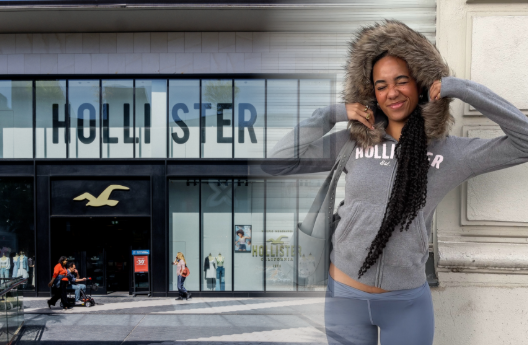
Online reactions such as “As soon as I entered the store, I spent $300” and “Y2K sensibility returned,” while some products, such as Terry Jogger pants and fur zip-up hoodies, were sold out immediately after their release. Analysts say that the way Y2K is consumed is shifting back from “retrospecting the past” to “fashion worn now.” Abercrombie & Peach withdrew its domestic business in five years after being embroiled in various controversies since entering Korea in 2012. At that time, the CEO’s remarks that “a brand only for cool and handsome children” and the racist gestures of the Hollister male models who were dispatched to the opening of Korea’s first store caused strong opposition.
However, the rebound has become clear in the U.S., and recently, its popularity has been re-imported in Korea. Kim, a woman in her 20s, said, “During my trip to Chengdu, China, I purposely stopped by a Hollister store to buy ‘Pur Zip-Up Hoodie’.” “It’s often seen on social media recently, and I got interested in memories I wore when I was young.”
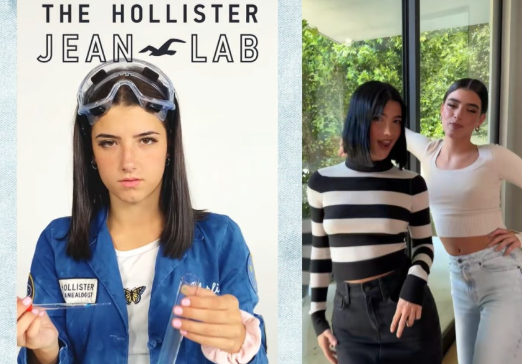
In the early 2000s, not only consumers but also Generation Z responded to Y2K sensitivity, actively traded on used trading apps, and reemerged as a ‘essential shopping list’ when traveling abroad. Behind this recovery, there is a channel strategy aimed at generation MZ. During the campaign, Hollister conducted marketing centering on TikTok, which has a high proportion of users of the MZ generation. It has formed a long-term partnership with the TikTok influencer “Diarmelio Sisters” with more than 100 million followers, and expanded its contact point to digital and offline related events such as the “Happy Dance” challenge and online autograph sessions wearing Hollister denim.
Experts say that the performance and rebranding have led to the rebirth of Abercrombie and Hollister. Business Insider said, “The Y2K style that stimulates perfume and the design that is easy to wear everywhere, so it can be worn in everyday life. It is an object of nostalgia for millennials and must have felt like the latest trend for young customers.” The market is paying attention to the fact that this trend is leading to earnings. Abercrombie & Fitch shares have recently surpassed the $95 mark on the Nasdaq, rising more than 40% in a short period of time. The market evaluates this as “a case in which the rebranding and Y2K strategies have improved not only performance but also investor sentiment.”
SALLY LEE
US ASIA JOURNAL

