


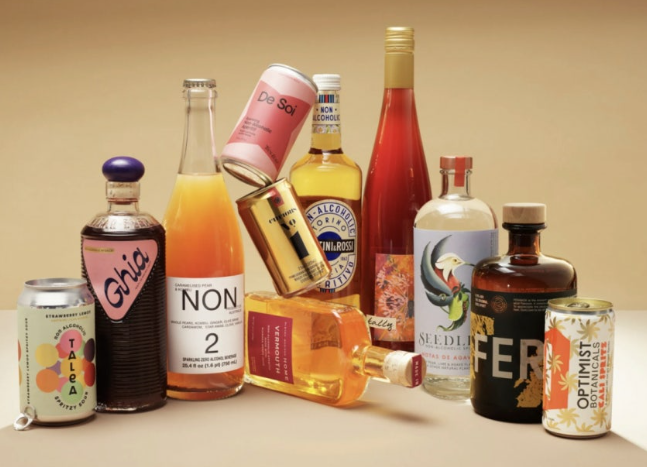
In November, invitations to end-of-year parties in New York and London began to take on a slightly different picture from previous years. Non-alcoholic beverages such as Honey Lime Necktail, not gin and tonic or champagne, were featured on the menu. As MZ’s lifestyle has changed to wellness, non-alcoholic beverages, which used to be treated as alternative drinks for people who couldn’t drink, have become the center of party culture.
According to the results of a joint survey with LS:N Global, a consumer forecasting platform released by Global Data in November, more than 80 percent of Gen Z respondents said they would choose non-alcoholic or low-alcoholic beverages for year-end gatherings. This is the highest response rate among all generations. In addition, 60 percent of respondents aged 16 to 34 said their spending on non-alcoholic beverages increased over the past 12 months. Global Data analyzed that the formula “Party when you drink alcohol” no longer works for Gen Z. Gen Z’s interest in non-alcoholic beverages is clearly revealed on social media. On TikTok, a video platform with 170 million monthly active users (MAUs) in the United States, videos with a hashtag called “Holiday Moktail Recipe” have thousands of views or millions of views.
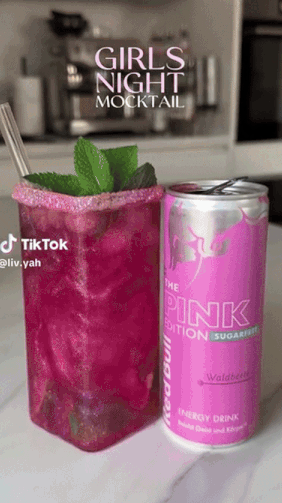
One of the reasons for the popularity of non-alcoholic beverages is that the necktail, which emphasizes visual elements such as transparent ice, bright-colored fruit, and decorative herbs, matches the emotional code of Generation Z. Global Data defined, “For Generation Z, necktail is more than a beverage,” and “necktail is one of Gen.G’s self-expression methods.”
The popularity of non-alcoholic beverages is also evident in the market. According to Nielsen IQ, a global consumer research company, sales of non-alcoholic beverage offline stores in the U.S. surged 22% year-on-year to $925 million (52 weeks) as of August. “The momentum for non-alcoholic sales is improving across distribution channels,” the report said. “As of the end of this year, the market size is expected to exceed $1 billion.” Generation Z’s preference for non-alcoholic beverages is mainly based on the balanced physical, mental, and social health or the “wellness” craze, which means overall activities to pursue them. As keywords such as exercise, nutrition, mental health, sleep, and productivity have become important, drinking has naturally been pushed back to “unnecessary behavior,” and non-alcoholic beverages are taking its place. Forbes said, “The younger generation is consuming “wellness” and choosing non-alcoholic beverages. This is evidence that the consumption trend in the liquor market is reorganized into health and self-care-oriented consumption rather than the drinking culture of the older generation.”
Gen Z’s pursuit of the life of a so-called “N Jobler” with two or more jobs is also in line with the popularity of non-alcoholic beverages. In other words, as there is not enough time due to several side jobs, it is a luxury to spend time recovering from hangovers caused by drinking, so they are choosing non-alcoholic beverages without hangovers. The New York Post said, “In recent interviews with Gen Z, the answer that ‘it’s such a waste to spend a day with hangovers’ has repeatedly appeared.”
The Guardian noted that non-alcoholic beverages are also gaining popularity even when they are more expensive than regular alcoholic beverages. “Depending on the distillation process and the use of premium ingredients, non-alcoholic beverages may be sold at 25 percent higher prices than regular alcoholic beverages,” the Guardian said. Non-alcoholic beverages are “expensive drinks of choice,” he said. “This means that the younger generation is pursuing value-oriented consumption that reflects health, self-management, mood, and identity.”
JULIE KIM
US ASIA JOURNAL

