



According to a study released by the Massachusetts Institute of Technology (MIT) on the 26th, artificial intelligence (AI) has already reached a level that can replace 11.7% of the U.S. labor force. This is equivalent to about $1.2 trillion in annual wage exposure, mainly in the financial, medical and professional services sectors.
The study was based on the “Iceberg Index,” a labor simulation tool jointly developed by MIT and the Oak Ridge National Laboratory (ORNL). The index models how AI affects 151 million workers in the United States by job and region.
“We are building a digital twin of the U.S. labor market,” said ORNL Director Prasanna Balaprakash, co-director of the research. “We can accurately grasp what AI can do at the moment.” Digital twin refers to a virtual model that reflects real structures, elements, and data equally.
The Iceberg Index calculates the skills and duties that AI can perform immediately based on △ 923 jobs △ 32,000 technologies △ 3000 counties (US local government units). The researchers pointed out that dismissal and job change in the technology, computer, and IT sectors, which have been revealed on the surface so far, account for only 2.2% of the total wage exposure (about $211 billion).
In fact, under the surface of the water, there are $1.2 trillion worth of alternative tasks centered on routine tasks such as personnel, logistics, finance, and office administration.
MIT presents the concept of “exposure hot spot” as the core element in this analysis. This refers to the “point where the impact is concentrated” as the possibility of AI replacement and automation is concentrated in a specific region or a specific occupation group. This means that high-risk areas that are highly concentrated in a specific county, industry, or job are already being formed, rather than spreading on an average basis. MIT explained that the Iceberg Index can identify risk distribution up to postcode and census block units.

The researchers said the Iceberg Index does not have the ability to predict when and where certain jobs will disappear. Instead, it emphasized that it is a tool that can identify the exact exposure status of technology and job units based on current AI capabilities and experiment with policy scenarios in advance.
Tennessee, North Carolina, and Utah have begun to use tools to validate their models using their labor data and to design actual policies. Tennessee officially cited the Iceberg Index in its “AI Labor Action Plan” released this month.
“This tool can be used to analyze what technology is being performed and how likely it is to be automated by going down to the census block unit of a specific county,” said Senator D’Andria Salvador of North Carolina. “We can even evaluate the impact of GDP and employment by region.”
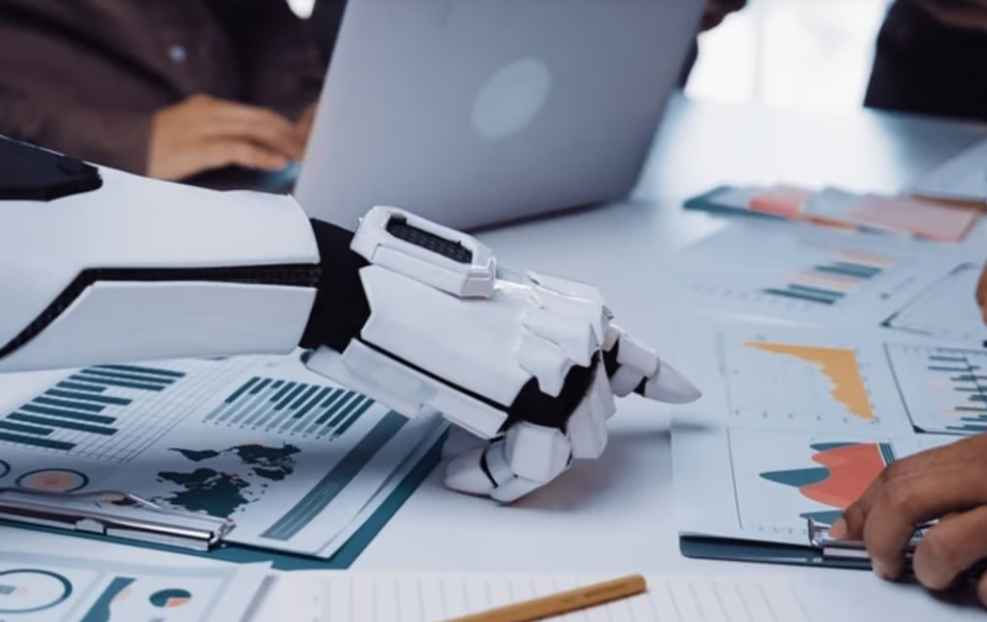
The Iceberg Index also reverses the existing assumption that the risk of introducing AI will be concentrated only on technology jobs in western coastal areas such as Silicon Valley, and in eastern coastal areas such as New York and Boston. Research has shown that a wide range of occupational groups have been exposed across all 50 states, especially in inland and rural areas that have been marginalized from AI discussions.
To complement this, the research team also established an interactive policy experimental environment in which each state can simulate the allocation of vocational training resources, adjustment of retraining programs, and changes in the speed of technology introduction.
“Project Iceberg allows policymakers and business leaders to identify exposure hotspots, prioritize staff retraining and infrastructure investments, and test intervention strategies before actually injecting billions of dollars,” the report said.
Regarding the discussion with the Tennessee government, director Balaprakash said, “Tennesia’s core industries, such as medical, nuclear, manufacturing, and transportation, still have a high proportion of physical labor, making it difficult to completely replace them with digital automation alone. We need to find ways to strengthen our industrial base by using robotics and AI.”
The research team defined this index not as a completed product, but as a “policy experimental sandbox” to prepare for AI shocks. “This tool is optimized for directly executing various scenarios and establishing preparation strategies,” Salvador explained.
JENNIFER KIM
US ASIA JOURNAL

