



About 22,000 people were found to have changed their gender.
Citing data from the Federal Statistical Office, the German weekly Staun reported that 7,057 people registered their new gender in November last year when the Self-Determination Act took effect, and the cumulative number of changes exceeded 22,000 by July this year. The figure is more than 30 times higher than 596 in the January-October period last year before the law went into effect.
According to statistics for the first two months of implementation, 33% of the cases were transitioned from men to women and 45% were transitioned from women to men.
The German government has changed the system to allow people to freely choose gender as one of “male, female, diverse, and indefinite” in response to criticism that the existing gender transition process could violate human rights by requiring doctor’s appraisal and court decisions.
However, there are some side effects, too. When Marla Svena Liebig (53), a far-right figure notorious for her hate speech against LGBTQ people, changed her gender to a woman ahead of her prison sentence, controversy erupted over whether it was appropriate to put her in a women’s prison.
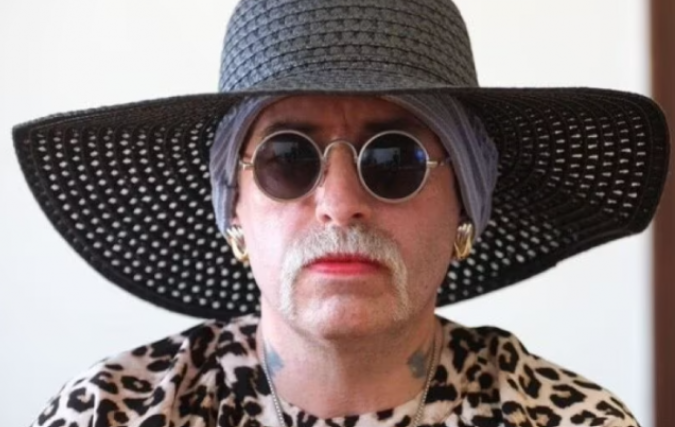
Liebig was sentenced to one and a half years in prison for making hate speech at the 2022 LGBTQ festival Christopher Street Day, shouting “Parasite of Society.” In January this year, when he was on trial, he changed his gender to female and also changed his name from Sven to Svenya. He now maintains a beard and wears lipstick and earrings, claiming to be a “politically persecuted women’s rights activist.”
The system was introduced in a “signal-light coalition government” led by the Social Democratic Party (SPD) and the Green Party. The moderate conservative Christian Democratic Party (CDU), led by Prime Minister Friedrich Merz, pledged to reform the system, but formed a coalition with the SPD earlier this year and adjusted its policy to maintain the current system until July next year and review its impact on children, adolescents and women.
SAM KIM
US ASIA JOURNAL

