


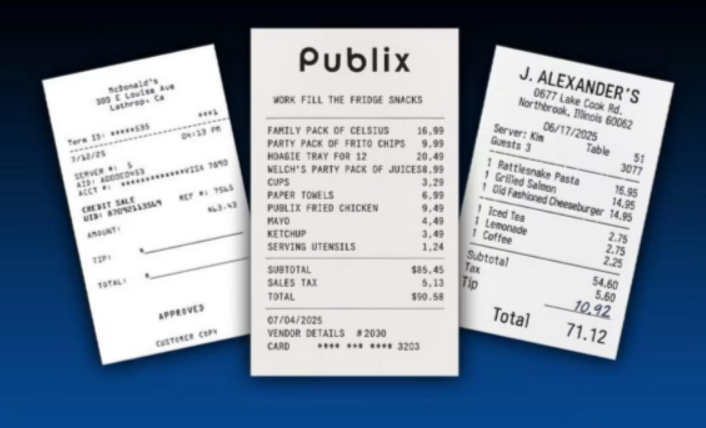
The Financial Times (FT) reported on the 26th that after major AI companies such as OpenAI and Google released new image generation models, the number of fake receipts generated by AI in corporate internal systems is increasing rapidly.
AppZen, an information security company, said about 14% of the false documents submitted in September were AI-generated receipts. The figure, which was 0% just a year ago, soared in a short period of time. Ramp, a fintech company, also said its software has detected fraudulent billing worth $1 million in the last 90 days.
In a survey of financial managers in the U.S. and the U.K. by AI-based expense management platform Medius, about 30% of respondents said “fake receipts have increased since OpenAI’s GPT-4o was released.” “The receipts made by AI are too sophisticated to be distinguished with the naked eye,” said Chris Juneau, vice president of product marketing for SAP’s global security platform “Concur.”
He added, “Since OpenAI launched the improved image generation model GPT-4o in March, the number of AI-generated receipts has exploded.” In response, OpenAI explained, “If a violation of the policy is confirmed, it takes action, and the generated image includes metadata called ‘ChatGPT generated’.
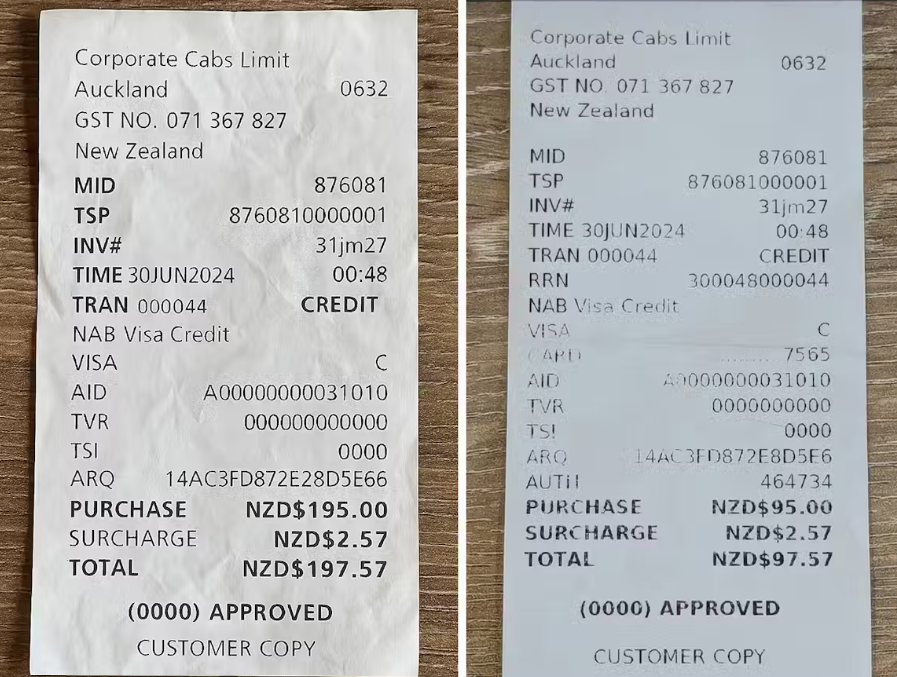
In the past, people had to use editing technologies such as Photoshop or paid outsourcing services to create false receipts, but now anyone can create fake receipts in seconds by simply entering a sentence into a free AI tool. The FT said, “The AI-made receipts include wrinkles on the paper, detailed items that might be on the actual menu, and even signatures, which are hardly distinguished from the real ones.”
Companies are relying on detection technology in expense management software to detect fake receipts made by AI. The system analyzes the metadata of the image to track the generation path or checks the server name, shooting time, and destination information where the receipt is stored to see if it is counterfeit. However, there is a problem that if a user takes an image again or captures a screen, the metadata is easily deleted and it is difficult to detect.
In a report released by SAP in July, about 70 percent of the chief financial officer (CFO) said, “Our employees have used AI to forge travel expenses or receipts.” In fact, SAP internal investigations also showed that about 10 percent of employees submitted counterfeit receipts.
Mason Wilder, director of research at the Accredited Fraud Investigation Association (ACFE), said, “AI-generated false receipts are not just a joke, but can cause serious financial damage to companies. In the past, Photoshop technology was needed, but now it is an era that anyone can easily manipulate.”
JENNIFER KIM
US ASIA JOURNAL

