


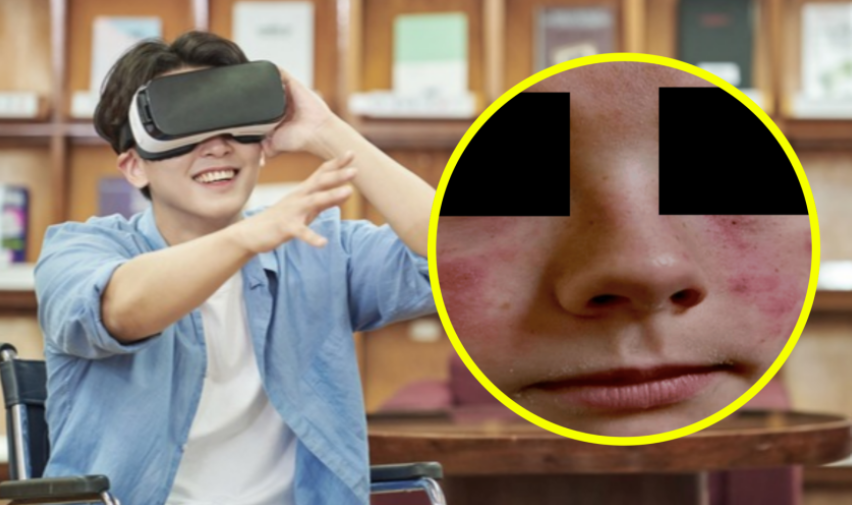
A British teenager who was using a virtual reality (VR) device visited a hospital due to a severe rash on his face. The cause was chemicals contained in foam material on the surface of the device. According to the medical journal “Cureus” on Wednesday, the British Health Commission confirmed that the 13-year-old boy wore Meta’s “Oculus Quest 2” headset and developed repetitive rashes and dead skin cells around his eyes and cheeks.
The red spot is centered on the foam that touches the face of the headset. Dead skin cells formed around the eyes and cheeks and swollen up red. As the ointment did not improve, the medical staff suspected that the skin was caused by “device contact.” The boy showed strong reactions to the foam pad and its chemical compounds methyl isothiazolinone (MIT) and benzisothiazolinone (BIT) in the patch test conducted later.
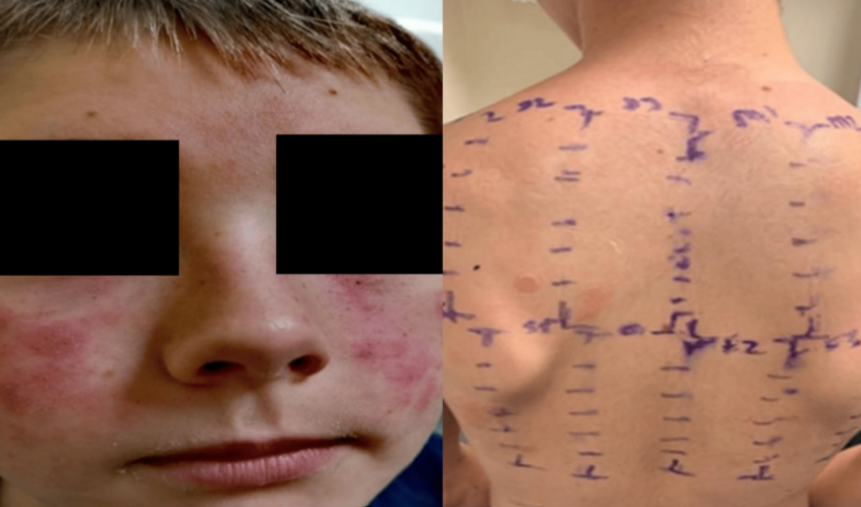
These substances are commonly used in rubber products, coolant, and detergent, and can cause allergic contact dermatitis when it comes into contact with the skin.
The medical staff recommended “replace the foam pad with a medical silicone cover,” and the boy’s dermatitis completely disappeared after the cover was replaced.
Afterwards, he was able to use the VR device normally. “This case shows that wearable device can cause dermatitis,” the medical team said. “The device material should also be included in the allergy test.”
“Dermatitis can occur not only in VR headsets, but also in smart watches, earphones, and blood glucose meters,” he said. “Especially for children or people with atopic skin, they should be careful.”
JULIE KIM
US ASIA JOURNAL

