


Millions of households across the country are expected to be hit directly amid the prolonged federal shutdown.
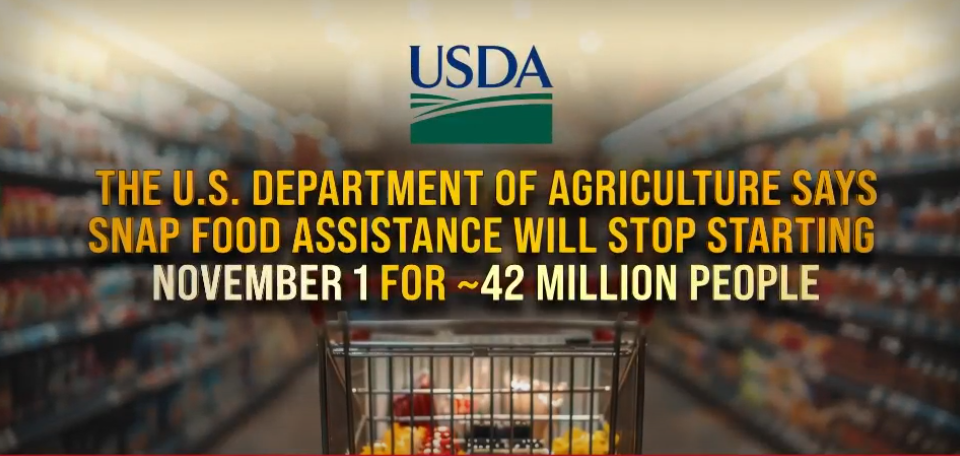
The announcement comes after the Trump administration decided not to extend SNAP payments to low-income families by using about 5 billion dollars worth of emergency reserve funds. SNAP is a core welfare system that helps about one in eight Americans buy food.
“The bottom line, the well has run dry,” the USDA said in a notice. “At this point, we don’t have any grants that can be paid on November 1. We are at the crossroads of the Democratic Senate.”
The shutdown began on October 1 and is recorded as the second longest ever. The administration guaranteed SNAP payments for a month before the shutdown, but tens of millions of people, including the poorest, could face a livelihood crisis if payments are suspended from November.
The Trump administration is blaming the Democratic Party for the situation. They say the shutdown has been prolonged as the Democratic Party has not responded to negotiations to extend medical insurance subsidies called “Obamacare.” On the other hand, the Democratic Party is confronting that dialogue is possible only when the Republican Party resumes the government first.
Democrats sent a letter to Agriculture Secretary Brooke Rollins asking him to use the reserve funds to maintain SNAP payments next month. However, the USDA’s internal documents state that the reserve funds cannot be used by law to provide general subsidies. They say that the funds will only be used for specific purposes, including emergency assistance in disaster areas.
“We need to be able to mobilize funds quickly to respond to disasters,” the USDA explained, citing the recent case of Hurricane Melissa strengthening into a major storm.
The possibility of stopping food subsidies is causing great concern in both states where both Democrats and Republicans are in power. Some states have said they will continue SNAP by investing their own funds, but critics point out that there is no way to be compensated unless the federal government recognizes it. The USDA document says, “Even if the state pays the cost temporarily, the federal government does not repay it.”
As a result, some states, including Arkansas and Oklahoma, are already notifying beneficiaries of the possibility of suspending subsidies and recommending that they know local food banks or church food aid organizations in advance.
SAM KIM
US ASIA JOURNAL

