


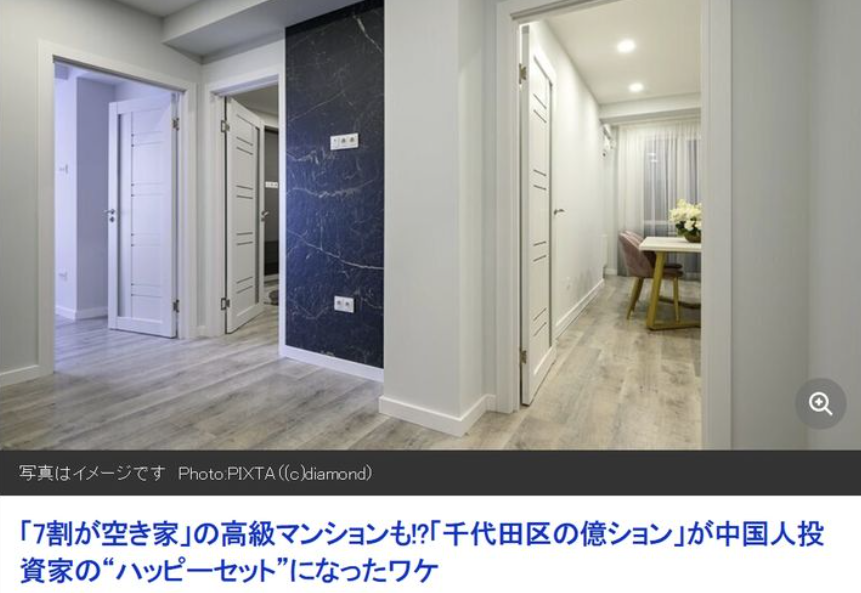
An increasing number of “empty houses” are not inhabited in apartments worth billions of won in downtown Tokyo. This is because Chinese investors are buying in large numbers and they do not actually live there.
On the 24th, Japanese economic media “Diamond Online” reported in detail the situation of high-end apartments in Tokyo, where vacancies are increasing due to Chinese purchases for investment purposes.
In central Tokyo, it is easy to see apartments with lights out at night, not just because the residents are out. It is a “ghost apartment” that pays only maintenance costs with many households empty.
Of course, there may be a certain percentage of vacancies in apartments that have been sold out, but recently, new complexes with vacancy rates exceeding 10% and occupancy rates of less than 50% have also appeared in Chiyoda-gu and Minato-gu, central Tokyo.
An official from Chiyoda-gu said, “We are receiving new complaints about apartments and conflicts with foreign investors that we don’t know who lives,” adding, “It’s not just a matter of manners, but there’s a concern that the local community base will be shaken.”
Currently, most new apartments in Chiyoda-gu are priced at hundreds of millions of yen. Why can’t they buy such an expensive house and neither buy it themselves nor sell it.
The media cited the cause as an “investment purpose.” If the price rises, it can be resold, but if you rent it, it will be disadvantageous when selling it.
A Japanese resident of a luxury apartment in Chiyoda-gu said, “I think only about 30% of people actually live in apartments.”
A survey by Chiyoda-gu ward office also revealed that 70% of the owners do not reside.
Behind this phenomenon are the low yen and ultra-low interest rates. Amid the extreme low yen, Japanese real estate is regarded as a “safe asset” by foreign investors. Among foreigners, Chinese investors surged.
An official from the real estate industry said, “Some Chinese customers buy several 500 million yen apartments in cash at once, and some buy one floor or the entire building.”
Due to the large number of cash transactions, financial screening or confirmation of the source of funds in Japan are often omitted.
As overseas funds are strictly restricted in China, some raise the possibility of remittances through ‘underground banks’, which are illegal exchange networks.
Leaving vacant spaces is another investment for them. All they have to do is pay management fees without receiving tenants. Even if the price increases by 10%, they can earn tens of millions of yen in profit.
Eventually, as Chinese capital flocked to the Tokyo real estate market, ordinary citizens became untouchable. Experts are concerned about “a rise in prices without real demand, that is, a real estate bubble.”
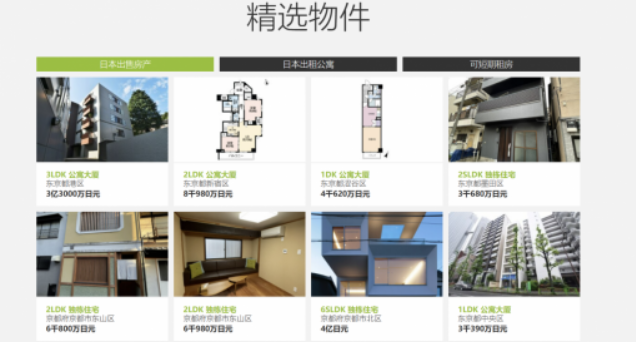
Recently, Chinese investors are increasingly introducing and reselling Japanese real estate through SNS such as Weibo and Xiao Hongshu.
“If this continues, shops and hospitals will lose demand and urban hollowing out will accelerate,” the media said, pointing out the urgent need for institutional reform at the national level.
He also suggested alternatives such as a pre-reporting system for foreign capital real estate transactions, strengthening capital gains taxes in short-term resale, disclosing owner information and sharing management associations, and additional taxation on non-residential real estate.
EJ SONG
US ASIA JOURNAL

