


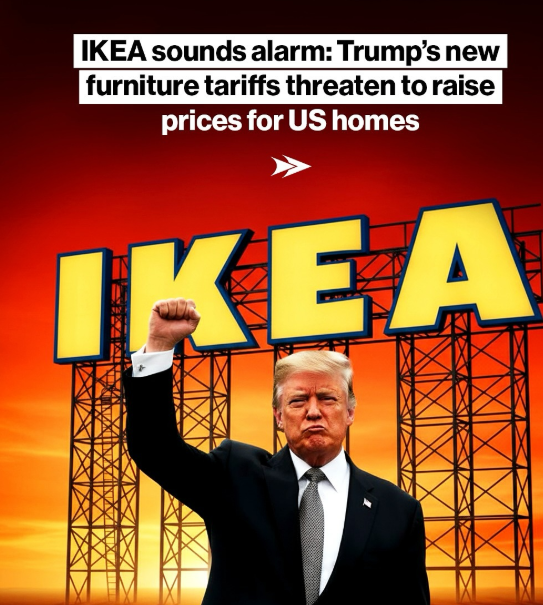
The Financial Times (FT) announced the policy in an interview with Jon Abrahamson Ring, CEO of IKEA brand owner Interikea, on the 16th (local time). “We want to continue to expand in the United States and Canada,” CEO Ling said. “How to establish an optimal supply chain system that ensures the right access to raw materials, parts and production is a very long-term task that we are carrying out.”
In a separate interview, Yesper Brodin, CEO of Inca Group, which operates 90% of IKEA stores, said, “We will continue to explore ways to add new customer contacts and expand sourcing and logistics networks in North America, including the United States.” He also stressed that in 2023, the group pledged to invest $2.2 billion (about 3.12 trillion won) in new stores and production facilities in the United States.
IKEA recorded 5.5 billion dollars in sales in the U.S. alone last year. However, only 15 percent of the products sold in the U.S. are produced in the country. The figure is significantly lower than the production ratio in Europe and 80 percent in Asia. In response, CEO Ling said, “This is because IKEA is importing most of its products from Europe.”
The Trump administration has imposed tariffs of 10 percent on imported wood and 25 percent on furniture as of January 14. After January 1 next year, tariffs will be raised to 50 percent on imported furniture such as kitchen cupboards and washbasins, and 30 percent on imported furniture with cloths like sofas will be applied. However, the EU and Japan will be subject to the existing tariff rate of 15 percent under the trade agreement.
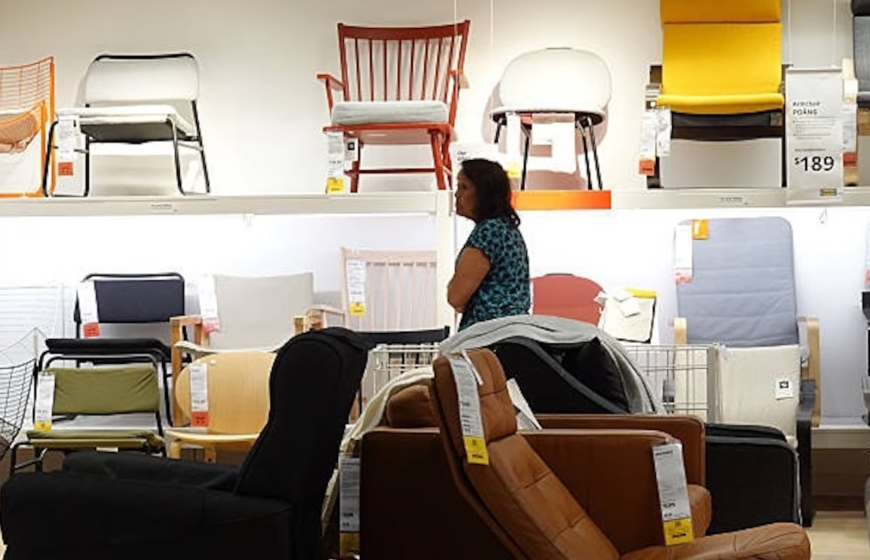
CEO Ling carefully predicted that since most of IKEA’s products in the U.S. come from Europe, 15% tariffs will be applied. Nevertheless, considering the burden of tariffs, they are seeking to expand their own supply and production networks in North America.
There are also concerns within the U.S. over tariffs on wood and furniture, which are closely related to the consumer economy. The Trump administration described the move as an attempt to expand domestic wood industry and furniture manufacturing, but experts expressed concern that the construction industry, including housing construction, would slow down. The U.S. has a high proportion of wooden houses.
“Contrary to the Trump administration’s goal of lowering house prices, the number of houses being built will eventually decrease,” said Darryl Fairweather, chief economist at Redfin, a real estate broker. Critics point out that it is a policy that goes against the Trump administration’s goal of restoring the housing market.
SAM KIM
US ASIA JOURNAL

