


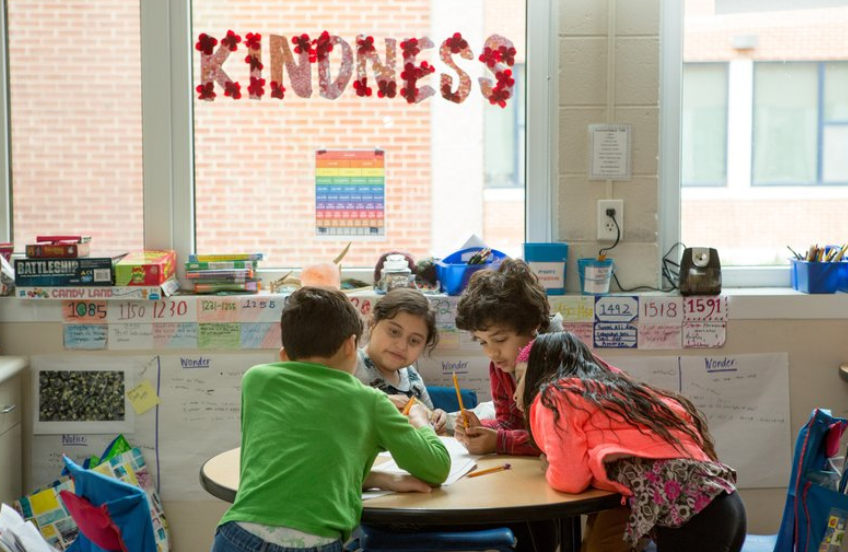
Concerns have been raised that public elementary, middle and high schools (public schools) in the U.S., which have provided separate English education for students who have difficulty using English, such as immigrant families and foreigners, will no longer provide such programs. This is because the U.S. Federal Department of Education recently abolished the English Learners Education Guidelines on the grounds that they do not conform to the Donald Trump administration’s policy. In addition, U.S. college districts, where the new fall semester is about to begin, are unable to return to school due to visa problems or giving up admission altogether. Analysts in the U.S. education community say that the place for immigrants and foreign students is rapidly narrowing.
The Washington Post reported on Tuesday that the Department of Education has quietly abolished federal regulations requiring education for English learners who are not fluent in English. Public schools in the U.S. have provided separate learning support for the shortcomings through related evaluations, believing that not only foreigners or immigrants, but also if more than one of their parents speaks their mother tongue, which is not English. Usually, several teachers are assigned to schools at all levels, and they have called out students who need supplementary education during regular classes to guide them or provide one-on-one learning support in the classroom.
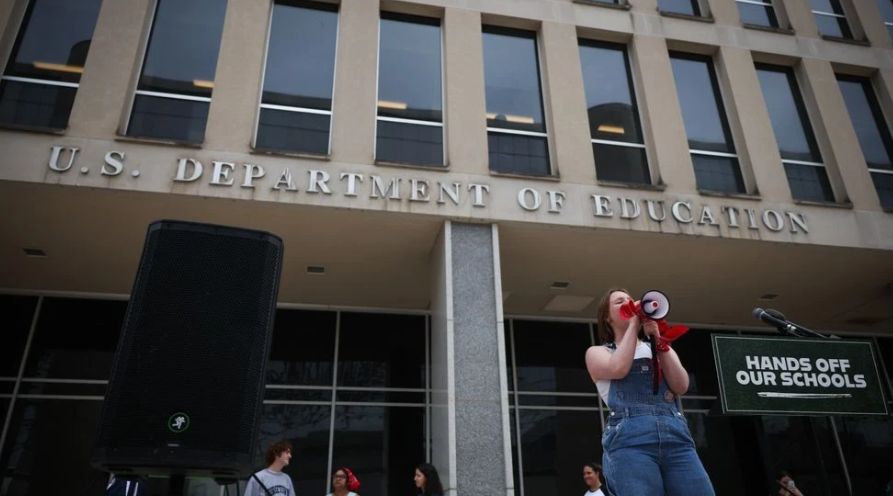
The Washington Post said, “The repeal is part of a reduction in support for about 5 million students who are not fluent in English, many of whom were born in the U.S. The federal government has argued for decades that the failure to provide such programs is discrimination based on nationality, which violates the citizenship law.” He also expressed concern, saying, “If the government does not stipulate it in law, schools will no longer provide such expensive education programs.”
Meanwhile, the New York Times (NYT) reported on the same day that President Trump’s restrictions on international students’ entry have led to students in some countries failing to obtain visas and being unable to attend classes this fall semester. The New York Times said, “Not only Iran and Afghan students (anti-American) but also students from China and India, the countries that send the most international students to the U.S., are embarrassed by obstacles such as strengthening student visa screening created by the Trump administration.” He also predicted, “This will significantly reduce the number of new international students enrolled in US universities.”
In fact, the U.S. Institute for International Education recently surveyed more than 500 colleges and universities in the U.S. and found that the number of applicants for international students dropped by 35% this spring. The Association of Educators (NAFSA) predicted that if visa issuance continues, the enrollment rate of new international students in U.S. universities will plunge by 30-40% in the fall semester. “In many universities, international students are a source of income that schools depend on,” the New York Times said. “Universities are concerned about the loss of talent and reduced opportunities for overseas exchange in addition to the financial blow.”
SAM KIM
US ASIA JOURNAL

