


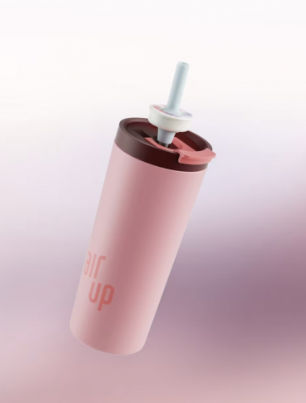
It’s zero-calorie water, but I can feel the flavor, and the salt is reduced, but the salty taste remains the same.
As the demand to take care of taste without harming health grows, new technology products that technology deceives the senses of the brain are emerging one after another. German start-up “Air Up” has developed a unique water bottle that adds taste to water by using the sense of smell. The moment you drink a straw through the scent “pod” mounted on the top of the bottle, the scent is delivered to the nose, and it is a method that makes the brain mistake to feel the flavor even though it is actually unsweetened and zero-calorie water.
Immediately after its launch, the product received an explosive response. The 80,000 units that were first introduced in Germany in 2019 were sold out in just six weeks. It has entered the U.S. market in 2022 and is currently attracting global consumers by selling a total of 11 scent pods, including lemon and raspberry. The electric salt spoon and spoon developed in Japan is a new technology that makes you feel salty without adding salt. It attracted attention by winning the Digital Health and Age Tech category at CES 2025.
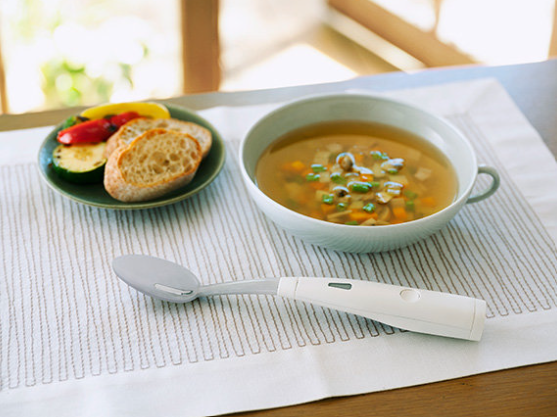
A weak electric current is applied to the spoon and chopsticks to induce sodium ions to be concentrated as soon as they touch the tongue, making the salty and savory tastes of food feel about 1.5 times stronger than it actually is. The salty taste can be adjusted in four steps through the handle button.
The product was jointly developed by Kirin Holdings and a research team of Miyashita at Meiji University to solve the problem of excessive sodium intake by Japanese people. According to data from Kirin Holdings, the average daily salt intake of Japanese adults is 10.9g for men and 9.3g for women, which is twice the WHO recommended level (5g). Experts view this trend as a “Healthy Pleasure” trend. Professor Kim Nan-do of Seoul National University defined in his book Trend Korea 2022 as “Health care itself is a way of being a pleasure,” and analyzed that food tech products using sensory illusion are opening new markets.
In line with this, the domestic food industry is also expanding the market by releasing a series of low-salt and mortgage products. In particular, the sugar-free beverage market is growing rapidly. According to market research firm Expert Market Research, the size of the sugar-free beverage market in Korea was $281.32 million in 2024. It is expected to grow 18.5% annually from 2025 to 2034, reaching about $1.53597 million by 2034.
JULIE KIM
US ASIA JOURNAL

