


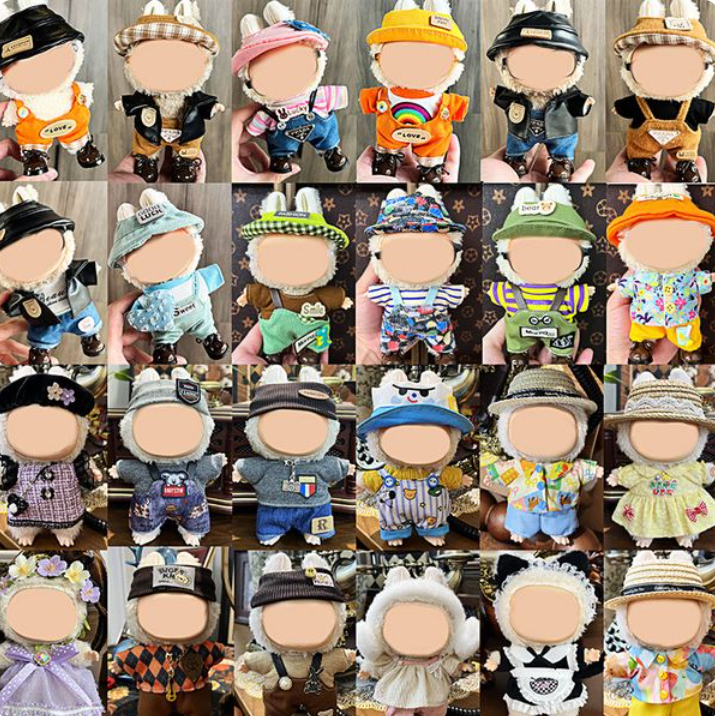
Beyond just hobbies, the related market is also shaking thanks to those who consider dolls as children and spend money on clothes and accessories.
According to Hong Kong’s South China Morning Post (SCMP) on the 25th, the doll clothing market has recently exploded in China.
According to Taobao and Tmall, China’s largest e-commerce platforms, sales of doll clothing surged more than 117% year-on-year last year, and sales exceeded 10 million yuan for the first time in May.
During the shopping festival “618” in June, related transactions increased by more than 50% compared to the previous year. More than 80% of buyers were counted as women.
A female college student from Zhejiang Province said, “It’s natural to like joint dolls as if you’re breathing.” The monthly cost of living is about 2,000 yuan, and she spent more than 3,000 yuan on doll clothes for two years alone.
In fact, artificial dolls are made of resin or ceramic, so you can take various poses like real people. Also, you can decorate your costumes and accessories yourself, so you feel like your child, not a doll.
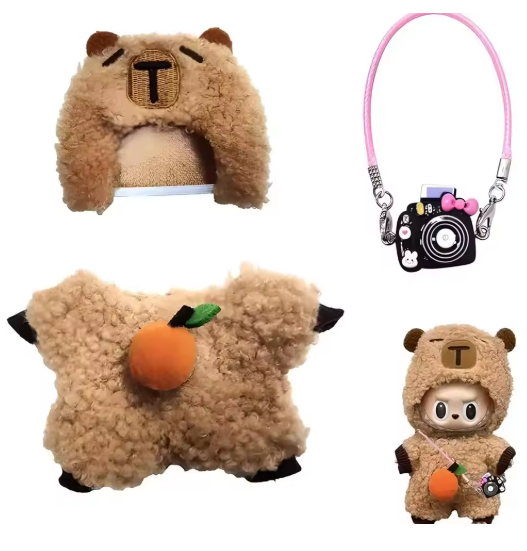
A doll’s clothing costs an average of 300 to 500 yuan, which is a considerable burden for young people, but it is regarded as a valuable emotional consumption by Generation Z.
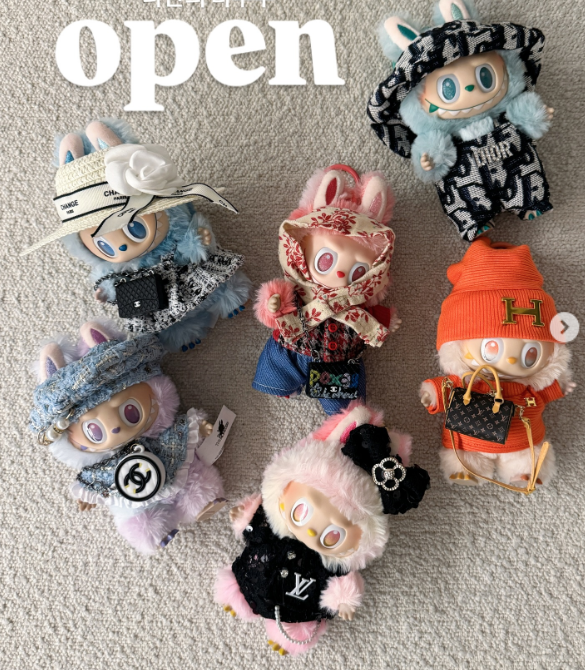
According to the media, customized decorative culture is spreading not only to joint dolls but also to Labubudolls, which have gained popularity. Pop Mart, the maker of Labubu dolls, did not have customization in mind, but fans are continuing the craze by making and purchasing their own doll clothes. In May, the number of searches for Labubu’s costumes on Taobao exceeded 300,000 in a month.
“The design, which was released at the end of last year, has received an explosive response this year and has sold nearly 1,000 pieces so far,” said Li Junz, who produces costumes for La couple in Shandong Province. The price is 60 to 138 yuan, depending on the fabric, and traditional jewelry and other items are sold separately. “Even a small doll’s clothing requires delicate technology that takes more than four hours to make,” she added.
“When I put clothes on, the doll feels more lively like a child. It’s as if there’s a little baby sitting next to me,” said Bang, a collector of the couple. He also added, “It’s a lot of fun to compare and purchase clothes on various e-commerce platforms, so I can choose the clothes that best suit my child.”
Experts analyze that this phenomenon goes beyond simple trends and is a new way for the MZ generation to lead the new consumer economy.
According to China’s CCTV finance report, the global toy market has rapidly grown from $20.3 billion in 2020 to $41.8 billion in 2024, and is expected to reach $52 billion by 2025.
In particular, exports of doll clothing surged. “Demand in Southeast Asia, Japan, and Korea has more than tripled in recent months,” said Yang Jin-hwa, a Yiu merchant in Zhejiang Province.
In a recent announcement, the Yeongji Industrial Research Institute said that Generation Z in China accounts for 40% of total consumption, and is expected to quadruple its size to 16 trillion yuan by 2035. The institute analyzed this in the sense that Generation Z will be a key driver of future market growth.
SALLY LEE
US ASIA JOURNAL

