


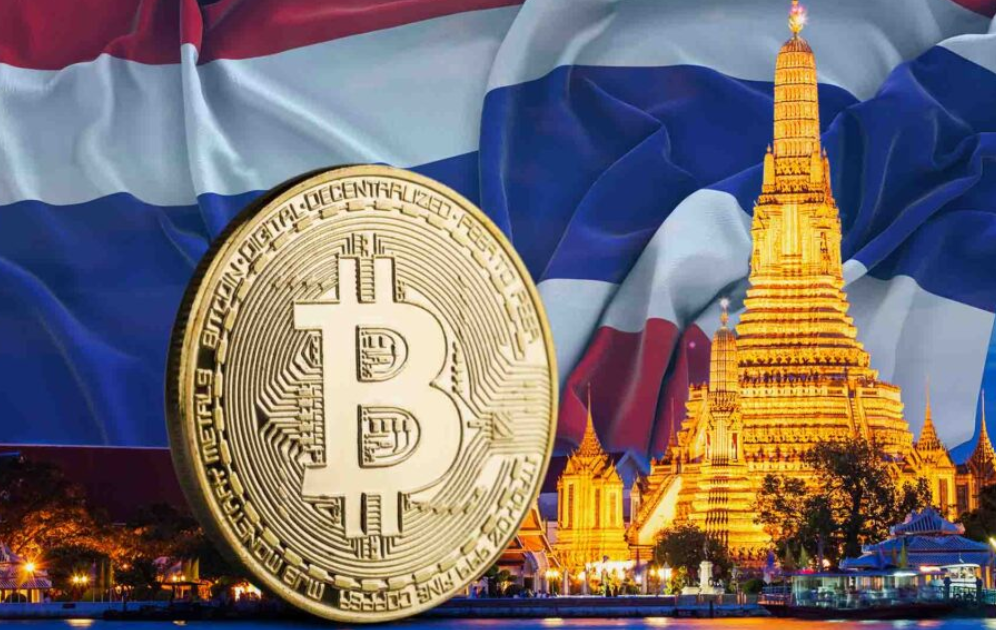
As the tourism industry has been shaken by a series of tourist kidnapping incidents and border disputes, it is believed that a new breakthrough has been made to induce spending by increasing the convenience of payment for travelers. According to Reuters and others on the 19th, Thailand’s Ministry of Finance held a press conference the previous day and announced that it will implement a virtual currency exchange and payment service called “Tourist DigiPay” for foreign tourists from the fourth quarter of this year.
As a result, tourists with virtual currency do not have to change their local currency into Thai baht or prepare U.S. dollar cash. Instead, they exchange their virtual currency into baht, transfer it to an electronic wallet managed by the central bank, and pay at local stores and restaurants by scanning the QR code. Instead of paying directly with digital assets such as Bitcoin and Ethereum, they exchange into ordinary currency. Currency exchange is possible only at local cryptocurrency exchanges that are approved by the Central Bank of Thailand and the Securities and Exchange Commission. However, it has not been disclosed yet which types of virtual currency will be included in the exchange.

It has also prepared a device to prevent misuse. Only foreign tourists staying in Thailand can use the service temporarily, and customer verification (KYC) is essential. Cash withdrawal after currency exchange is prohibited. The move is aimed at blocking money laundering.
The currency exchange limit was limited to 550,000 baht. The Thai government plans to re-evaluate the limit and overall operation of the system after a trial run of 18 months. “Thailand does not yet recognize virtual currency as a currency. It provides a new means of innovation for foreign tourists to use instead of cash and credit cards,” explained Pichai Chunhabajira, Thailand’s deputy prime minister and finance minister. The move is an experimental policy aimed at recovering the tourism industry. Tourism accounts for about 20 percent of the country’s gross domestic product (GDP). However, as the number of tourists has not recovered even after the COVID-19 pandemic, the government has come up with various incentives, including allowing recreational hemp, visa waiver, and casino legalization.
Nevertheless, the number of tourists is continuing to decline. Chinese tourists were kidnapped from Thailand and trafficked to Myanmar fraudulent crime rings, and recently, the border dispute with Cambodia overlapped. Thailand’s National Economic and Social Development Committee predicted that the number of foreign visitors will only reach 33 million this year. The figure is down more than 10 percent from the original estimate. In particular, the number of Chinese tourists, who are considered “big hands,” plunged 33 percent in the first half of the year alone.
In response, the Thai government’s plan is to increase the convenience of payment and expand consumption for young foreigners who are familiar with digital assets. Bloomberg explained, “Thailand’s Ministry of Finance expects this measure to increase tourism spending by 10% and have an economic effect of up to 175 billion baht.”
SALLY LEE
US ASIA JOURNAL

