


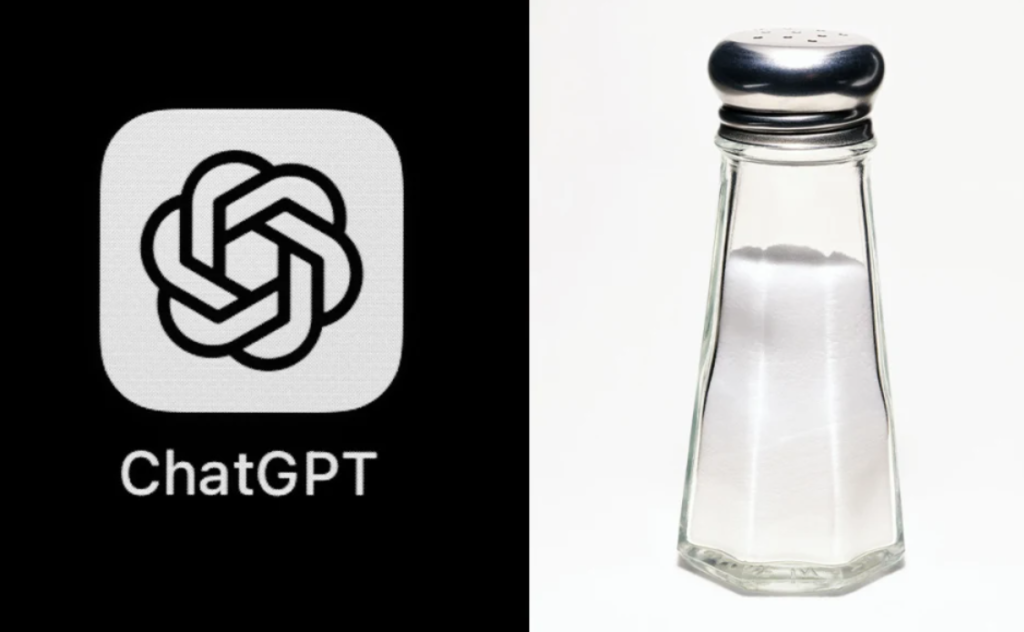
The accident was also introduced in the International Medical Journal as a risk case for AI to transmit misinformation to the general public.
According to local media reports such as USA Today on the 13th, A, an American man in his 60s who majored in nutrition, asked ChatGPT for seasoning ingredients to replace salt.
ChatGPT advised A to consume sodium bromide instead of salt, which is mainly composed of sodium chloride. A purchased sodium bromide online and started consuming it instead of salt. Sodium bromide is a white crystal that looks similar to sodium chloride. This substance combines with chlorine and is used as a disinfectant in swimming pools. In the past, it was used as a sedative, but excessive intake is known to accumulate in the human body and cause side effects such as skin rash and mental illness. In fact, it was found that 8-10% of mentally ill patients admitted to the United States in the 19th century were patients with bromine poisoning.
As the situation became serious, the U.S. Food and Drug Administration (FDA) banned bromide sedatives from 1989, and the number of patients with bromine poisoning has significantly decreased since then. A consumed sodium bromide without knowing this.
Afterwards, A developed megalomania and was diagnosed with bromine poisoning after visiting the local emergency room, saying that his neighbor was trying to poison him. In addition, tests showed that various nutrients, including vitamins, were also deficient. A’s blood bromine level was 1,700mg per liter, about 1,000 times that of the general public (0.9-7.3mg per liter).
The medical staff said, “After reading the article on the side effects of salt, A asked ChatGPT how to replace sodium chloride. Afterwards, I drank sodium bromide in water for three months after receiving ChatGPT’s advice.”
A received treatment to remove bromine from the body through urine, and after three weeks of hospitalization, his symptoms eased and he was able to be discharged. A’s case was introduced through the medical journal “International Chronicle of Clinical Cases of Internal Medicine.” Journal authors said, “It is positive that AI can serve as a bridge between science and the public,” but stressed, “There is a risk of spreading misinformation.”
JULIE KIM
US ASIA JOURNAL

