



In the summer of 2025, when the record-breaking heat wave hit, there was a crack in the dress code that has been going on for more than 100 years in Wall Street in New York and London in the U.K. A growing number of financiers are wearing formal suits and taboo shorts instead of tie-ups. Amid fierce opposition to rational change in line with climate change and criticism that it undermines professionalism and dignity, major media such as the Financial Times (FT) have focused on this unusual phenomenon. The FT quoted Robert Armstrong, a financial columnist, as saying on the 14th (local time) that it is time to consider shorts in the office. “Styles have never been fixed, and dress codes should also change according to the changing world,” he added. This means that dress codes must also evolve amid the huge trend of climate change.
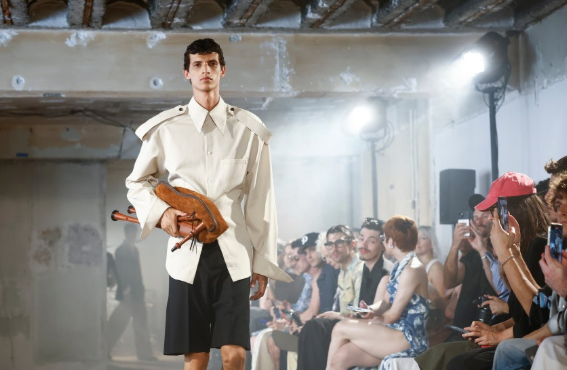
A Wall Street financier usually wears a dark navy blue suit and a blue tie that he hopes for a rise. Influenced by Britain in the early 20th century, he began to wear blue outfits that symbolize trust and stability. After the Second World War, solid, gray flannel-based suits inspired by military uniforms gained popularity. In the 1980s, when the U.S. economy was at its golden age, power suits with shoulder lines reinforced to show off wealth and power were in vogue. The first significant change in fashion in the financial sector was the dot-com bubble of the 1990s. Back then, a growing number of companies listed on NASDAQ from Silicon Valley made their way to Wall Street for the first time. As the anti-capitalist movement represented by the “Occupy Wall Street protests” gained momentum after the 2008 financial crisis, showy styles such as the previous power suits disappeared. On top of that, as telecommuting became more common after the COVID-19 pandemic, business casualties without ties have emerged as the trend that cannot be countered on Wall Street, according to GQ, a men’s fashion media outlet. Of course, this does not mean that you can wear any shorts to work. The New York Times said that office shorts should be chosen according to strict criteria to escape from symbolism during weekends or childhood. Shorts that are short enough for bicycles, sportswear, or knee-high should be avoided first. Instead, alternatives are the tailed shorts, which are neatly below the knees and made of high-end materials such as linen, wool, and sufima cotton. Luxury brands such as Burberry and Dries Van Norton have also recently introduced shorts that can be worn as a jacket. The New York Times said that wearing tailed shorts, a suit, a shirt that fits well, a loafers or neat shoes will make the shorts look more formal and suitable for office wear.
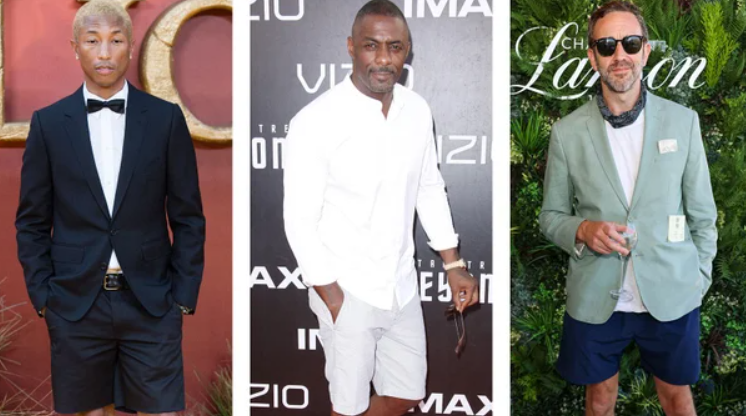
A complex social phenomenon has led to the emergence of formal shorts as a new alternative. The MZ generation, which values sustainability and practicality, has now emerged as leaders in the labor market. According to a survey by the organization consulting firm Korn Perry, 75 percent of millennials showed positive responses to office shorts. The Wall Street Journal reported that it was also analyzed that people who lost weight due to the popularity of obesity treatments such as Ozempic gained confidence and attempted bold fashion.
Some still view clothing as a matter of respect for the organization and society rather than focusing on individual freedom. Legislative bodies have made the strongest argument against this trend of dress autonomy. The ‘dressing regulation happening’ held in the U.S. Senate in September 2023 clearly shows this difference in perspective. Since its establishment in 1789, the U.S. Congress has had an unwritten rule that requires people to wear suits when enrolled for more than 230 years. The Democratic Party of Korea passed the bill on dress autonomy in response to this long-standing unwritten rule. Then, some lawmakers began appearing in the Capitol in shorts, hoodies, and short sleeves.
The media strongly criticized the situation, calling it a “decline in dignity” of the U.S. The Wall Street Journal quoted columnist Peggy Noonan as saying, “If you want to be respected, you should show respect for your organization and colleagues, set an example for the younger generation, and express your inner modesty that puts community standards ahead of your own comfort.” The Senate unanimously passed a resolution requiring male lawmakers to wear coats, neckties and long pants again within a week, ending the controversy. However, more than half of companies still failed to come up with clear guidelines regarding their attire. According to a survey by Monster, a job search site, only 57 percent of office workers said they worked in an office with a dress code for the past year. The New York Times reported that due to the lack of clear guidelines, engineers at a Washington, D.C., even walked around the office barefoot saying they could think better. They are known to avoid being branded as a “frustrating and obnoxious company” with a dress code.
Experts analyzed that the shorts debate is a process in which corporate culture finds a new balance between formality and practicality amid the huge trend of the climate crisis and generational change. Professor Dawn Karen, a fashion psychologist, told Forbes, “Dressing is a form of ‘encoded cognition’ that affects our thoughts and actions. The dress code is likely to move toward trusting and empowering employees to choose their own clothes that can be most immersed in their work.”
SALLY LEE
US ASIA JOURNAL

