


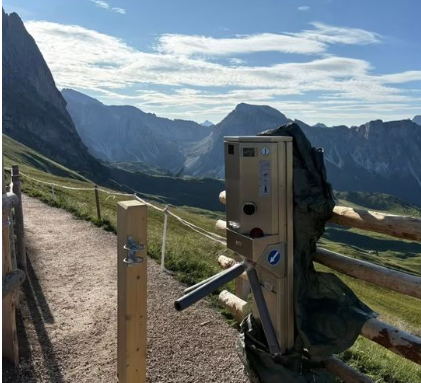
According to CNN on the 1st, the “Instagram Hot Place” in the Dolomite Mountains is suffering from environmental damage, private land infringement, and garbage problems as up to thousands of people flock a day.
Alto Adize, president of Alpine Club Carlo Janella, criticized “people are coming into the mountains without any preparation just to take pictures.”
“We need to block the travel influencer account and raise the admission fee to 100 euros,” he argued.
Accordingly, you have to pay an admission fee of up to 5 euros to pass through major photo zones such as Seseda and Dreyzinen (three peaks).
“This was a cry for help,” said Georg Ravenser, a former Italian national snowboarder and landowner who owns land on the grasslands of Seseda, stressing that residents were taking self-rescue measures after local governments did not respond clearly.
He criticized the hikers for riding cable cars, saying he saw them climb the mountain in Yangsan and slippers.
Although Italian law guarantees free access to natural parks, there are still no official sanctions on the installation of turnstiles. Local tourism agencies claim that the number of park rangers has been increased and the problem of garbage has improved, but residents’ complaints remain. Tourist control is not unique to Dolomites. In order to restrict vehicle entry, paid shuttle buses are in operation in the Aosta Valley, and some wetland areas in Piedmont limit parking spaces to 150. In addition, some areas, such as Lake Bryce, are receiving 40 euros per vehicle to control access.
Across Italy, crackdowns on tourists’ clothing and behavior are also intensifying.
In Tuscany, Liguria, Sardinia, and other countries, taking off their tops or striding through the city in swimsuits can result in fines of up to 500 euros, and some beaches restrict entry or even lie in the sand.
The sale of takeout alcohol was banned in San Felice Tirceo, south of Rome, and boat music within 500 meters of the coast is also subject to crackdown in southern Pulia.
The tightening of regulations appears to be a measure to preserve local ecosystems and protect the quality of life of local residents, sending a message that Italian tourism should move away from simple “certification shots” and into a more responsible form.
JENNIFER KIM
US ASIA JOURNAL

