


Netflix said it applied artificial intelligence (AI) to its original series for the first time. It is expected that many content producers will continue to utilize AI to save time and budget. According to Reuters, Netflix recently announced that it produced visual effects (VFX) based on Generative AI in a scene from its original Argentine series “El Eternauta.”
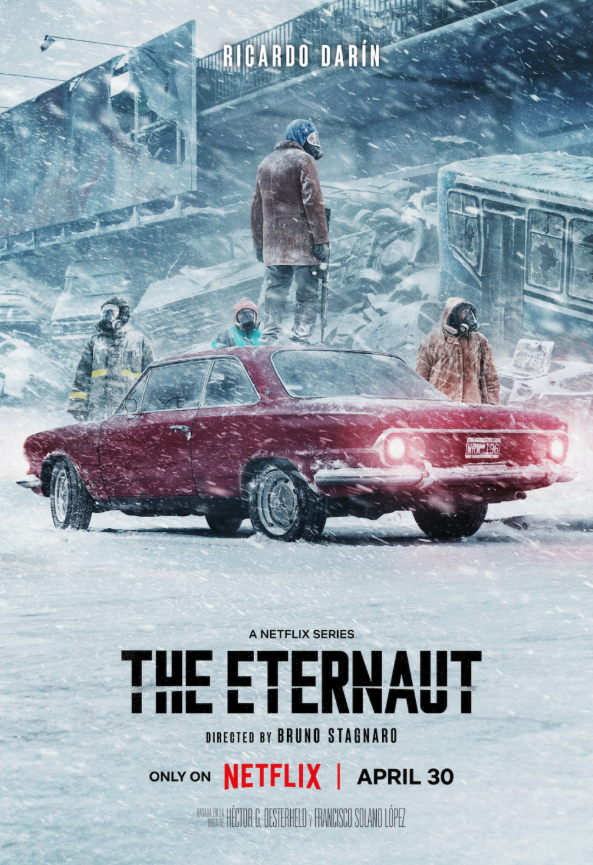
Netflix explained that the production team tried to make a scene where a building in Buenos Aires collapsed, but it was over budget, so it was implemented through AI. It collaborated with Iline Studio, an internal production group of Netflix, to complete the scene using AI.
Netflix said the scene was the first Generative AI based video to appear in the original Netflix series and movies.
“If the VFX sequence had been used with traditional visual effects tools and workflow, it would have been completed 10 times faster than it would have taken,” co-CEO Ted Sarandos said. “The cost of producing the scene in the existing way would have been impossible to cover with the existing budget.”
Another co-CEO, Greg Peters, said AI can also be used to enhance the user experience, such as the ability to search for content by voice.
“If you say, ‘I want to see a dark psychological thriller from the ’80s,’ you get the result, but this is an experience that has not been implemented so far,” Peters said. “It’s a really interesting development.”
He added that Generative AI can also provide new opportunities in advertising. AI can help companies and marketers when they want to create attractive content.
“We see that the Generative AI technique will gradually lower the barriers and allow us to implement them in more areas,” Peters said.
In 2023, actors and writers went on strike in the United States against the use of Generative AI in film production. The main concern is that AI can replace human jobs. There is also controversy over whether the Generative AI model illegally used copyright protection materials for learning. After the strike, new user guidelines, such as protective measures to obtain consent and demand compensation if the actor’s appearance is duplicated through AI, have been introduced, but the controversy has not been completely resolved.
Earlier, the movie was criticized after it was revealed that AI tools were used in the production of the Oscar-nominated movie “Brutalist.” In the movie, actor Adrian Brody played a Hungarian Jewish architect who moved to the U.S. to avoid the Holocaust, and AI was used to correct actors’ Hungarian accents. David Jancho, the film’s editor, said he used an AI called “Lispitzer” to modify actors’ lines and speed up the process of making actors’ Hungarian pronunciation sound natural. To save money, architectural drawings that appear in the latter half of the movie were also made using Generative AI.
The reputation was previously used in the Disney+ original series Obiwan Kenovie to create new lines for Darth Vader.
These tools are likely to continue to be used in the future. Filmmaking requires enormous resources, and companies are making various attempts to increase the utilization of AI technology. “It’s a tremendous opportunity to help creators make better films and series,” Sarandos said of AI. “It’s not just about reducing costs.”
JENNIFER KIM
US ASIA JOURNAL

